Advanced Product Quality Planning (APQP): Complete Guide 2026

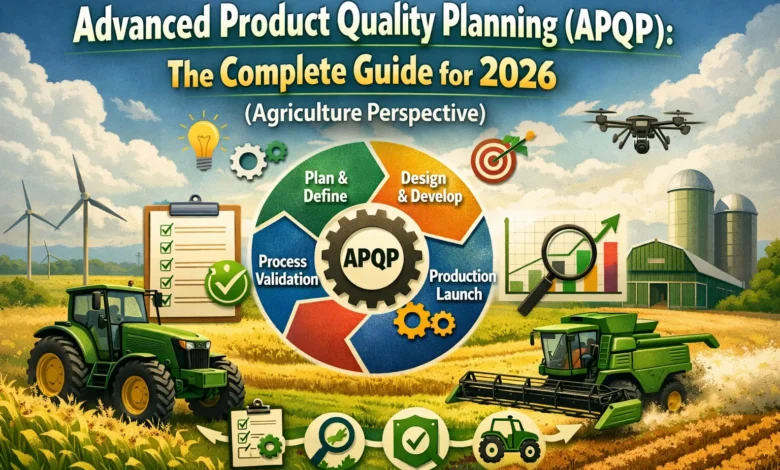
Advanced Product Quality Planning (APQP) is a structured quality management methodology used to ensure that requirements are fully understood, translated, and systematically implemented throughout the product and process lifecycle.
While originally developed for manufacturing, APQP is increasingly relevant in modern agriculture, where “product quality” refers to crop yield, uniformity, disease resistance, and market standards. APQP principles can help farmers shift from reactive farming to planned, precision-based crop management.
What Is APQP in Agriculture?
APQP in agriculture acts as a preventive farm planning system. Instead of reacting to problems like pest attacks, nutrient deficiencies, or low yields after they occur, this approach focuses on:
- Identifying risks before crop sowing
- Planning inputs like seed, fertilizer, and irrigation
- Monitoring crop performance at every stage
This ensures better coordination between farmers, agronomists, and agricultural extension services, leading to improved crop quality and profitability.
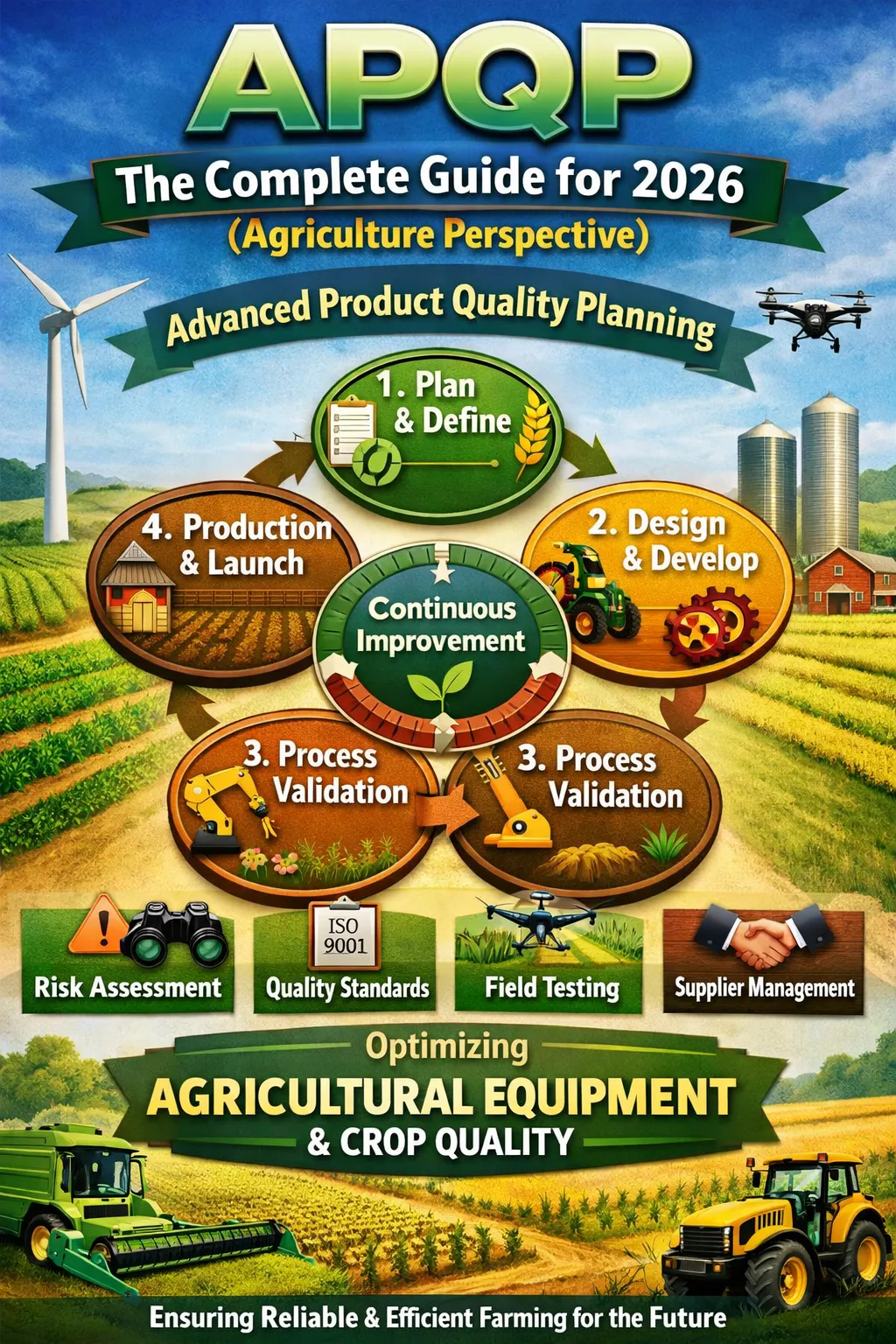
The Five Phases of APQP (Agriculture Adaptation)
1. Plan and Define Program
This phase focuses on understanding crop requirements and planning the season.
- Soil testing and land preparation
- Climate and seasonal analysis
- Crop selection based on market demand
- Identifying risks like pests, water shortage, or diseases
2. Product Design and Development
In agriculture, this relates to selecting the right crop variety and planning inputs.
- Choosing high-quality seeds or hybrids
- Planning fertilizer schedules
- Identifying potential risks (similar to DFMEA in industry)
- Planning crop protection strategies
3. Process Design and Development
This phase defines how farming operations will be carried out.
- Sowing methods and spacing
- Irrigation planning (drip, flood, etc.)
- Pest and weed management strategies
- Creating a “farm workflow plan” for consistent results
4. Product and Process Validation
Here, farmers validate whether their planning is working effectively.
- Field inspections and crop monitoring
- Yield estimation and growth tracking
- Testing soil moisture and nutrient levels
- Ensuring crops meet expected quality standards
5. Feedback, Assessment, and Corrective Action
This is where learning happens for future improvement.
- Analyzing yield results
- Identifying what worked and what didn’t
- Improving future crop planning strategies
- Applying lessons learned for the next season
📊 APQP in Agriculture: Comparison
| APQP Phase | Agriculture Activity | Key Data Inputs | Tools / Methods | Expected Outcome |
|---|---|---|---|---|
| Plan & Define Program | Crop selection & seasonal planning | Soil test values (pH, NPK), weather forecasts, market prices | Soil testing kits, agri apps, historical yield data | Right crop choice, reduced risk |
| Product Design & Development | Seed & input planning | Seed germination rate (%), fertilizer requirements, pest history | Certified seeds, fertilizer charts, pest risk maps | High-quality crop foundation |
| Process Design & Development | Farming operations planning | Irrigation schedule, spacing data, input timing | Farm calendars, drip systems, extension guidelines | Efficient and consistent farming |
| Product & Process Validation | Crop monitoring & validation | Plant growth rate, leaf color index, pest incidence %, moisture levels | Field scouting, IoT sensors, satellite data | Early problem detection, yield assurance |
| Feedback & Corrective Action | Post-harvest analysis | Yield per acre, input cost vs output, quality grading | Farm records, market feedback, analytics tools | Continuous improvement & higher profits |
Why APQP Is Important for Agriculture in 2026
In 2026, agriculture faces:
- Climate change and unpredictable weather
- Rising input costs
- Increased pest and disease pressure
- Demand for high-quality produce
APQP provides a structured and practical framework to handle these challenges. It helps farmers reduce losses, improve consistency, and adopt a more scientific farming approach —which aligns perfectly with the mission of fasalbachao.com.
APQP Training and Practical Application in Farming
Successful APQP implementation depends on proper understanding and execution. In agriculture, this means:
- Training farmers on planning-based farming
- Using digital tools for crop monitoring
- Applying scientific methods instead of guesswork
Successful APQP implementation depends heavily on structured training that connects theory with real-world execution. Comprehensive APQP training programs—such as the APQP course offered by Excedify https://www.excedify.com/courses/apqp-training focuses on end-to-end application rather than isolated templates, making APQP a practical management system rather than a documentation exercise.