Best Time to Plant Herbs in Pakistan – Complete Seasonal Guide for Home & Farm Gardens 2026
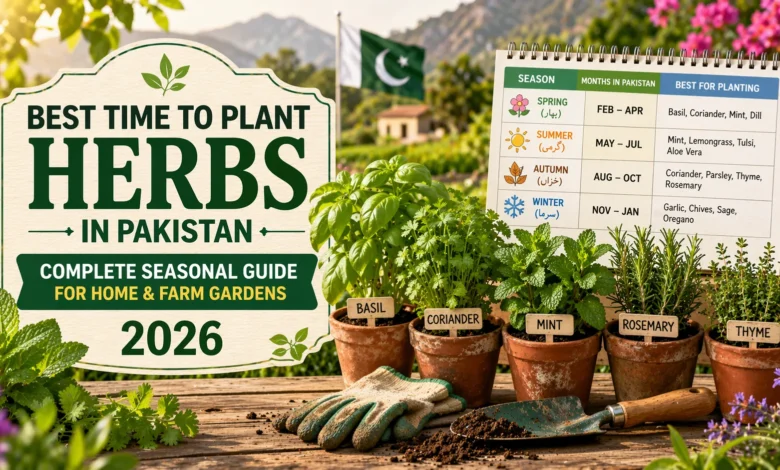
Growing herbs is one of the most rewarding and practical things any gardener or farmer can do. Whether you have a sprawling farm in Punjab, a rooftop garden in Karachi, or a few pots on a Lahore apartment balcony — herbs deliver fresh flavors, medicinal value, and real income potential all year round.
But here is the truth most beginners miss: the single biggest factor in herb gardening success is timing. Plant the right herb at the wrong time and it will struggle, bolt, or die. Plant it at the right time and it practically grows itself.
This complete guide covers the best time to plant herbs — by season, by herb type, by location, and by growing method — so you never waste a seed again.
1. Why Timing Matters When Planting Herbs
Every herb has a preferred temperature range, day length sensitivity, and soil condition requirement. Planting outside these windows leads to:
- Poor or failed germination
- Weak, leggy plants with low essential oil content
- Premature bolting (going to seed too early)
- Vulnerability to pests and disease
- Reduced yield and flavor intensity
On the other hand, planting at the optimal time means faster germination, stronger plants, higher yields, and significantly better flavor and medicinal potency. Herbs grown in their ideal season produce more essential oils — which is exactly what gives them their aroma, taste, and therapeutic value.
💡 Pro Tip: Soil temperature is more important than air temperature for germination. Most herb seeds germinate best when soil temperature is between 18°C and 24°C.
2. Best Season to Plant Herbs — Quick Overview
| Season | Best Herbs to Plant | Avoid |
|---|---|---|
| Spring (Feb–Apr) | Basil, Coriander, Mint, Dill, Parsley, Chives, Fennel | Tropical herbs too early |
| Summer (May–Jul) | Moringa, Tulsi, Lemongrass, Roselle | Cool-season herbs |
| Autumn (Aug–Oct) | Fenugreek, Ajwain, Dill, Parsley, Spinach herb | Heat-loving tropicals |
| Winter (Nov–Jan) | Garlic Chives, Parsley, indoor Mint, indoor Basil | Most outdoor herbs |
3. Best Time to Plant Herbs in Pakistan — Month by Month
Pakistan’s diverse climate — from the cold northern mountains to the hot southern plains — means herb timing varies by region. The following guide is primarily for Punjab and central Pakistan which covers the largest farming population.
| Month | Recommended Herbs | Growing Condition |
|---|---|---|
| January | Parsley (indoors), Chives (indoors) | Cold — indoor sowing only |
| February | Coriander, Dill, Parsley, Chives | Soil warming — ideal for cool herbs |
| March | Basil (indoors), Mint, Fennel, Fenugreek | Best all-round planting month |
| April | Basil (outdoors), Tulsi, Lemongrass | Warm enough for heat-lovers |
| May | Moringa, Tulsi, Roselle | Hot season — tropical herbs only |
| June | Moringa, Lemongrass | Peak heat — limit new sowing |
| July | Moringa, Lemongrass, Roselle | Monsoon — great for tropical herbs |
| August | Coriander, Fenugreek, Dill | Start cool-season herbs again |
| September | Fenugreek, Ajwain, Coriander, Parsley | Excellent cool-season window |
| October | Ajwain, Fenugreek, Garlic Chives | Good planting conditions |
| November | Indoor herbs only | Getting cold |
| December | Indoor Mint, indoor Basil | Cold — indoor sowing only |
🌍 For Karachi and Sindh: Winters are milder — you can grow cool-season herbs like Coriander and Fenugreek from October through February with excellent results.
🏔️ For KPK and Northern Areas: Summers are shorter and cooler — focus on cool-season herbs and plant warm-season herbs only in May and June.
4. Best Time to Plant Herbs Indoors vs Outdoors
One of the most effective strategies for any herb gardener is starting herbs indoors before the outdoor season begins. This gives you a head start of 4 to 8 weeks and protects delicate seedlings from late frosts and extreme heat.
Starting Herbs Indoors
| Herb | Start Indoors | Transplant Outdoors |
|---|---|---|
| Basil | 6–8 weeks before last frost | After all frost risk passes |
| Parsley | 8–10 weeks before last frost | Early spring |
| Coriander | Direct sow outdoors only | Does not transplant well |
| Mint | Anytime indoors | Spring or autumn |
| Tulsi / Holy Basil | 6–8 weeks before warm season | When nights stay above 15°C |
| Lemongrass | 8 weeks before warm season | When temperatures are consistently warm |
Direct Sowing Outdoors
Some herbs strongly prefer direct sowing and do not transplant well due to their taproot structure:
- Coriander (Dhaniya)
- Dill (Soya)
- Fennel (Saunf)
- Fenugreek (Methi)
- Ajwain (Carom)
For these herbs always sow directly in their final growing position and thin seedlings to the recommended spacing.
5. Best Time to Plant Popular Herbs — Individual Guide
Basil (تلسی / Basil)
Best time: March to April (outdoors), January to February (indoors) Basil is a warm-season herb that absolutely cannot tolerate frost. Soil temperature must be at least 18°C for germination. In Pakistan, April is the perfect month for outdoor basil sowing. Related reading: Tulsi / Holy Basil Cultivation in Pakistan
Coriander / Dhaniya (دھنیا)
Best time: February to March and August to September Coriander is a cool-season herb that bolts quickly in heat. It thrives in temperatures between 17°C and 27°C. In Pakistan two excellent windows exist — late winter/early spring and early autumn. Always sow directly — coriander does not transplant well.
| Sowing Window | Expected Harvest |
|---|---|
| February–March | April–May |
| August–September | October–November |
Mint / Pudina (پودینہ)
Best time: February to April (from runners/cuttings) Mint is best propagated from runners or root divisions rather than seed. It spreads aggressively and grows best in partial shade with consistent moisture. Plant in containers to control its spread. Mint is one of the easiest herbs to grow in Pakistan year-round with minimal care.
Fenugreek / Methi (میتھی)
Best time: September to November Fenugreek is a cool-season herb and one of Pakistan’s most important culinary and medicinal plants. It grows best in temperatures between 10°C and 25°C making autumn the perfect planting window. A fast grower — leaves are ready to harvest in as little as 3 to 4 weeks.
Moringa / Sohanjna (سوہانجنا)
Best time: February to March and July to August Moringa is a tropical tree-herb that thrives in Pakistan’s warm climate. It requires soil temperatures above 20°C to germinate reliably. Related reading: Moringa in Urdu – Complete Cultivation Guide
Dill / Soya (سویا)
Best time: February to March and September to October Dill is a fast-growing cool-season herb that bolts in hot weather. It grows best in full sun with well-drained soil. Sow directly every 3 to 4 weeks for a continuous harvest throughout the cool season.
Ajwain / Carom Seeds (اجوائن)
Best time: September to October Ajwain is one of Pakistan’s most medicinally important herbs and thrives in cool dry conditions. It performs best when sown in early autumn and harvested in late winter or early spring.
Lemongrass (لیمن گراس)
Best time: April to June Lemongrass is a tropical grass-herb that needs warm temperatures consistently above 20°C to establish well. In Pakistan it grows excellently in Punjab and Sindh as a perennial, returning year after year with minimal care once established.
Tulsi / Holy Basil (تلسی)
Best time: March to April Tulsi is deeply valued for both culinary and medicinal use across Pakistan. Related reading: Tulsi in Urdu
Garlic / Lehsan (لہسن)
Best time: October to November Garlic is planted as a bulb, not a seed, and requires a period of cold to develop properly. Plant individual cloves in well-prepared beds in late autumn for a summer harvest. Related reading: G1 Garlic Cultivation in Pakistan
6. Best Time to Plant Herbs in Pots
Container herb gardening is perfect for Pakistani urban households with limited outdoor space. Pots on rooftops, balconies, and windowsills can produce an impressive year-round supply of fresh herbs.
| Herb | Pot Size | Best Season | Sun Requirement |
|---|---|---|---|
| Mint | 20–30 cm | Year-round | Partial shade |
| Basil | 20–25 cm | Spring/Summer | Full sun |
| Coriander | 25–30 cm | Autumn/Winter | Full sun |
| Parsley | 20–25 cm | Spring/Autumn | Partial sun |
| Fenugreek | 20–30 cm | Autumn/Winter | Full sun |
| Tulsi | 30–40 cm | Spring/Summer | Full sun |
| Ajwain | 25–30 cm | Autumn/Winter | Full sun |
| Lemongrass | 40–50 cm | Spring/Summer | Full sun |
💡 Key tip for pot herb gardening: Always ensure pots have drainage holes. Root rot from waterlogging kills more potted herbs in Pakistan than any other cause. Related reading: Kitchen Gardening in Pakistan
7. Cool Season vs Warm Season Herbs
Understanding this fundamental distinction is the key to year-round herb gardening success.
Cool Season Herbs (Best planted: Feb–Apr & Aug–Oct)
These herbs thrive in temperatures between 10°C and 22°C and will bolt, turn bitter, or die in summer heat:
| Herb | Ideal Temp | Bolts In |
|---|---|---|
| Coriander | 17–27°C | Above 30°C |
| Dill | 15–25°C | Above 28°C |
| Parsley | 15–22°C | Above 29°C |
| Fenugreek | 10–25°C | Above 30°C |
| Ajwain | 15–25°C | Above 28°C |
| Chives | 13–24°C | Above 27°C |
Warm Season Herbs (Best planted: Mar–Jul)
These herbs need heat to thrive and are damaged or killed by frost:
| Herb | Minimum Temp | Ideal Temp |
|---|---|---|
| Basil | 18°C | 24–30°C |
| Tulsi | 15°C | 25–35°C |
| Moringa | 20°C | 28–38°C |
| Lemongrass | 18°C | 25–35°C |
| Roselle | 18°C | 26–35°C |
8. Common Mistakes to Avoid
Even experienced gardeners make timing mistakes. Here are the most common ones:
Planting basil too early Basil planted when nights are still cold will sit stunned in the soil, turn purple, and become vulnerable to fungal disease. Wait until nights are consistently above 15°C.
Sowing coriander in summer Coriander planted from May through July in Pakistan will bolt within 2 to 3 weeks, going straight to seed without producing useful leaf growth. Always wait for cooler temperatures.
Transplanting tap-rooted herbs Coriander, dill, fennel, and fenugreek all develop long taproots and hate being moved. Always sow these directly in their final position.
Ignoring soil temperature Air temperature and soil temperature are different. On a warm spring day, the air might be 22°C but the soil could still be 10°C — too cold for warm-season herb germination. Use a simple soil thermometer for reliable results.
Overwatering newly planted herbs Newly planted herb seeds need moisture to germinate but waterlogged soil causes rot before roots can establish. Keep soil consistently moist — not wet.
9. Frequently Asked Questions
What is the best month to plant herbs in Pakistan? March is the single best all-round month for herb planting in Pakistan. Soil has warmed sufficiently for most herbs, frost risk is past in most regions, and both cool-season and warm-season herbs can be started.
Can I grow herbs year-round in Pakistan? Yes — by growing cool-season herbs in autumn and winter and warm-season herbs in spring and summer, you can maintain a productive herb garden throughout the entire year.
What herbs grow fastest? Coriander, fenugreek, and dill are the fastest growing herbs in Pakistan, with harvestable leaves available in as little as 3 to 4 weeks from sowing.
Do herbs grow better in pots or in the ground? Both methods work well. Ground planting generally produces larger, more vigorous plants. Pot growing gives you control over soil quality, drainage, and positioning — ideal for rooftop and balcony gardens.
What herbs can I grow indoors in Pakistan? Mint, parsley, basil, and coriander all grow well on sunny indoor windowsills with at least 6 hours of light per day.
Which herbs are most profitable to grow in Pakistan? Moringa, tulsi, lemongrass, ajwain, and fenugreek have strong commercial demand in Pakistan and internationally. Moringa leaf powder and essential oil crops command especially high market prices.
External Resources for Further Reading
- University of Agriculture Faisalabad (UAF) — Pakistan’s leading agricultural university with research on herb cultivation
- FAO Herb & Spice Production Guide — UN Food & Agriculture Organization’s global herb farming resources
- Royal Horticultural Society – Herb Growing Guide — World-class horticultural guidance on herb planting times
- Penn State Extension – Herb Gardening — University-backed practical herb gardening advice
- Gardeners’ World – When to Plant Herbs — Trusted UK gardening authority with detailed herb timing guides
Further Reading on fasalbachao.com
- Moringa / Sohanjna Cultivation in Pakistan
- G1 Garlic Cultivation in Pakistan
- Kitchen Gardening in Pakistan
- Sesame in Urdu – تِل کی کاشت
- Medicinal Plants in Pakistan
- Superfoods in Pakistan