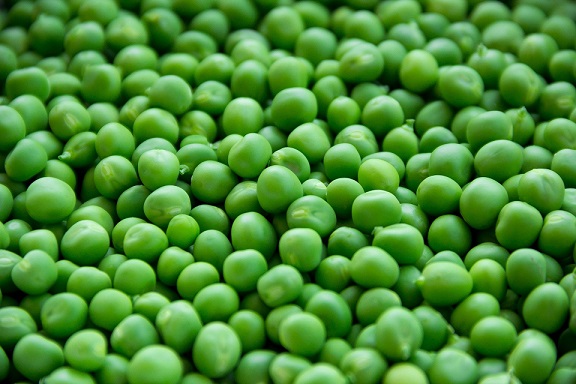
CropsProduction TechnologiesPulses
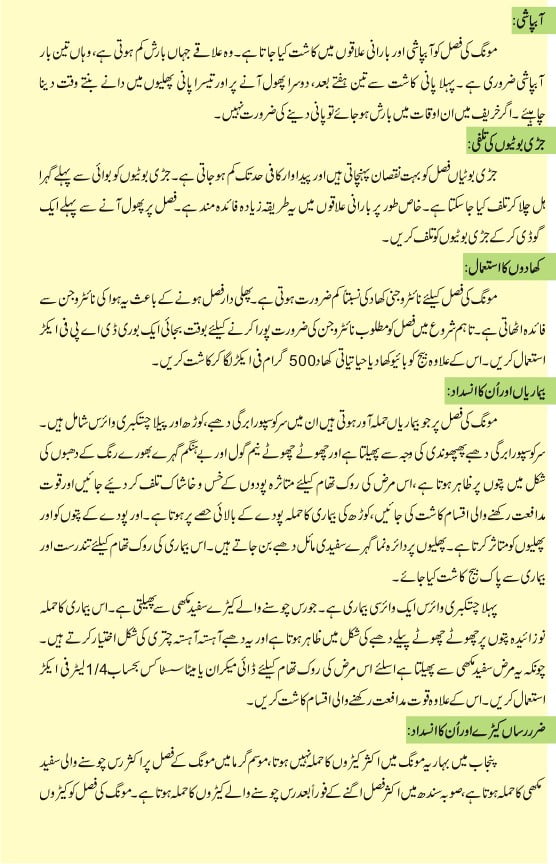
Mung & Mash in Pakistan 2026 / مونگ ماش کی کاشت
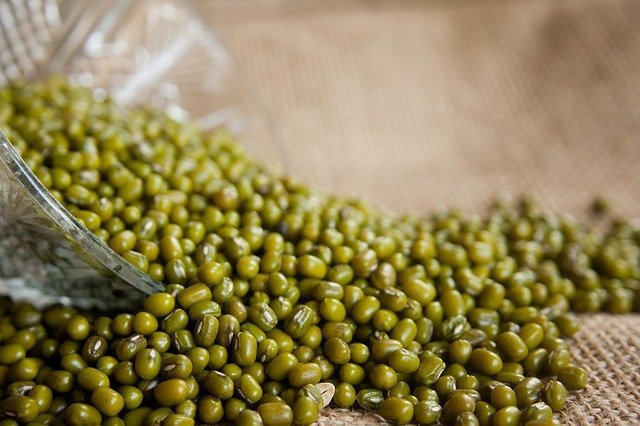
Mung Varieties 2026
| 1. NIAB-PRI MUNG (Punjab, 2023) | 2. NIFA Sikaram-21 (K Pakhtunkhwa, 2021) | 3. Jumbo Mung (13TM 14) (Punjab, 2021) |
| 4. NIFA Spinghar-21 (K Pakhtunkhwa, 2021) | 5. NIAB- Mung- 2021 (Punjab, 2021) | 6. Abbas-Mung (Punjab, 2021) |
| 7. AZARI-Mung 2021 (Punjab, 2021) | 8. NIFA Mung 19 (K Pakhtunkhwa, 2018) | 9. PRI Mung-2018 (Punjab, 2018) |
| 10. NIFA-Mung 2017 (KPK, 2018) | 11. AZARI Mung 2018 (Punjab, 2018) | 12. BahawalpurMung- 2017 (Punjab, 2017) |
| 13. NIAB MUNG 2016 (Punjab, 2016) | 14. Sona Mung (KPK, 2015) | 15. Inqilab Mung (K. Pakhtunkhwa, 2013) |
| 16. NIAB MUNG 2011 (Punjab, 2011) | 17. Dera Mung V-0809 (NWFP, 2008) | 18. NIAB Mung 2006 (Punjab, 2006) |
| 19. Chakwal M 5 (Punjab, 2006) | 20. AZARI Mung 2006 (Punjab, 2006) | 21. Ramzan (NWFP, 2005) |
| 22. Swat Mung 1 (NWFP, 2004) | 23. Karak Mung 1 (NWFP, 2003) |
Mash Varieties 2026
| 1. Potohar Mash (14CM-705) (Punjab, 2023) | 2. Barami Mash (11CM-707) (Punjab, 2019) | 3. Arooj-2011 (Punjab, 2011) |
| 4. Chakwal Mash (Punjab, 2002) | 5. Mash 97 (Punjab, 1997) | 6. Mash 2 (Islamabad, 1993) |
| 7. Mash 3 (Islamabad, 1993) | 8. Mash 88 (Punjab, 1990) |
Production Plan of Mung Mash (Urdu)
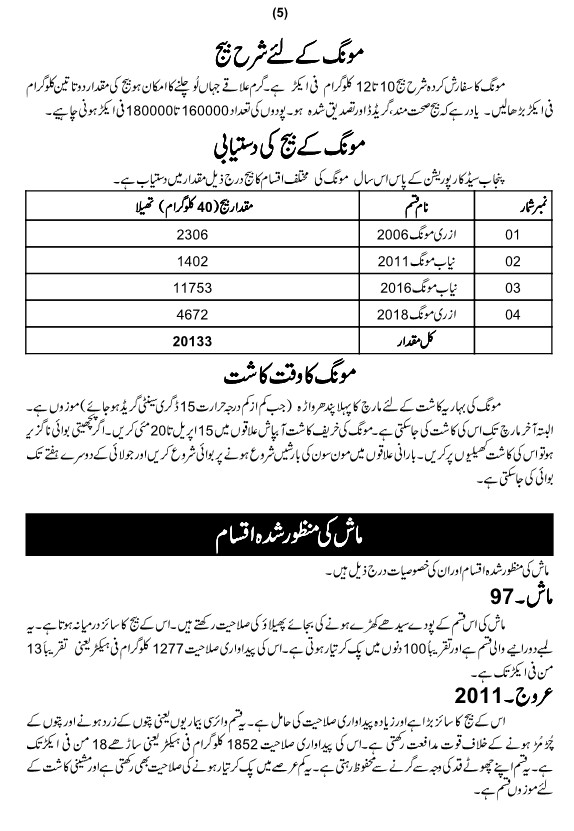
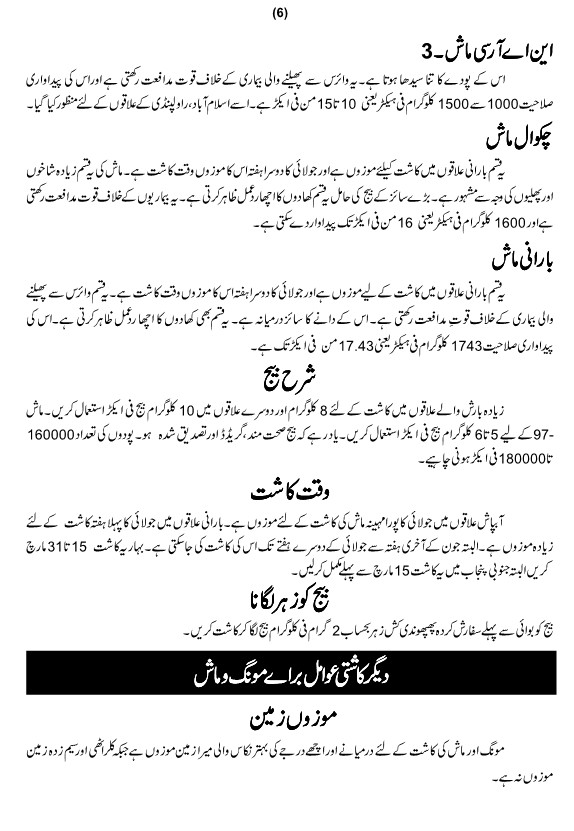
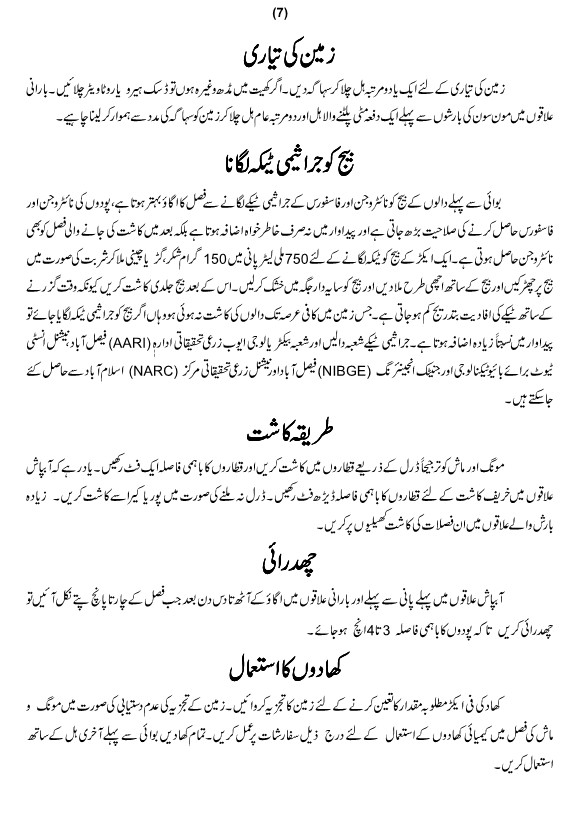
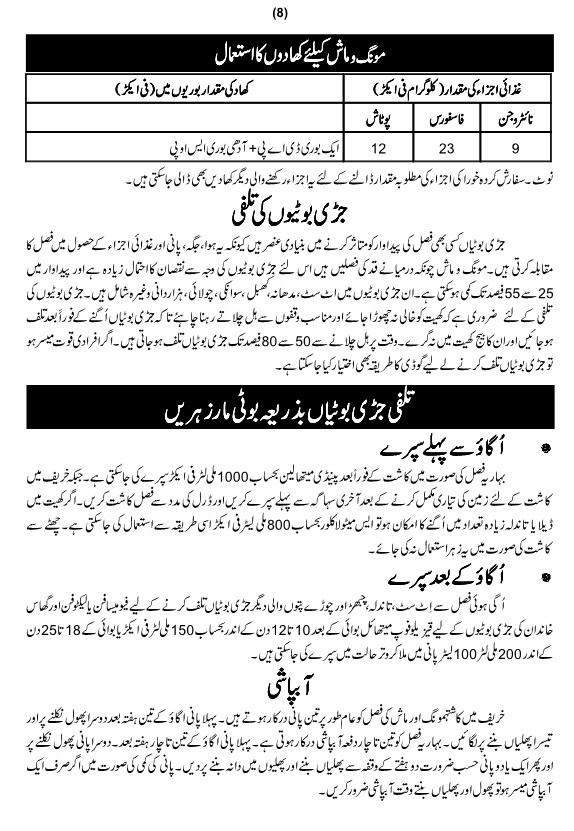
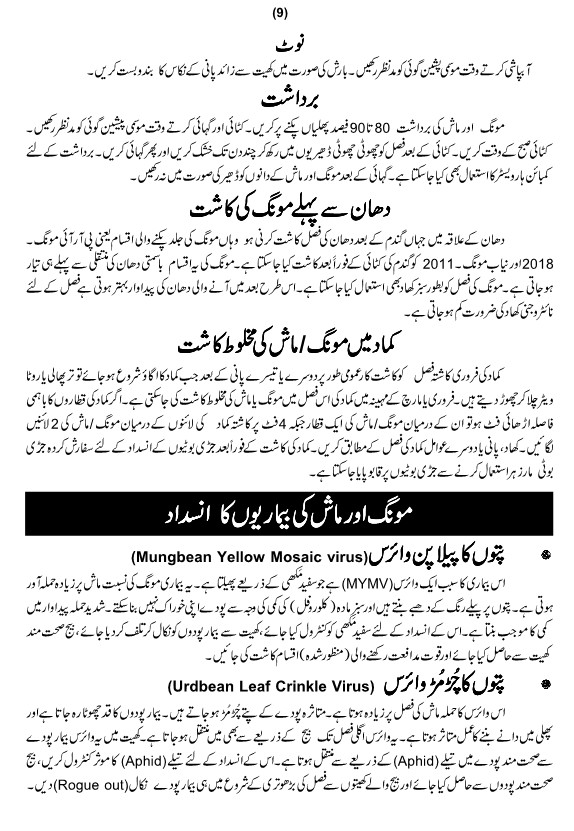
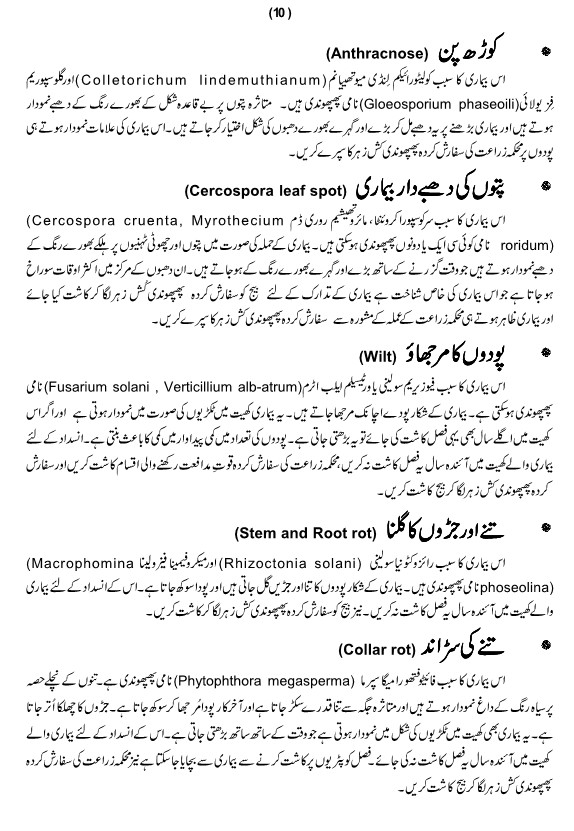
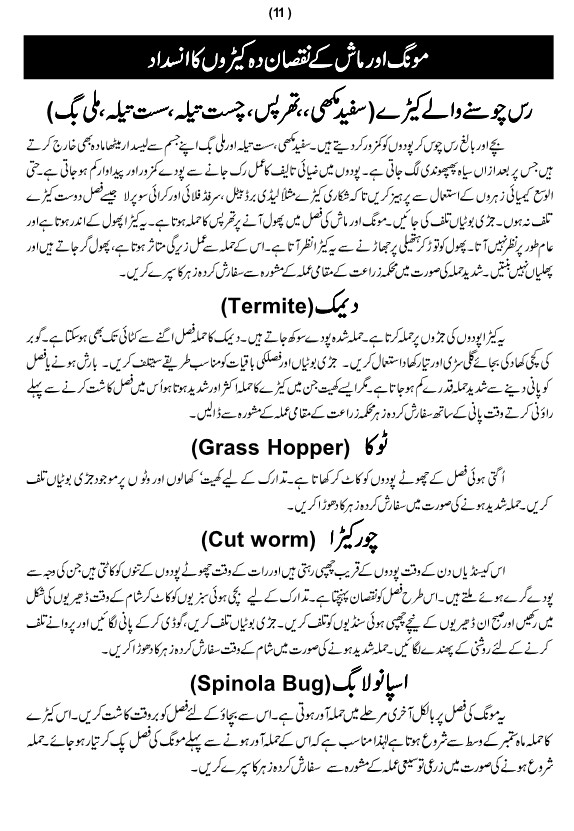

Literature by: Mung & Mash in Pakistan / مونگ ماش کی کاشت, Government of the Punjab, Agriculture Department, Pakistan
Mung Mash Production Technology (English)
Description of Mung Mash Crops
- Annual legume crop
- Protein rich cereal
- Originated from India
- Cultivated in dry and intermediate zones of Punjab
Soil Selection for the Mung Mash Crop
- Best: Sandy Loam Soil
- Sandy and Heavy Loam Soil
- Saline Soil, not fit for cultivation.
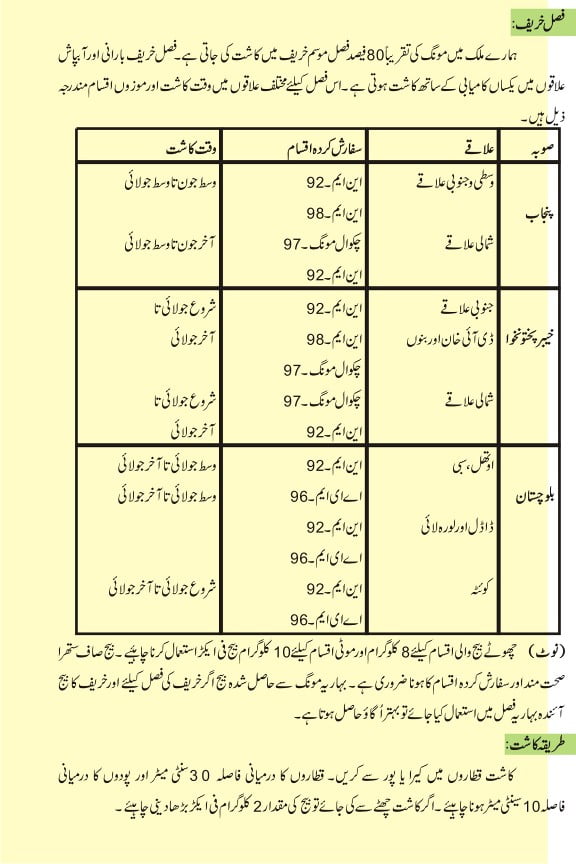
Sowing Time & Climte Required for Mung Mash
- SPRING & SUMMER
- Need: Warm climate 28-35 °C
- Spring Sowing Mung: 15 Feb-15 March
- Spring Sowing Mash: 15 Mar to 31 March
- Summer season Mung; Thall Region: Planting Time 1-15 June
- Irrigated Areas Mung: 15th June – 7th July
- Kharif Sowing Mash: 1st to 31st July
Sowing Method
- Irrigating the field after harvesting wheat
- Land Preparation at “Wattar” Condition (optimum moisture level)
- Drilling of Mung bean in lines @ 10-12 Kg/acre
- Row to row distance is maintained as 1 foot
- Application of Pre-Emergence Weedicide like Pendimethalin
- Mash Seed rate is 8-10 kg per acre
- Mash Plant Population should be 160000 to 180000 plants per acre
- For Mash RxR distance is 1 foot and PxP distance is 10 cm
Weeds Management in Mung Mash
- Losses 10-50 % are observed due to weeds
Hoeing is best method to control - Keep the crop free of weeds
First 6 weeks from seedling emergence are important
Before application of top dressing, weeding should be done
If there are more weeds regular weeding/suitable Post Emergence Weedicide should be practiced in 2 weeks interval - Use Post Emergence weedicides for Broad & Narrow leaves like Conquest, Fomesafen, Percept and Quizalofop
Fertilizer Application
- Basal dressing :
- Apply and incorporate in to the soil before sowing
- DAP 1/ NP1½ / SSP 2 Bags/Acre along with SOP/MOP 1 Bag/Acre
- Top dressing :
- Apply at flowering (about 30 days after sowing)
- Urea 1 Bag/Acre
Irrigation
- Critical Stages:
- Sufficient moisture is essential during
- germination
- flowering
- seed filling stages / pod formation
- Irrigation should be done according to requirement/need
- At Pod Maturing Stage: water supply should be cut down
Harvesting
- Maturity period should coincide with the dry whether condition for high yield and quality seeds
- Harvesting is done when 80-90% of the pods have reached physiological maturity stage/Turn Brown
- Mechanical Harvesting through Combine Harvester
- Finally seeds are winnowed to separate the chaff
- Dried under sun
Post Harvest
- Moisture content of seeds should not be above 13% at storage
- Seeds are mixed with ash or sand to protect from storage pests/
- Fumigate the Seed to protect from storage pests
- Stored in gunny bags and kept in clean, ventilated place
Major Diseases in Mung Mash
- Mung bean yellow mosaic virus
- Powdery mildew
- Bacterial blight
- Anthracnose
- Cercospora leaf spot
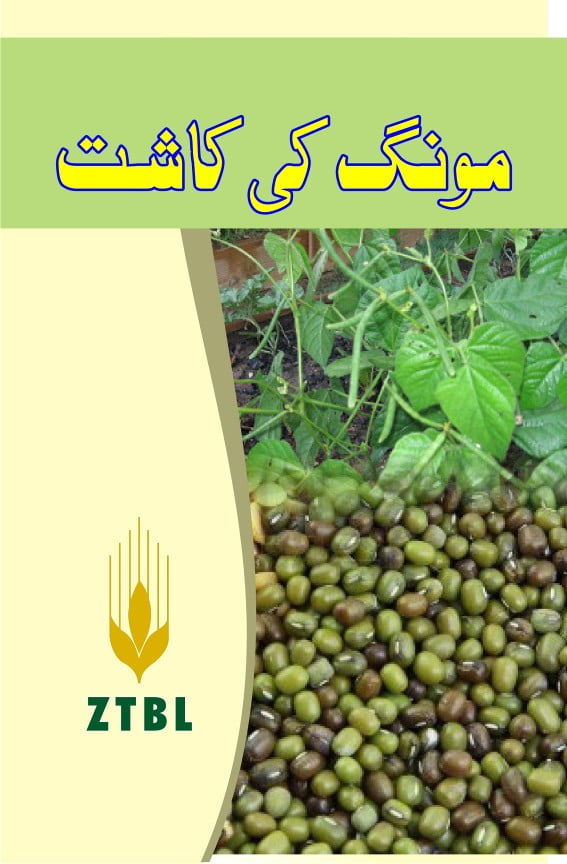
Insects / Pests in Mung Mash
- Aphid
- Termite
- White Fly
- Pod Borer
- Pod borer
- Beetles
- Whitefly
- Foliage beetle – Bean flies
- Aphids – Pod sucking bug



Literature: Mung Mash ki Kasht, ZTBL, Pakistan