How Biopesticides Help Restore Soil Health and Reduce Toxic Residues?


Introduction
There has been a significant shift in pest management in recent years. There is a rise in the use of sustainable solutions that have a minimum environmental impact. Soil is an essential service provider in the ecosystem. It is the reservoir of water and nutrients, and supports the dietary needs of not just the plants but also the organisms present in them. These essential organisms are adversely affected when chemical pesticides are used for pest control. These invertebrates in the soil have a significant role to play as nutrient cyclers in the ecosystem. If there are no soil invertebrates, nutrient flow, air and water movement in the below-ground ecosystem will be disrupted. Impacts of extreme droughts and floods can be reduced if the soil biodiversity is well maintained.
Healthy soil acts like a sponge, during heavy rains it absorbs water and utilises it during the dry times, helping the farmers in extreme weather conditions. Pest control is necessary, but synthetic pesticides are beneficial and hazardous at the same time. Biopesticides are emerging as an environmentally friendly approach, as they help to overcome the harmful effects of chemical pesticides. This article by Pristine Market Insights sheds light on the beneficial aspects of using biopesticides on soil health and how they help to reduce the toxic residues in the soil.
What are Biopesticides?
Biopesticides are a type of pest control product which comes from naturally occurring substances or agents sourced from animals, plants, and some minerals. Their primary purpose is to control the activities or population of agricultural pests while safeguarding the surrounding organisms and humans from any form of damage. They are highly selective when it comes to the pests that they target. Consequently, damage to the surrounding nature and non-target organisms through competition, predation, and parasitism is very limited. Because of this, they have less impact on the environment and pose reduced toxicity.
Classes of Biopesticides:
The US Environmental Protection Agency (US EPA) has classified biopesticides into three major classes:
- Biochemical Pesticides or Plant-based Biopesticides
Methods like interference with physiology, feeding, mating, or endocrine balance are employed to destroy pests with the help of biochemical pesticides. Plant products, hormones, pheromones and other organic substances are used to protect the plants against pests. Neem oil and garlic extracts are common examples. They mimic the naturally occurring chemicals in targets and affect their growth and development.
- Microbial Pesticides
Microbial pesticides consist of living microbes and their metabolites. Microbial pesticides operate by mechanisms such as infecting, where some species of fungi cause fatal diseases by penetrating the insect cuticle. Some other methods are parasitising, where they attack and destroy pathogens, interrupting the life cycle or secreting compounds that are toxic to the pests or pathogens and reduce the pest population.
- Plant Incorporated Protectants (PIPs)
PIPs are compounds expressed in the genetically modified plant cells. This makes the crop pest resistant. Plant-Incorporated Protectants are inserted into the plant through genetic engineering and are also referred to as self-made pesticides. PIP-producing crops are sometimes called “genetically modified” (GM) plants.
Mechanisms of Soil Health Restoration with Biopesticides:
Biopesticides help enhance soil health with numerous interlinked mechanisms. It increases nutrient cycling by transforming the required elements into a form which can be easily consumed by the plant for its uptake. Certain bacteria help in transformations that are vital for a plant’s nutrition. Enzymes and organic acids present in bacteria convert insoluble phosphates into a soluble form, increasing their availability for the crops. Through the support of the soil microbiome, biopesticides enhance the texture of the soil. It enhances the water retention ability of the soil, which makes its texture sponge-like. Mycorrhizal fungi and other populations of beneficial fungi are boosted through the application of biopesticides. They assist in lowering the toxic residual material by substituting chemical pesticides. Some soil microorganisms possess the capability to decompose chemicals with the assistance of enzymes contained within them. Such activity is referred to as bioremediation.
Benefits of Using Biopesticides:
- Environmental Sustainability
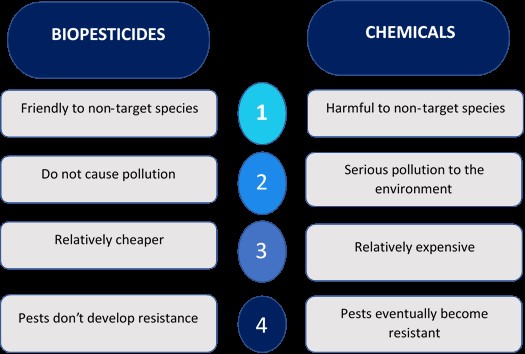
Chemical fertilisers are highly polluting to the environment and cause ecological imbalance. Crops might be affected by the water and soil pollution caused by them. Biopesticides are less pollution-causing and degradable in nature.
- Target Specificity
Numerous chemical pesticides are lethal to beneficial as well as pest insects, whereas biopesticides are target-specific. They contribute to the conservation of beneficial organisms, which strengthen the agroecosystem. Organisms required for natural pest management and pollination are not harmed by biopesticides.
- Enhanced Soil Health
Chemical fertilisers affect the long-term fertility and microflora of the soil. Biopesticides enhance the nutrient cycle of the soil by protecting the useful organisms present in it. Process like nitrogen fixation and phosphate solubilisation, with the assistance of these organisms, enhance the nutrient availability.
- Decreases Health Risks
Growers using biopesticides are exposed to fewer health risks because they are non-toxic compared to users of chemical pesticides. Consumers, too, are at an advantage with lower residue on the foodstuffs.
- Lower Risk of Resistance Development
Chemical fertilisers employ a single mechanism to kill pests. This can cause the development of resistance to the pesticide employed. Biofertilizers employ several different mechanisms to combat pests. Due to this, they cannot inherit resistance against them
- Biopesticides in Integrated Pest Management (IPM)
Biopesticides are an essential part of integrated pest management (IPM) strategies. It aims to reduce the dependency on conventional chemical pesticides, because they offer a sustainable way to control pests. It depends on the prevention and suppression of pests for a longer duration. They create food items with less residual matter, which eventually means there are no health hazards when they are consumed.
Conclusion
The advantages of biopesticides surpass chemical pesticides in every way. The biopesticides market is experiencing a growth trajectory due to growing consumer awareness for safe, chemical-free food. Technological advances combined with research and development have helped propel the commercial pathways of biopesticides. By employing biopesticides, farmers will be able to defend the crops without inflicting any considerable harm on the soil condition.
Author Bio:
Ishita Mehta is a seasoned writer and market research analyst with deep expertise in sustainable agriculture and environmental innovations. Her work focuses on emerging trends such as biopesticides, soil restoration, and eco-friendly farming practices. Ishita’s insights help readers and businesses navigate the evolving landscape of green technologies and make informed, responsible choices for a healthier planet.
Find more informative blogs here at our English Blog