How to Extend the Life of Your Farm Equipment: 15 Proven Strategies Every Farmer Should Follow


Farm machinery or Farm Equipment is the backbone of modern agriculture. Whether you operate a small farm or manage large acreage, your tractors, harvesters, and implements represent a major investment. The good news? With proper care, you can significantly extend their lifespan, reduce downtime, and improve overall productivity. This guide walks you through practical, field-tested strategies to help you extend the life of your farm equipment — while ensuring optimal performance season after season.
Why Farm Equipment Longevity Matters for Farmers
Farm equipment operates in tough environments — dust, mud, heat, moisture, and heavy loads. Without proper maintenance, even the strongest machines will wear down quickly.
Extending equipment life helps you:
- Reduce repair and replacement costs
- Avoid unexpected breakdowns during peak seasons
- Improve fuel efficiency
- Maintain resale value
- Increase operational efficiency
A well-maintained tractor can last 15–20 years or more. Neglect, however, can cut that lifespan in half.
1. Follow a Preventive Maintenance Schedule
Preventive maintenance is the single most important factor in extending machinery life.
Instead of waiting for a breakdown, schedule routine servicing.
Basic Maintenance Schedule Example
| Component | Inspection Frequency | Replacement Interval |
|---|---|---|
| Engine Oil | Every 50 hours | 100–150 hours |
| Air Filter | Weekly (dusty season) | 200 hours |
| Hydraulic Oil | Monthly | 500 hours |
| Fuel Filter | Monthly | 300 hours |
| Coolant | Every 3 months | Annually |
Keeping a maintenance logbook ensures nothing gets missed.
You can even use planning tools from the Agri Tools section on FasalBachao to organize equipment schedules along with crop cycles.
2. Use High-Quality and Reliable Tractor Components
When replacing parts, never compromise on quality. Using reliable tractor parts ensures proper fitting, better durability, and smoother performance.
Low-grade components may save money upfront but can:
- Cause engine strain
- Increase fuel consumption
- Lead to early mechanical failure
- Damage surrounding components
Always match parts to your tractor model and purchase from trusted suppliers. Reliable components reduce long-term costs dramatically.
3. Clean Equipment After Every Use
Dust, mud, and crop residue trap moisture and accelerate corrosion. Cleaning may seem simple, but it’s powerful.
Cleaning Checklist
- Remove soil from tires and undercarriage
- Clear debris around engine vents
- Wash radiators gently
- Dry metal parts to prevent rust
Regular cleaning also helps you spot cracks, leaks, or loose bolts early.
4. Lubricate Moving Parts Regularly
Friction is the silent killer of farm machinery.
Greasing moving joints, bearings, and pivots reduces wear and prevents overheating.
Lubrication Points to Monitor
- Axle joints
- Steering linkages
- PTO shafts
- Hitch components
- Loader arms
A simple weekly greasing routine can add years to equipment life.
5. Monitor Tire Health
Tires are often ignored — yet they directly affect fuel efficiency and machine stability.
Tire Maintenance Table
| Issue | Cause | Solution |
|---|---|---|
| Uneven Wear | Improper inflation | Maintain correct PSI |
| Sidewall Cracks | Sun exposure | Store under shade |
| Low Traction | Worn tread | Replace tires |
| High Fuel Use | Under-inflation | Regular pressure checks |
Maintaining proper tire pressure improves traction and reduces engine load.
6. Store Farm Equipment Properly During Off-Season
Environmental exposure damages machinery faster than usage itself.
Best Storage Practices
- Keep equipment under a shed
- Use weather-resistant covers
- Disconnect batteries during long storage
- Drain fuel if storing for extended periods
- Elevate machinery slightly to protect tires
7. Train Equipment Operators Properly
Operator behavior significantly impacts machinery life.
Poor habits include:
- Overloading tractors
- Sudden braking or acceleration
- Ignoring warning lights
- Operating at excessive RPM
A trained operator listens to the machine and responds early to unusual sounds or vibrations.
8. Inspect Hydraulic Systems Frequently
Hydraulic systems power many farm implements. Leaks or dirty hydraulic oil can cause major failures.
Hydraulic Care Tips
- Check for hose cracks
- Inspect seals
- Replace fluid as recommended
- Keep hydraulic filters clean
Using reliable tractor parts for hydraulic replacements ensures consistent pressure and smooth operation.
9. Monitor Engine Cooling System
Overheating is one of the top causes of tractor engine failure.
Cooling System Maintenance
- Clean radiator fins
- Maintain coolant levels
- Replace damaged hoses
- Inspect water pump
A healthy cooling system prevents expensive engine repairs.
10. Keep Electrical Systems in Check
Electrical faults can stop equipment completely.
Electrical Maintenance Checklist
- Inspect battery terminals
- Check wiring for rodent damage
- Replace worn connectors
- Test alternator output
Store batteries in dry areas when not in use.
11. Keep Detailed Maintenance Records
Documentation prevents missed servicing.
Maintain a logbook that includes:
- Date of service
- Parts replaced
- Hours of operation
- Oil and fluid changes
- Repairs performed
Why This Matters:
- Helps predict future servicing
- Improves resale value
- Identifies recurring issues early
Farmers who maintain records extend machinery life by spotting patterns before breakdowns happen.
12. Avoid Overloading Equipment
Overloading is one of the fastest ways to destroy tractors and implements.
Common Overload Mistakes:
- Pulling heavier trailers than recommended
- Using wrong gear ratios
- Carrying excessive front-loader weight
- Operating continuously at maximum RPM
Overloading increases:
- Engine strain
- Fuel consumption
- Transmission damage
- Tire wear
Always follow manufacturer load limits.
13. Warm Up and Cool Down Engines Properly
Cold starts and sudden shutdowns damage engines over time.
Best Practice:
- Let engine idle 3–5 minutes before heavy use
- Allow cooldown before switching off
- Avoid immediate high RPM after starting
This protects internal engine components and reduces long-term wear.
14. Replace Worn Belts and Seals Early
Small rubber components cause big problems when ignored.
Inspect:
- Drive belts
- Fan belts
- Hydraulic seals
- O-rings
Early replacement prevents:
- Overheating
- Oil leaks
- Hydraulic pressure loss
Using reliable tractor parts for these replacements ensures longer durability.
15. Conduct Annual Professional Inspection
Even if everything seems fine, schedule a yearly professional check-up.
Technicians can:
- Diagnose hidden engine issues
- Test compression levels
- Identify electrical faults
- Inspect internal hydraulic performance
Preventive diagnostics cost far less than major engine repairs.
Check out Why Electric Tractors Are Becoming the Next Big Shift in Agriculture
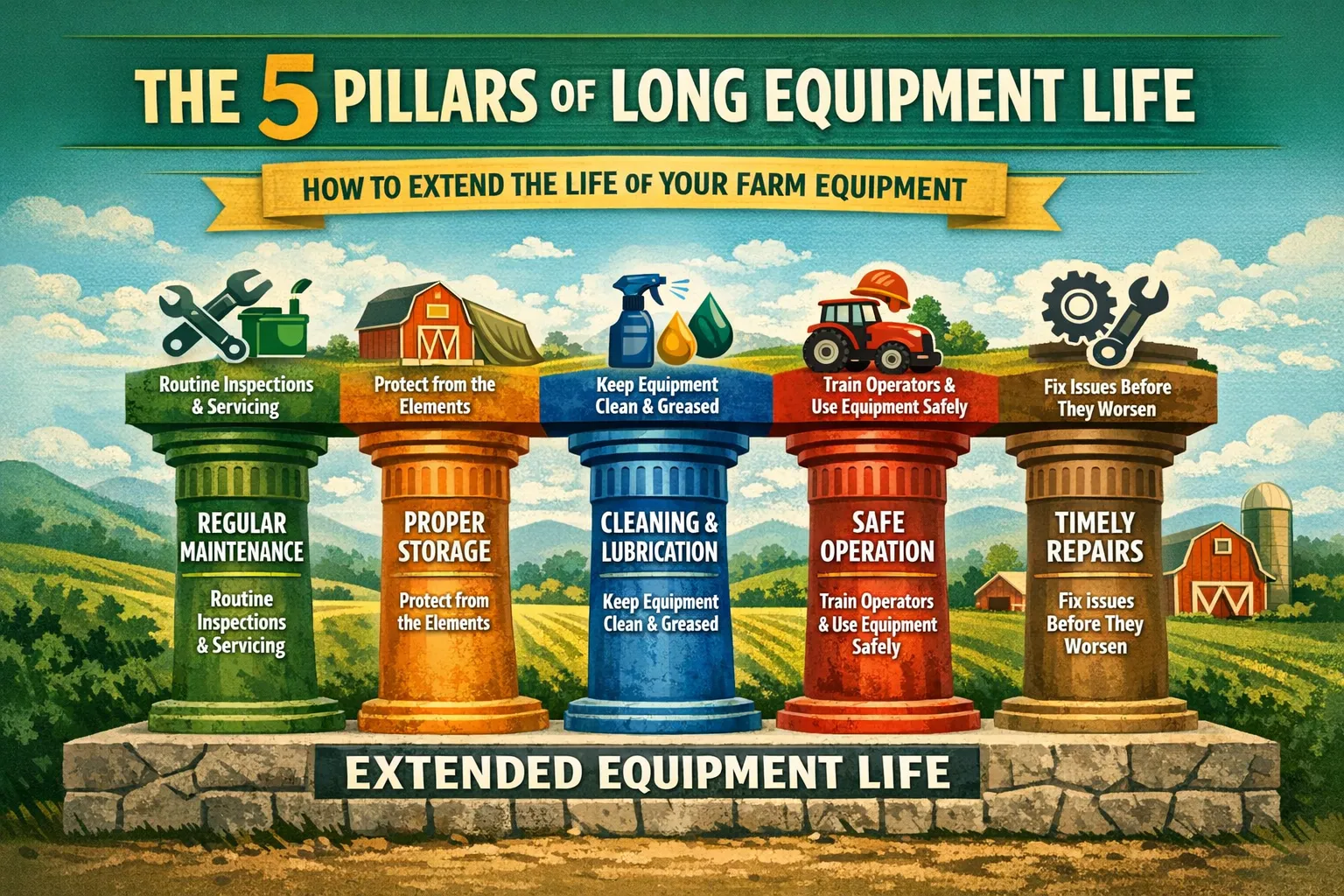
The 5 Pillars of Long Equipment Life
Core Maintenance Pillars
- Preventive Maintenance
- Proper Storage
- Operator Training
- Quality Replacement Parts
- Regular Inspection
If even one pillar is ignored, equipment lifespan shortens significantly.
Cost Comparison: Maintenance vs Neglect
| Scenario | Annual Maintenance Cost | Breakdown Repair Cost | Equipment Lifespan |
|---|---|---|---|
| Regular Care | Low to Moderate | Rare | 15–20 Years |
| Neglected | Minimal | Very High | 7–10 Years |
Preventive care always wins financially.
Seasonal Maintenance Strategy
Before Planting Season
- Full inspection
- Oil and filter changes
- Tire pressure check
Mid-Season
- Greasing routine
- Hydraulic checks
- Cooling inspection
Post-Harvest
- Deep cleaning
- Replace worn parts
- Store properly
Planning maintenance alongside crop cycles improves efficiency.
Common Mistakes That Shorten Equipment Life
- Ignoring small leaks
- Delaying oil changes
- Using cheap replacement components
- Skipping storage protection
- Running engines at high idle unnecessarily
Avoiding these simple mistakes can double machinery lifespan.
Conclusion: Protect Your Farm Investment
Farm equipment is not just machinery — it’s the engine of your productivity. By implementing preventive maintenance, cleaning regularly, monitoring systems, and using reliable tractor parts, you safeguard both your equipment and your income.
At FasalBachao.com, we encourage farmers to adopt smarter equipment management practices alongside improved crop strategies. When your machines run efficiently, your entire farming operation thrives.
Start today. A little attention now saves a fortune later.