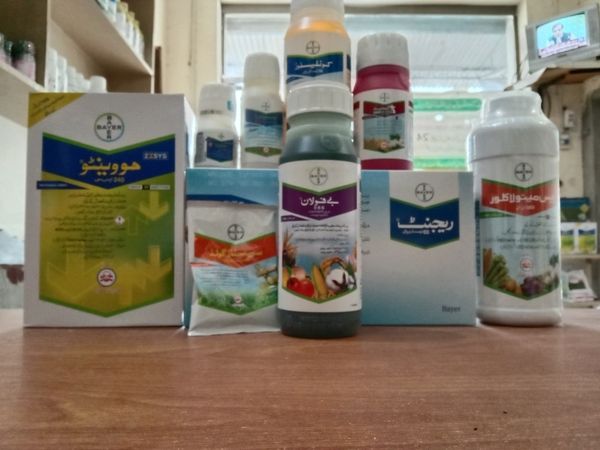
Seed Borne Diseases & their Control

What are seed borne diseases and how do you manage them?
Seed borne diseases are diseases whose pathogens travel on or inside seed — among them loose smut of wheat, rice bakanae and purple blotch of onion — and they are managed by starting with tested, healthy seed and matching the treatment to where the pathogen sits in the seed: on its surface, in its tissues, or in the embryo itself.
The seed looks like the safest part of the crop, yet infected seed is often where an outbreak begins. When an infected seed germinates, the pathogen it carries becomes primary inoculum — the first source of infection for the new plant and, later, for the whole field. Seed borne fungi damage the lot before the crop even emerges, causing seed discolouration, seed rot, poor germination and weak seedlings. Because the fungal hyphae can sit established and dormant inside the seed, these diseases are harder to manage than infections that arrive later by wind or rain. That is why seed borne diseases and their management are decided before sowing, not after symptoms appear in the field.
How seed borne pathogens travel: on the seed or inside it
Seed borne pathogens travel in two ways: stuck to the outside of the seed as surface contamination, or hidden inside the seed’s own tissues — in the outer layers, the endosperm, or even the embryo.
The distinction decides the treatment. Surface contamination can be removed by disinfestation, a treatment that cleans the outside of the seed. Pathogens that have penetrated into internal tissues need disinfection, a treatment that reaches inside the seed, because a dressing that only coats the surface cannot touch an infection sealed within.
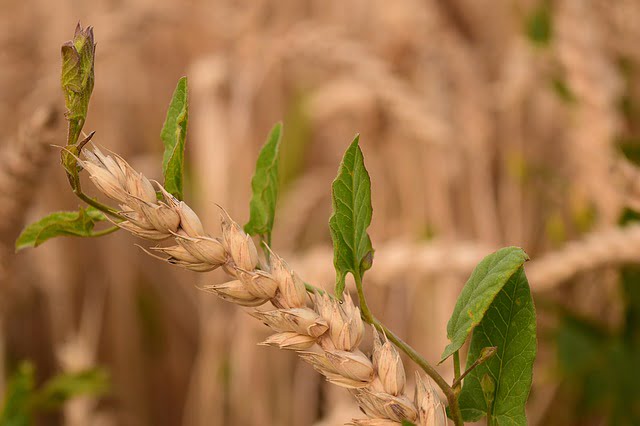
Loose smut of wheat shows the extreme case. Windblown spores infect the flowers of developing wheat heads and the fungus invades the seed’s embryo, so it survives inside the seed until the next sowing season. It then grows with the seedling as a hidden systemic infection, staying invisible until the ears emerge blackened. Surface-only protective fungicides are ineffective against loose smut for exactly this reason.
The major seed borne diseases, and the pathogen behind each one
The major seed borne diseases in the list this article updates are nine distinct diseases once bakanae and foot rot are counted as one, and each is caused by a named pathogen on a specific host, as the table below shows.
| Disease | Pathogen | Main host(s) | Where the pathogen sits in or on the seed |
|---|---|---|---|
| Alternaria blight (carrot blight) | Alternaria dauci | Carrot | On and in the seed |
| Purple blotch | Alternaria porri | Onion | Seed-borne; also survives in and on infested crop debris |
| Alternaria leaf spot | Alternaria species, named by host (A. dauci, A. porri) | Vegetables, including carrot and onion | On and in the seed |
| Cercospora leaf spot (light leaf spot, frog-eye) | Cercospora brassicicola | Turnip, cauliflower, Chinese cabbage, mustard | In seed, crop trash and volunteer plants |
| Node blast | Rice blast fungus (a symptom form of rice blast) | Rice | On and in infected seed |
| Brown spot | Bipolaris oryzae | Rice | On the seed |
| Bakanae (foot rot) | Gibberella fujikuroi (asexual state Fusarium moniliforme) | Rice | On and in infected seed |
| Glume blotch | Parastagonospora nodorum (formerly Septoria nodorum) | Wheat and other cereals | On and in the seed |
| Loose smut | Ustilago tritici | Wheat | Inside the seed, in the embryo |
One item in the original list, “Alternaria leaf spot”, named no host and no species. Alternaria diseases are host-specific — Alternaria dauci blights carrot, while Alternaria porri causes purple blotch of onion — so that item is covered by the named Alternaria rows above instead of being repeated as a vague entry. Several diseases in the table attack vegetables in the field as well as in the seed, and their wider management is covered in our guide to vegetable diseases and their management.
Bakanae and foot rot: why they share one entry in this list
Bakanae and foot rot are two names for the same rice disease, caused by the fungus Gibberella fujikuroi, so the original list counted one disease twice.
The fungus’s asexual state is Fusarium moniliforme, and rice literature uses the names together: a University of Ghana study of seed-borne rice fungi selected its sites as hotspots for bakanae, foot rot and blast, treating them as related seed problems of the same crop. Listing bakanae and foot rot as separate diseases would double-count the rice entries and send readers looking for two different controls where only one exists.
The disease itself is distinctive. Infected seedlings grow yellow, thin and abnormally tall, with elongated internodes and fewer tillers. The fungus is seed- and soil-borne, spreads over long distances on and in infected seed, and can stay viable in seed for about one to two years, and about one year in soil. IRRI records seed-borne infection levels of up to 25%, and crop losses of up to 20% in outbreaks in South and Southeast Asia.
Preventing seed borne diseases before sowing
Seed borne diseases are prevented before sowing by planting tested, certified seed, storing it cool and dry, and backing the seed up with rotation, sanitation and resistant varieties.
Accurate identification of the problem is the first step, because management follows the pathogen, not the symptom. Good-quality seed shows itself in test weight, a high germination percentage and an absence of kernel discolouration, all of which predict better emergence and stands. Ohio State University advises buying thoroughly cleaned seed with germination of 90% or better, avoiding wheat seed with more than 30–40% scabby kernels, and storing seed under cool, dry conditions so mould cannot develop before planting.
Seed health testing checks what the eye cannot see. Laboratories work to ISTA-standard methods, combining direct tests with indirect ones such as ELISA and PCR, under a certification system recognised in international trade. In the field, the same prevention logic continues: rotate with non-host crops — three years or longer away from onion hosts for purple blotch, a two to three year break between brassica crops for Cercospora leaf spot — remove culls, crop debris and volunteer plants, and choose resistant or less susceptible varieties where they exist.
Hot water seed treatment: how it works and the temperatures used
Hot water seed treatment works by holding seed at a controlled temperature that kills pathogens on the seed’s outside and inside its tissues — places that surface chemical and chlorine treatments cannot both reach.
In the University of Connecticut protocol, seed is pre-warmed at 100 °F, then treated at 118–125 °F for 15 to 30 minutes depending on the crop, and air-dried immediately. Published schedules vary by crop — 50 °C for 25 minutes for cabbage family crops and tomato — and for carrot they conflict: 50 °C and 47.7 °C, both for 20 minutes. Treat carrot within that 47.7–50 °C range and control the temperature exactly: the margin between killing the pathogen and damaging germination is narrow.
The OISAT procedure, in order:
- Put seed in a loose cotton bag so water circulates through it.
- Submerge the bag fully, suspended clear of the pot bottom.
- Keep the water at target temperature, stirring for uniform heat.
- Plunge the bag into cold water to stop the heating.
- Spread the seed to cool and dry, then sow rather than store it.
The limits matter too. Treat only seed you will sow within a year — treated seed does not stay viable as long; never treat the same seed twice; and the bath washes off any fungicide or insecticide coating. The method is not recommended for large-seeded crops such as beans, peas, cucurbits and corn, where the heat can kill the outer seed tissue. Treated seed still needs rotation, sanitation and scouting afterwards: hot water gives a clean start, not season-long protection.
When do biological seed treatments help — and when do they not?
Biological seed treatments help against pathogens living on the seed surface, where the biocontrol organism can colonise the seed and suppress them, but they do not reliably reach pathogens hidden inside the seed.
Commercial cereal products such as Cerall and Cedomon use soil bacteria of the genus Pseudomonas that colonise the seed surface and can suppress certain fungal pathogens. That surface action is why biological and physical treatments work well against surface diseases such as common bunt, and why they cannot be relied on against loose smut, whose fungus is protected within the embryo. Universities publish working rates for the common agents: Tamil Nadu Agricultural University lists Trichoderma species at 4–6 g per kg of seed, Trichoderma at 5–10 g per kg for rice seed, Pseudomonas fluorescens at 10 g per kg for rice, and Trichoderma viride at 4 g per kg for wheat. These are published university examples to adapt to the local product label, not universal prescriptions. How the agent itself works is covered in our guide to how Trichoderma harzianum works as a biocontrol fungus.
The limits are real: for purple blotch of onion, biological control strategies have not been developed at all, so a grower facing that disease still depends on clean seed, rotation and the other methods set out in this article.
Chemical seed treatments that control seed borne diseases
Chemical seed treatments control seed borne diseases by killing fungi on the seed surface or — with systemic products — inside the seed, and they also protect young seedlings against soil-resident pathogens.
Montana State University groups the targets into three: smuts and bunts, seed and seedling diseases, and root rots, noting that root rots respond least consistently to seed treatment alone. Because the loose smut fungus lives inside the seed, a systemic fungicide is the chemical answer where clean seed is uncertain; difenoconazole is effective against loose smut of wheat but not loose smut of barley. Ohio State advises treating all wheat seed against diseases such as loose smut, common bunt, Fusarium scab and Stagonospora glume blotch, with a mixture of active ingredients, since no single one protects against all of them. In practice that means choosing products by mode of action — contact or systemic — and matching them to where the target pathogen sits, rather than relying on one dressing for every seed lot.
For bakanae, seed is treated with thiram, or thiram combined with thiophanate-methyl, to eradicate spores on the seed surface; azole and strobilurin groups are also effective. For Cercospora leaf spot of brassicas, seed treatment with captan, thiram or mancozeb is the published recommendation. Two limits apply to every chemical option: protection is strongest in the first two to three weeks after planting, and the label governs use — wear protective clothing and follow it for dosage, timing and pre-harvest interval.
Set side by side, the methods divide by where the pathogen sits:
| Control method | Best against | Example from the sources | Key limit |
|---|---|---|---|
| Clean, certified seed and seed health testing | All seed borne pathogens (prevention) | ISTA blotter and agar testing; quality seed at 90% germination or better (Ohio State) | Infected seed often shows no symptoms, so lots must be tested, not just inspected |
| Cultural practices (rotation, sanitation, resistant varieties) | Pathogens surviving in seed, debris and volunteers | Three-year or longer rotation for purple blotch; certified seed with a 2–3 year brassica break for Cercospora leaf spot | Slow to work, and it does not clean a seed lot that is already infected |
| Hot water treatment | Pathogens on the seed and inside the seed tissues | Pre-warm at 100 °F, then 118–125 °F for 15–30 minutes (University of Connecticut) | Narrow temperature margin; shortens seed storage life; not recommended for large-seeded crops |
| Biological seed treatment | Mainly pathogens on the seed surface | Trichoderma species at 4–6 g per kg of seed (TNAU examples); Pseudomonas-based cereal products | Weak against embryo-borne loose smut; no biocontrol developed for purple blotch |
| Contact fungicide seed treatment | Pathogens on the seed surface | Thiram on rice seed against bakanae; captan, thiram or mancozeb against Cercospora leaf spot | Cannot penetrate the seed coat to reach infections inside the seed |
| Systemic fungicide seed treatment | Pathogens inside the seed, including loose smut | Difenoconazole against loose smut of wheat (Montana State) | No seed treatment controls seed-borne viruses; protection is strongest for only 2–3 weeks |
Recommendations for seed treatments by crop are set out in the table below.
| No. | Crop | Pathogen(s) | Recommended fungicides |
|---|---|---|---|
| 1 | Pea | Wilt/blight (Fusarium solani, Fusarium moniliforme, Phoma sp.); Blight (Ascochyta pisi, A. pinodella) | Carbendazim or Topsin-M @ 2.0 g/kg of seed; Pre cure cumbi* or Topsin-M @ 2.0 g/kg of seed and field spray* |
| 2 | Indian gourd | Stem rot (Macrophomina phaseolina) | Carbendazim or Topsin-M @ 2.0 g/kg of seed |
| 3 | Ash gourd | Wilt (Fusarium solani) | Carbendazim or Topsin-M @ 2.0 g/kg of seed |
| 4 | Red gourd | Leaf spot (Myrothecium roridum) | Mancozeb @ 2.5 g/kg of seed or Score @.1.0cc/lkg of seed* |
| 5 | Sponge gourd | Leaf spot (Colletotrichum dematium) | Nativo @ 1.0 g/kg of seed |
| 6 | Longmelon | Leaf spot (Myrothecium roridum) | Mancozeb @ 2.5 g/kg of seed or Score @.1.0cc/lkg of seed* |
| 7 | Spinach | Leaf spot (Stemphylium botryosum); Wilt/seedling blight (Verticillium sp., Fusarium solani); Leaf spot (Cercospora sp.) | Tebuconazole or Halonil 75 WP @ 2.5 g/kg of seed; Carbendazim or Topsin-M @ 2.0 g/kg of seed; Score @ 1.0 cc/kg of seed or Tebuconazole @ 2.0 cc/kg of seed |
| 8 | Fenugreek | Wilt/seedling blight (Fusarium solani, Fusarium moniliforme, Verticillium sp.); Leaf spot (Stemphylium botryosum) | Carbendazim or Topsin-M @ 2.0 g/kg of seed; Topsin-M @ 2.5 g/kg of seed |
| 9 | Cauliflower | Head rot (Fusarium solani); Leaf spot (Alternaria brassicae, A. brassicicola) | Carbendazim or Topsin-M @ 2.0 g/kg of seed; Nativo @ 1.0 g/kg of seed or Score @ 1.0 cc/kg of seed |
| 10 | Onion | Leaf spot (Myrothecium roridum, Stemphylium botryosum); Purple blotch (Alternaria porri) | Mancozeb @ 2.5 g/kg of seed or Score @.1.0cc/lkg of seed* |
| 11 | Garlic | Leaf spot (Stemphylium botryosum); Wilt/seedling blight (Fusarium oxysporum) | Tebuconazole or Halonil 75 WP @ 2.5 g/kg of seed; Carbendazim or Topsin-M @ 2.0 g/kg of seed |
| 12 | Turnip | Wilt (Fusarium solani); Leaf spot (Alternaria brassicae, A. brassicicola) | Carbendazim or Topsin-M @ 2.0 g/kg of seed; Dithane M-45 or Captan @ 2.5 g/kg of seed |
| 13 | Radish | Leaf spot (Alternaria brassicae, A. brassicicola) | Nativo @ 1.0 g/kg of seed or Score @ 1.0 cc/kg of seed |
| 14 | Carrot | Leaf spot/head blight (Alternaria radicina, Alternaria dauci) | Tebuconazole @ 2.cc/kg of seed* or Score @ 1.0 cc/kg of seed |
| 15 | Lettuce | Wilt (Fusarium moniliforme) | Carbendazim or Topsin-M @ 2.0 g/kg of seed |
| 16 | Bitter gourd | Leaf spot (Myrothecium roridum) | Topsin-M @ 2.5 g/kg of seed |
| 17 | Tinda gourd | Wilt (Fusarium moniliforme); Charcoal rot (Macrophomina phaseolina) | Carbendazim or Topsin-M @ 2.0 g/kg of seed |
* As printed in the source table — verify against the current product label before use.
FAQ — Can seed treatment control every seed borne disease?
No — seed treatment cannot control every seed borne disease: most fungicidal and insecticidal seed treatments do not control bacterial pathogens, and none of them controls seed-borne viruses. Even against fungi, the protection is temporary, strongest in the first two to three weeks after planting for seed and seedling diseases, and a treatment aimed at the seed surface cannot reach an embryo-borne infection such as loose smut. Seed treatment works as one layer in an integrated programme alongside certified seed, resistant varieties, rotation and sanitation, not as a complete answer on its own.
FAQ — What is the difference between seed borne and soil borne diseases?
A seed borne disease travels with the seed itself, on its surface or inside its tissues, while a soil borne disease is picked up from pathogens that survive in the soil. Some pathogens are both at once — the bakanae fungus, for example, is seed- and soil-borne — which is why the two groups are often managed together. The practical difference is where control starts: seed borne infection is stopped before sowing, by testing, treating or replacing the seed lot, while soil borne infection is managed in the field through rotation, residue management and resistant varieties — the underground side of the same problem is covered in our guide to soil borne pest management.
FAQ — How can you tell if a seed lot is infected?
You often cannot tell by looking: infested seed is frequently symptomless, and pathogen levels inside a lot can be very low and unevenly distributed. Laboratories test seed health with ISTA-standard methods — in the blotter test, seeds are surface-sterilised, for example with 2% sodium hypochlorite, then incubated for seven to eight days at 25 ± 2 °C so that fungi grow out and can be identified; agar tests, ELISA, PCR and high-throughput sequencing are also used. At farm level, discoloured kernels, shrivelled seed and a poor germination result are warning signs that a lot should be tested or replaced.
FAQ — Is hot water treatment safe for all seeds?
No — hot water treatment is not safe for all seeds: it is not recommended for large-seeded crops such as beans, peas, cucurbits and corn, because the temperature required can kill the outer seed tissue and prevent germination. It is also the wrong choice for seed you plan to store, since treated seed should be sown within a year, for seed that has already been treated once, and for fungicide-coated seed, whose coating the bath washes off. For suitable crops, the method is safe only when the temperature is held exactly at that crop’s published schedule.
FAQ — Why is loose smut of wheat so hard to control with ordinary seed dressing?
Loose smut of wheat is hard to control with ordinary seed dressing because the fungus lives inside the seed, in the embryo, where a surface dressing cannot reach it. The infection begins a season earlier, when windblown spores enter the flowers of developing wheat heads; the fungus then waits inside the seed and grows systemically with the seedling, revealing itself only when the ears emerge. Surface-only protective fungicides are ineffective against loose smuts, and biological and physical treatments are weak against this disease as well. The reliable answers are certified clean seed or an appropriate systemic fungicide seed treatment.