Why Electric Tractors Are Becoming the Next Big Shift in Agriculture

Farming is changing fast with technology as a catalyst, sustainability abroad the pressure’s, and farms looking for practices that are more efficient. Of the new technologies that could transform farming, few are more promising than the electric tractor. Once a futuristic concept, electric tractors are increasingly playing a role in mainstream agriculture as concerns over climate change continue to pull at the agricultural sector and battery technology improves to allow for expanded use of machinery that is cleaner than fossil fuel-consuming machines.
This transition isn’t only about new machines, though: It’s part of a larger trend toward cleaner, smarter and more cost-effective farming. Farmers say electric tractors are becoming more attractive because they can cut long-term costs and boost productivity. Ranging from lower running costs and less noisy to offset canopied roof and eco-friendly performance, these machines are defining the future of farming.
Increasing Demand for Sustainable Farming Solutions
The agriculture sector is an important driver of carbon emissions on account of the diesel-run machineries, soil erosion and conventional methods of cultivating crops. Policy makers and environmental groups are constantly pressuring farmers to adopt more sustainable practices.
Why Electric tractors are a direct tool in facilitating this transition is because its:
- Eliminating exhaust emissions
- Reducing dependence on fossil fuels
- Aiding in long-term sustainable soils and environment health
As public awareness continues to grow around the way our food is produced, farming systems that place sustainability front and centre are moving into the spotlight. Electric tractors enable farmers to cater to such market demands while future betting on current or upcoming emissions regulations.
What Makes Electric Tractors Different?
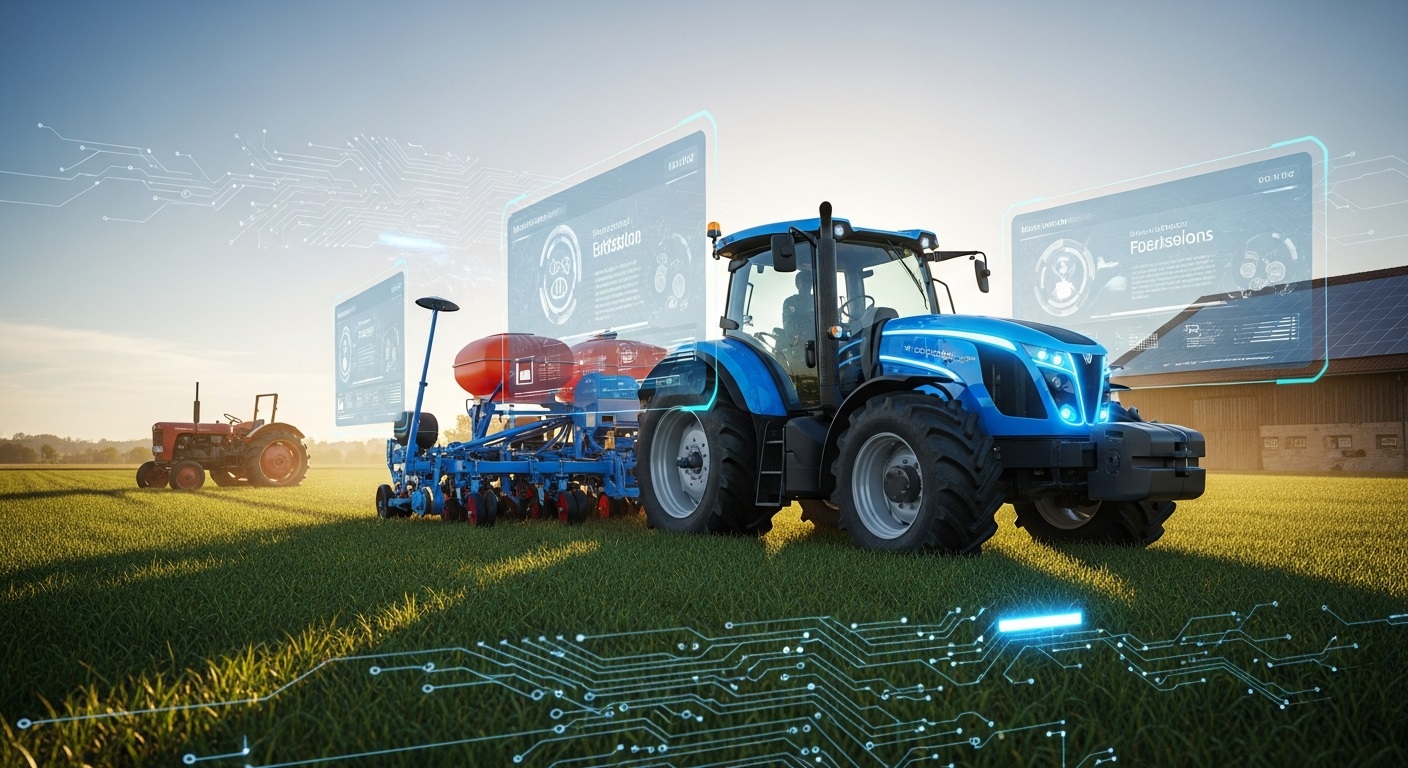
Electric tractors run on rechargeable battery packs, not diesel engines. This crucial difference brings several operational benefits:
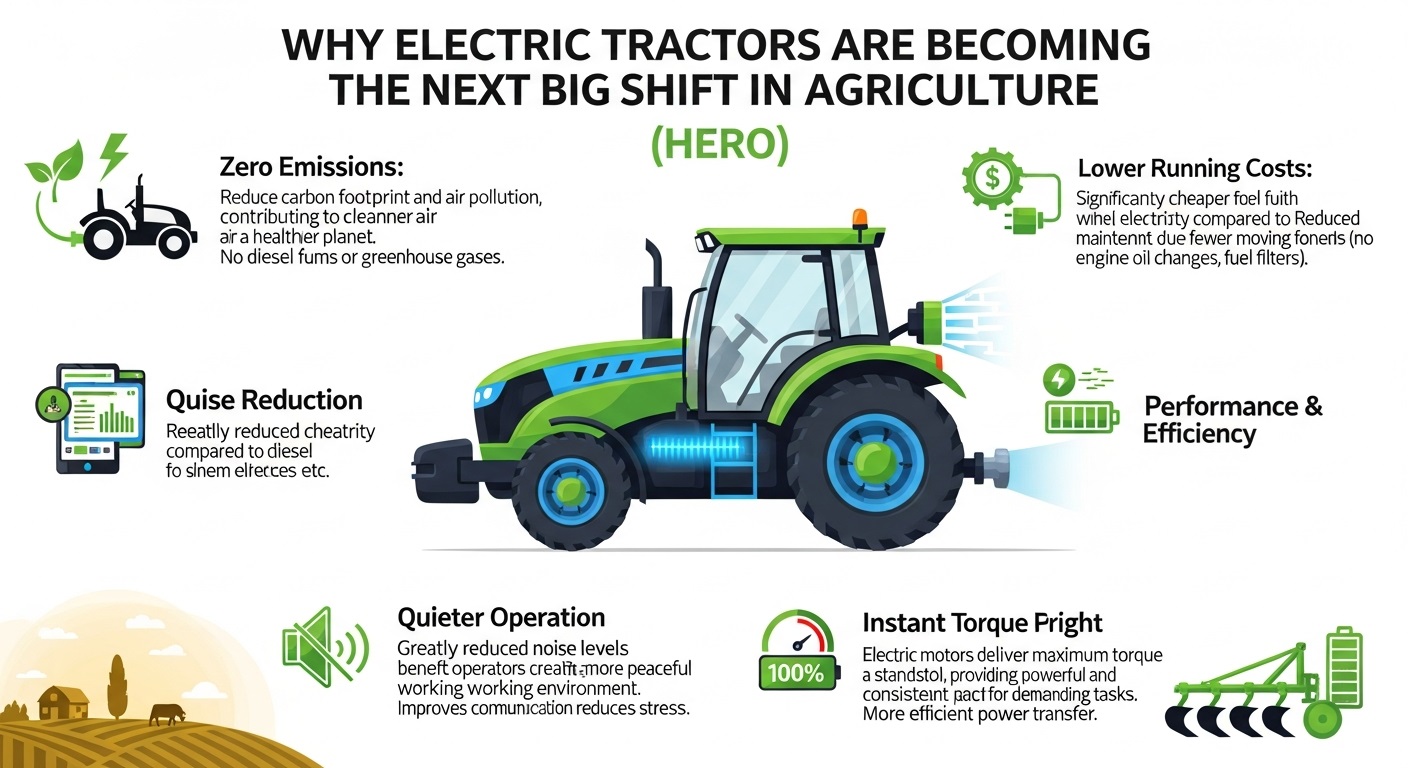
• Zero Fuel Consumption
And with diesel fuel prices climbing higher all around the world, using a diesel tractor is getting more and more expensive every year! Because electric tractors don’t require any fuel, they reduce reliance on petrol and protect farmers from fluctuating costs.
• Lower Maintenance Requirementsc
Diesel tractors can contain hundreds of moving parts filters, belts, gears and pistons that need constant upkeep. Electrified tractors, by contrast, have:
- Fewer mechanical components
- No oil changes
- Minimal engine wear
This translates to fewer maintenance costs and less downtime at times when the farming season is in full swing.
• Quiet Operation
Electric tractors are almost silent compared with their diesel counterparts. This minimizes noise and vibration, making work possible early in the morning or late into the evening without affecting neighboring communities or livestock.
• Instant Torque
Electric motors also deliver immediate torque, which is great for both hard work and the ability to get off the line when towing or plowing.
3. Economic Benefits for Farmers
Although electric tractors might cost more to buy upfront, there are substantial long-term economic advantages.
• Reduced Operating Costs
Farmers can save between 40% and 70% per year on fuel and maintenance. Over 5–10 years the saving easily eclipses any up-front cost.
• Government Incentives
Lots of governments provide subsidies, tax rebates and financing for the purchase of electric farm equipment to lower its cost.
• Longer Lifespan
“Electric rail powertrains suffer far less mechanical wear, and in general an electrically powered trainset will therefore outlive a diesel one.”
• Renewable Energy Integration
Farmers can power their electric tractors with solar panels or wind turbines. This not only lowers operational costs even more, it also increases energy self-sufficiency.
Technological Advancements Boosting the Trend
Electric tractor- this technology is ever evolving and production companies are making these more powerful beasts.
• Improved Battery Technology
Modern lithium-ion batteries offer:
- Longer running hours
- Faster charging
- Higher energy density
- Extended lifespan
- Some are even swappable, which reduces your time off the clock.
• Smart Farming Features
Electric tractors also typically have digital technology built into them such as:
- GPS guidance
- Autonomous steering
- IoT-based monitoring
- Precision agriculture tools
For the farmer, these characteristics result in ability to increase productivity, a further reduction of input losses and increased yields.
• Autonomous Operations
A lot of electric tractors are launch to drive in fully autonomous or semi-autonomous mode. This is particularly advantageous for labor-scarce intensive farms.
BARRIERS TO THE ADOPTION OF ELECTRIC TRACTORS
Electric tractors hold much promise but they also present several challenges:
• Higher Upfront Cost
Electric tractors are more expensive, mostly because of battery technology. But for long-term savings, the up-front investment often pays off in the end.
• Charging Infrastructure
In rural areas, there are hardly any charging stations available. Farmers would also need to invest in home-based charging stations.
• Not so good for heavy work or applications with a lot of variations.
Battery technology improves, but diesel engines are better suited to very heavy or continuous work. Hybrid approaches could be middle-keys of the research in the coming years.
• Battery Replacement Costs
Battery pack replacement can be costly, but costs are anticipated to come down as technology advances.
Why You’ll Be Seeing More Electric Tractors on the Farm
While electric tractors face significant hurdles, the future is looking very bright. There’s good reason to believe that they will soon be an indispensable farm tool:
• Strong Policy Support
Nations around the world are calling for carbon-neutral farming. Electric tractors enable farms to more directly achieve these sustainability objectives.
• The Swift, Plunging Price of Batteries
Battery prices have fallen sharply over the last decade and experts predict they will fall some more, which would make electric tractors more affordable.
• Rising Diesel Costs
With the increase in fuel prices, farmers are looking for viable alternatives. Electric tractors provide a long-term solution to fuel costs.
• Advancements in Autonomous Farming
Electric tractors will be the cornerstone of totally automated farms in the future. They have the electrical foundation to easily integrate with AI, robotics, awakening automation initiatives.
• Increasing Farmer Awareness
In the process, farmers are learning more about both the economic and environmental benefits of electric machines. Early adopters are already claiming lower costs and greater speed.
Advanced electric tractors are also being developed around the world:
• Monarch Tractor
Famed for its AI-based, driverless electric tractors focused on precision agriculture.
• Solectrac
Provides strong electric tractors for vineyard and orchard work, small farms and municipalities.
• John Deere
Has focused on next-generation electric and hybrid tractors that incorporate autonomous and smart farming technologies.
• Kubota
Creating light electric tractors, perfect for small farms and specialized work.
Such developments underscore the increased faith in electric tractors worldwide.
Effects on Small, Medium and Large Size Farms
Electric tractors are universal enough to be useful for every type of farm:
• Small Farms
They save much more on running cost and perfect for applications such as the daily small jobs because of quiet operating, very low maintenance.
• Medium Farms
And those farms might supplement the electric tractors with the driverless models it seems unlikely anyone will even bother giving a diesel engine.
• Large Farms
Autonomously operated electric tractors help large agribusinesses to automate routine tasks, save time and make more efficient use of labor.
Environmental and Social Benefits
Electric tractors have greater societal benefits than simply economic and technological goals:
• Cleaner Air
No emissions equals healthier surroundings for farmers, workers and neighbouring communities. “Empirical evidence shows that agro-ecological farming under trees brings food stability to the long-suffering far dry areas.
• Reduced Noise Pollution
Provides a calmer, quieter stall climate for both people and livestock.
• Contribution to Climate Goals
Electric tractors are a critical part of reducing agriculture’s carbon emissions and addressing climate change.
• Better Working Conditions
Farmers can avoid vibration, noise and heat which make workers more pleasant and less fatigue.
The Read-Ahead on What to Expect
The future electric tractors to bring:
- Longer battery life
- Faster charging
- More powerful models
- Affordable pricing
- Increased government support
- Wider availability of charging infrastructure
As time goes on, electric tractors will be more readily available as well as more efficient and powerful. They’re on track to become routine tools of farming in many parts of the world within a decade.
Electric tractors are part of a massive evolution in modern agriculture. Together, these offer a combination of profitability, environmental friendliness and advanced technology to assist farmers in being more cost-effective and responsible. Although obstacles such as cost and charging infrastructure remain, the rapid evolution of technology and strong government backing suggest electric tractors could be a common sight on farms in short order.
Electric tractors represent a revolutionary opportunity as farmers seek smarter, cleaner and cheaper ways to farm. They are not only a new kind of machine they represent the future of farming.