Container Farming: Balancing Climate Control and Energy Efficiency for Maximum ROI
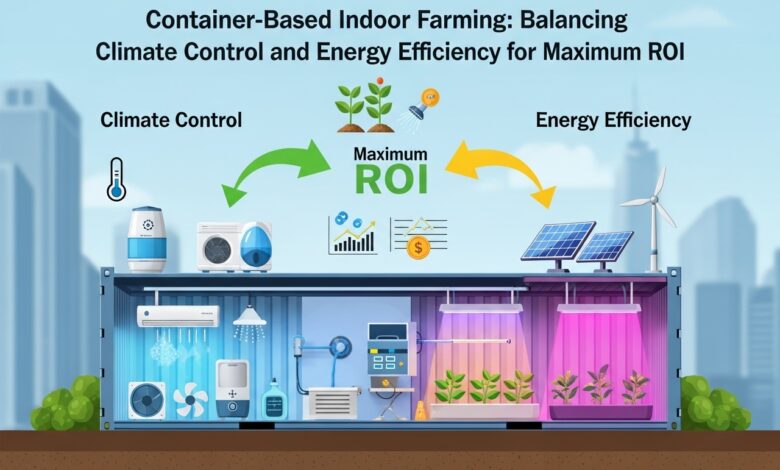
Indoor farming using containers has quickly surfaced as a new approach to address worldwide food production issues. By converting shipping containers into fully regulated environments, growers can produce crops year-round without the influence of outside climatic conditions. However, consistent production and sustainability hinge tremendously on farmers’ ability to balance energy efficiency and climate balance.
This balance is so important because precision growing conditions are created using advanced HVAC systems, LED lights, and automation, which also become a hefty part of the overall operational cost and carbon footprint. In this blog, we will discuss the strategic considerations, technology trade-offs, and ROI that characterize energy-smart container farmland.
According to the latest market research study by Market Intelo, the global container farming climate control market was valued at USD 1.2 billion in 2024 and is projected to reach USD 4.8 billion by 2033, expanding at a robust CAGR of 16.7%.
Understanding the Energy-Climate Relationship in Container Farms
Container farming utilize controlled-environment agriculture (CEA) based on the manipulation of temperature, humidity, CO₂ levels, and light. In order to make it livable for plants in a sealed steel container, it must happen under continuous inputs of energy for:
- Lighting systems (mainly energy-efficient LEDs)
- HVAC Units (Heat, Ventilation, Air Conditioning)
- Dehumidifiers and humidifiers for water vapor
- Pumps and sensors (for hydroponic or aeroponic to use for watering)
Energy efficiency in CEA is determined by maintaining climate control while using a minimal amount of energy resources. The issue is trying not to sacrifice crop quality – yield, consistency – and reliability of the system for the maximization of energy efficiency.
Major Energy Drivers in Container Farming
1. Climate Control Systems (HVAC and Dehumidification)
In most container farms, the HVAC system is usually the greatest consumer of electricity. It regulates temperature and airflow, while also preventing heat buildup from LED lighting and equipment. Good performance of the HVAC system depends on the quality of insulation, design of air circulation, and real-time monitoring.
Energy-saving tip: Utilizing variable-speed fans and heat recovery ventilation (HRV) systems, when appropriate, can save energy while maintaining uniform conditions while avoiding unnecessary energy consumption.
2. Lighting Systems
LEDs are now ubiquitous in most container farms for their low energy consumption and ability to accurately control the spectrum. Yet, the efficiency of LEDs depends on intensity, duration of light, and distance from the crops.
Optimization strategy: Use smart lighting that alters the intensity of light, depending on the stage of growth for plants, and considering natural light if there’s any, can save 20–30% in electric cost.
3. Water Management and Pump Systems
In hydroponic or aquaponic systems, water circulation pumps and nutrient dosing systems run continuously. While pumps consume less energy than the HVAC or LED lighting, optimizing pump schedules and, if available, energy efficient motors can save energy.
Strategies for Energy-Efficient Climate Control
1. Advanced Insulation and Thermal Design
An insulated envelope helps tremendously in reducing heat loss in the winter and mitigates the risk of overheating in the summer. Newer designs today contain high R-value panels and phase-change material which captures heat, releases heat, and thus helps moderate the temperature swings in the space.
Pro Tip: For an extra bonus, a reflective finish can reduce radiant heat from all lighting and equipment, further reducing cooling loads.
2. Smart Automation and IoT Monitoring
Regardless of other methods used, the optimization of energy starts with effective data. Today, IoT-type sensors can capture and record foramine data sets, including temperature, CO₂, humidity, and light intensity. From there, real-time smart system algorithms can adjust settings and outputs as needed.
For example: if humidity rises to a level above a tolerable threshold, the system will automatically bring on dehumidifiers while also turning down or off the cooling load — thus achieving the balance with the least energy required.
3. Integration of Renewable Energy Sources
The offsetting dependency on electric grid consumption can now be achieved with micro wind turbines, solar panels, and/or energy storage onsite. While the initial capital investment can be high, renewables certainly have their place in the renewable energy picture and long-term ROI.
Not to mention, consideration toward offshore grid electric consumption does enlighten sustainability. For example, If a farm is solar integrated and the geo-location has panel access to sunlight 8+ hours per day, a 40-foot container farm can offset 25-40 fields of grid electricity consumption depending on the geographic location.
4. Heat Recovery and Reuse
As container-farms grow food, considerable waste heat is produced during light consumption and processing food. It is smart now to think about sensible usage and practices for this heat waste, in fact, heat exchanges can help in these scenarios.
Reusing heat waste will relieve the HVAC load while also increasing the energy performance ratio (EPR) of the farm!
5. Precision Environmental Zoning
Instead of trying to have the whole container maintain uniform conditions, zoning allows for different areas of the enclosure to have slightly different microclimates, based on crop stage (seedling, vegetative, flowering), or possibly even the types of crops. This works to prevent unnecessary energy consumption, as well as to fine-tune the growing conditions for each vegetable or plant.
Trade-Offs in Energy and Climate Optimization
1. Cost vs. Efficiency
Energy-efficient systems – modern HVAC equipment, LED lights, and controls – tend to be more expensive upfront. The consideration is how to weigh these costs versus future savings created from operational savings across time.
The insight is investing in 10% – 15% energy efficient systems can ultimately decrease long-term operating costs nearly 30%.
2. Automation vs. Flexibility
Automation increases accuracy and efficiency, but reduces flexibility to respond dynamically to unforeseen changes or unique crop needs, which will still require the need for manual adjustment by a person to fine-tune the automated setting.
3. Renewable Integration vs. Scalability
While the incorporation of renewables indicates thoughtfulness toward sustainability through efficiency, the incorporation of renewables to many container units is limited due to the space and costs associated with each integrated renewable system. Each added renewable system will require pricing for additional infrastructure.
Measuring Energy Efficiency and Performance
Energy Use Efficiency (EUE) – Biomass produced per total energy consumed is an important metric for performance assessment in container farms. Energy Productivity Ratio (EPR) is another useful metric for measuring crop yield per kilowatt (kW) hr.
Tools for tracking:
- Real-time energy meters
- Cloud monitoring dashboards
- Predictive analytics to improve system efficiency
Audits are useful in identifying inefficiencies in use, e.g., over-cycling of HVAC or lighting schedules not matching growth cycles for crops.
Economic Perspective — ROI in Energy-Efficient Container Farms
Although the initial costs of start-up may be significant, the financial merits of energy-saving technology are experienced over time. The degree of ROI (return on investment) for a container-based, indoor farm can be tied to three main variables:
- Operational Costs: Your lighting and HVAC systems with energy efficiency will be 20-35% less expensive in terms of electricity, and operational costs will decrease as a result.
- Yield Consistency Risk: Quality climate control will positively affect whether you will yield a harvest and also reduce your risk of crop loss.
- Sustainability Incentives: Some regions provide tax credits or rebates to providing energy efficiency and sustainability in agricultural practices which can improve your payback times
As an example of ROI, a hydroponic shipping container unit measures 40′, your initial cost may increase by up to 10% for energy-efficient LED lighting, HRV (heat recovery vent) systems, and smart sensors built into your system, however, you could see savings in operational spending on electricity $3.000-$5,000 savings in only one year. Given energy costs and energy rates in your area, your return on investment could be from 3-5 years.
Estimated Cost of a 40 Foot Container Farm
| Cost Category | Estimated Low Cost (USD) | Estimated High Cost (USD) | Description |
|---|---|---|---|
| Shipping Container (40 ft) | $3,500 | $10,000 | Purchase of new or used container for conversion |
| Structural Modifications & Insulation | $1,500 | $4,500 | Cutting, framing, and thermal insulation for climate control |
| Electrical System Installation | $2,500 | $6,500 | Wiring, lighting circuits, and power distribution setup |
| Plumbing & Nutrient System | $2,000 | $5,000 | Water lines, nutrient delivery, and drainage setup |
| Climate Control (HVAC & Dehumidification) | $2,800 | $7,500 | Temperature and humidity regulation for consistent growing conditions |
| Grow Systems (LED Lights, Racks, Hydroponics) | $3,500 | $10,000 | Vertical racks, LED lighting, irrigation and control systems |
| Monitoring & Automation Equipment | $750 | $1,700 | Sensors, controllers, and automation software for farm management |
| Subtotal (Conversion + Container) | $16,550 | $44,700 | Estimated base cost before additional upgrades |
| Advanced Automation & Premium Features | — | $20,000 | Optional add-ons like AI-based control systems or cloud monitoring |
| Full Turnkey Setup (Ready-to-Operate) | $85,000 | $200,000 | Complete plug-and-play container farm solution |
| Annual Operating Costs | $5,000 | $30,000+ | Electricity, water, seeds, nutrients, maintenance, and labour |
Future Outlook — The Path Toward Net-Zero Farming
Eventually, farms using container system infrastructure will reach net- zero energy performance, which means that their energy use- electric energy for example- will be equal to or even exceed the amount they generate. New and developing technologies in predictive AI climate models, hybrid renewable energy systems, and thermal energy storage are paving a path forward into the future.
As the stark reality of climate variability become unavoidable, energy efficiency, and climate-resilient indoor farms will become even more pressing for global food security. The blending of sustainability and technology will shift the fundamental ways we grow food, transport it, and consume it into another phase.
Conclusion – Container Farming
A combination of technical and economic imperatives exists between bringing energy use in check and effective climate control in indoor Container Farming with containers. In shifting energy performance toward sustainability, growers can align energy performance with climate control through intelligent insulating, incorporating smart automation, renewable energy combinations, and data-driven decision making—all while preserving yield quality in profitability.
In this respect, container farming is ultimately predicated on design decisions that equalize energy use, environmental responsibility, and profitable performance. As the agricultural industry moves toward circular economic and net-zero models, indoor container-based farms occupy an important position to lead a food production system that is more resilient, efficient, and sustainable.