A Green Goldmine: Unlocking the Potential of the Commercial Seaweed Industry

Seaweed has moved from a traditional food in a handful of coastal cultures to a raw material that food manufacturers, farmers, cosmetics brands and energy researchers all compete for. The scale is already large: according to the Food and Agriculture Organization, global fisheries and aquaculture production reached 223.2 million tonnes in 2022, and algae accounted for 37.8 million tonnes of it — about 17 percent of the total, against 83 percent for aquatic animals. Because the booming commercial seaweed sector rides on rising demand for natural, eco-friendly products, analysts increasingly describe it as a “green goldmine”. This article looks at how big the industry really is, where the money is made, and what could hold it back.
| Global fisheries and aquaculture production, 2022 (FAO) | Volume | Share |
|---|---|---|
| Total production | 223.2 million tonnes | 100% |
| Algae (including seaweed) | 37.8 million tonnes | 17% |
| Aquatic animals | 185.4 million tonnes | 83% |
How big is the commercial seaweed market?
There is no single agreed figure, because research firms draw the market’s boundaries differently — some count only processed commercial products, others the wider seaweed economy. What they agree on is steady mid-single-digit growth. Next Move Strategy Consulting valued the global commercial seaweed market at USD 12.04 billion in 2023 and projected a compound annual growth rate of 6.5% from 2024 to 2030. Reports and Data puts the market at USD 11.43 billion in 2025, growing at 5.0% a year to reach USD 18.72 billion by 2035. IMARC Group’s wider-scope estimate is USD 24.8 billion in 2025, reaching USD 46.1 billion by 2034 at 7.12% a year. Read together, the estimates describe an industry worth somewhere in the low tens of billions of dollars and expanding on demand from food, agriculture, cosmetics and medicine.
| Research firm | Market estimate | Forecast |
|---|---|---|
| Next Move Strategy Consulting | USD 12.04 billion in 2023 | CAGR of 6.5% from 2024 to 2030 |
| Reports and Data | USD 11.43 billion in 2025 | USD 18.72 billion by 2035 (CAGR 5.0%) |
| IMARC Group | USD 24.8 billion in 2025 | USD 46.1 billion by 2034 (CAGR 7.12%) |
Production volumes give the money figures a physical check. FAO’s SOFIA 2026 summary reports that 39 million tonnes of algae were farmed in 2024, and Fortune Business Insights values the market at USD 19.79 billion in 2025, rising to USD 40.85 billion by 2034 — a higher starting point than the firms above, which again reflects how much of the seaweed economy each study chooses to count.
Geography is lopsided. IMARC estimates that Asia-Pacific held over 90 percent of the market in 2025, built on the long seaweed-eating history of China, Japan and South Korea and on favourable conditions for large-scale farming, with Indonesia and the Philippines also major cultivation countries. By type, red seaweed is the largest segment — IMARC puts it at about 47.8 percent of the market in 2025 — because it supplies carrageenan and agar to the food industry, while brown seaweed is widely tipped as the fastest-growing type on demand from nutraceuticals, biofertilizers and animal feed.
Where seaweed earns its money: the main applications
Seaweed’s commercial value comes from versatility: the same crop feeds people directly, supplies industrial ingredients, and is being tested in fields its traditional users never imagined. The applications below account for the bulk of demand.
| Application | What seaweed provides | Why buyers want it |
|---|---|---|
| Food and beverage | Whole seaweed foods plus carrageenan, agar and alginate | Texture, stabilization and clean-label replacement for synthetic additives |
| Agriculture | Kelp extracts and liquid biostimulants | Better nutrient uptake, soil moisture retention and stress tolerance |
| Animal feed | Feed additives, including Asparagopsis species under research | Improved digestion and potential cuts in cattle methane emissions |
| Cosmetics and personal care | Bioactive extracts rich in antioxidants and minerals | Hydration, anti-inflammatory and anti-aging skincare claims |
| Pharmaceuticals and nutraceuticals | Iodine, trace minerals and bioactive compounds | Supplements and functional-health formulations |
| Biofuels and materials | Fast-growing biomass and film-forming extracts | Renewable fuel feedstock and biodegradable plastic alternatives |
Seaweed in food and beverage
Food is the industry’s foundation: IMARC attributes about 76.8 percent of 2025 applications to human consumption, and Reports and Data likewise ranks food and beverage as the largest application. Seaweed has been eaten for centuries in Japan, Korea and China, and it is now spreading worldwide on the strength of its vitamins, minerals, fibre and antioxidants and the growth of plant-based diets — in snacks, soups, salads, drinks, dietary supplements and meat substitutes; Berkeley’s Umaro Foods, for example, raised USD 3.8 million in March 2024 to expand production of seaweed-based meatless bacon, and brands such as Ocean’s Halo and Gimme Seaweed sell roasted seaweed snacks to health-conscious shoppers. Behind the scenes, the bigger business is hydrocolloids: red seaweeds such as Kappaphycus and Eucheuma supply carrageenan and agar, and brown seaweeds supply alginate, which stabilize dairy products, sauces, confectionery and plant-based foods — Cargill expanded its seaweed-based texturizer portfolio in March 2024 as manufacturers replace synthetic additives with clean-label ones. University of Connecticut researchers are even studying seaweed extracts as natural preservatives that could extend shelf life and reduce food waste.
Agriculture: seaweed as a natural fertilizer and biostimulant
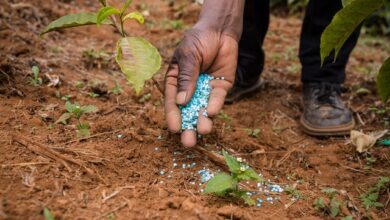
On farms, seaweed’s mineral content and natural plant hormones support soil fertility and crop growth, which is why seaweed extracts — especially from kelp — have become established biostimulants in organic and sustainable farming. Liquid extracts are the fast-growing form, sprayed or watered onto crops to improve nutrient uptake and stress tolerance, and they sit naturally alongside other bio-based inputs such as coconut coir growing media. Animal feed is the other rising farm use: feed companies are evaluating seaweed additives, including Asparagopsis, for their ability to reduce methane formation in cattle, with government-supported pilot programs running in Australia and New Zealand.
Cosmetics, skincare and wellness
Seaweed’s bioactive compounds — antioxidants, anti-inflammatory agents and essential minerals — suit it to creams, lotions, serums and hair-care products that promise hydration and skin protection, and to anti-aging products aimed at wrinkles and skin elasticity; the Kittery-based company Cold Current Kelp, for instance, builds its skincare line on kelp. The opportunity is large: IMARC valued the global skincare products market at USD 166.35 billion in 2024. The same nutritional profile carries seaweed into wellness supplements, valued for iodine and trace minerals; in 2023 India’s ICAR-Central Marine Fisheries Research Institute signed a deal to introduce two commercialized seaweed nutraceutical products aimed at antiviral defence and lowering cholesterol.
Biofuels and new materials
Seaweed is a promising feedstock for renewable energy because it grows fast without freshwater, farmland or fertilizer, and it can be processed into several renewable fuel forms; government funding and private investment are backing pilot projects to make the conversion efficient at scale, including an MoU between Hindustan Petroleum Corporation Limited and Sea6 Energy for joint technology development to turn seaweed biomass into sustainable fuels. The same biomass is opening a materials market: companies such as Sway, Zerocircle and Notpla make biodegradable, compostable packaging from seaweed to replace single-use plastics — part of the wider shift examined in sustainable agriculture packaging — while cultivation technology keeps advancing, with methods as varied as offshore farms and vertical farming techniques being adapted to algae.

Why farming seaweed is unusually gentle on the planet
Seaweed cultivation has a short list of environmental demands, and that is the core of its appeal. A seaweed farm:
- Needs no freshwater, fertilizer or agricultural chemicals to grow — the crop feeds from the sea itself.
- Absorbs carbon dioxide and excess nutrients as it grows, which is why it is studied for carbon sequestration and water cleanup.
- Creates habitat — farm structures shelter marine species, supporting local biodiversity.
- Pays coastal communities, giving fishing families an income that does not deplete wild stocks.
Researchers keep finding new combinations: the Seawines Project, for example, is exploring farmed seaweed as a sustainable fertilizer and pest-control input for vineyards, aiming to cut chemical inputs while improving grape quality and climate resilience.
What could slow the industry down?
Growth is not guaranteed. Seaweed farming is exposed to the ocean’s moods: marine heatwaves, typhoons and disease outbreaks can sharply cut harvests, and climate change is making water conditions less predictable in several aquaculture zones. Processing is a second bottleneck — carrageenan and alginate extraction capacity is concentrated in a limited number of coastal hubs, so weather or shipping disruption in the wrong place tightens supply for everyone, and harvested seaweed must be processed quickly before its extract quality fades. Smaller growers face high upfront costs for drying and extraction facilities. The industry’s own conclusion is that success depends on continued innovation, strategic investment and practical solutions to these logistical obstacles.
Conclusion
The commercial seaweed market is a genuinely sustainable resource being pulled forward by many industries at once: food manufacturers reformulating for clean labels, farmers adopting biostimulants, skincare brands chasing natural ingredients, and energy and materials startups hunting for low-impact feedstocks. Estimates of its size differ — from around USD 11 billion to nearly USD 25 billion in the mid-2020s, depending on the firm and the scope — but every credible forecast points up. If producers can widen processing capacity and steady the supply chain, seaweed’s status as a green goldmine could well become a reality.
Frequently asked questions
What is commercial seaweed used for?
Mainly food — whole seaweed products and the hydrocolloids carrageenan, agar and alginate — followed by agricultural biostimulants, animal feed, cosmetics, pharmaceuticals and nutraceuticals, with biofuels and bioplastics as emerging uses.
How big is the commercial seaweed market?
Estimates vary by research firm and scope: Next Move Strategy Consulting valued it at USD 12.04 billion in 2023, Reports and Data at USD 11.43 billion in 2025, and IMARC Group at USD 24.8 billion in 2025. All three forecast continued growth.
Where is most seaweed produced?
Asia-Pacific dominates, with over 90 percent of the market in 2025 according to IMARC. China, Japan and South Korea have the longest consumption history, and Indonesia and the Philippines are major cultivation countries.
Which type of seaweed is most valuable commercially?
Red seaweed is the largest type segment — about 47.8 percent of the market in 2025 by IMARC’s estimate — because it supplies carrageenan and agar. Brown seaweed, the source of alginate, is expected to grow fastest.
Is seaweed farming environmentally friendly?
Largely, yes. It requires no freshwater, fertilizer or pesticides, absorbs carbon dioxide and excess nutrients while growing, creates habitat for marine life, and provides income to coastal communities — though farms remain vulnerable to storms, marine heatwaves and disease.
ABOUT THE AUTHOR

Swagata Sarkar is an enthusiastic and dedicated researcher with 3 years of experience, committed to helping clients navigate complex business challenges with actionable insights through thorough research. Her interests include Agriculture, Energy & Power and ICT & Media. The author can be contacted at [email protected].
Disclaimer: Market sizes and growth forecasts quoted in this article are third-party estimates, and different research firms publish different figures. This article is information only, not investment advice.