Maximizing Farm Yields: The Critical Role of HVLS Fans in Agriculture

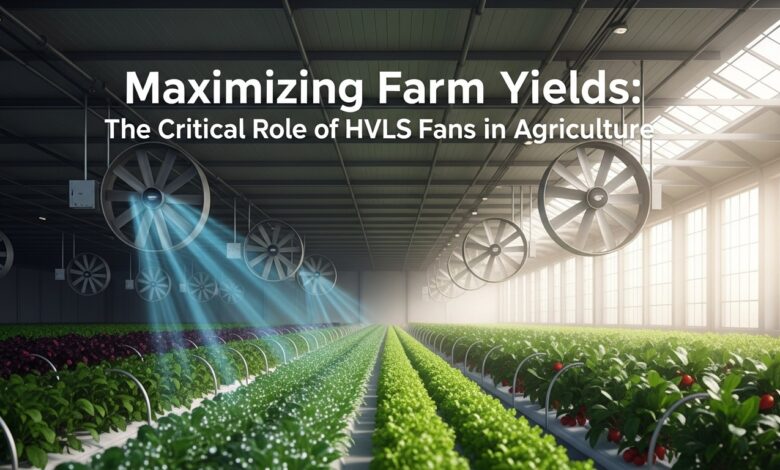
Stagnant air, humidity, and heat pockets are silent killers in agriculture. They lead to heat stress in cattle and mold growth in stored harvests. This is where High-Volume, Low-Speed (HVLS) technology steps in. It is not just about blowing air around; it is about creating a stable climate for your farm.
Here is a deep dive into how industrial ceiling fans are transforming modern agriculture and what you need to know about HVLS Fans in Agriculture before installing them.
Understanding the “Big Fan” Technology
When most people think of fans, they think of high-speed floor units that create a noisy, turbulent wind tunnel. HVLS Fans in Agriculture work differently. They are designed on the principle that moving a massive amount of air slowly is far more efficient than moving a small amount of air quickly.
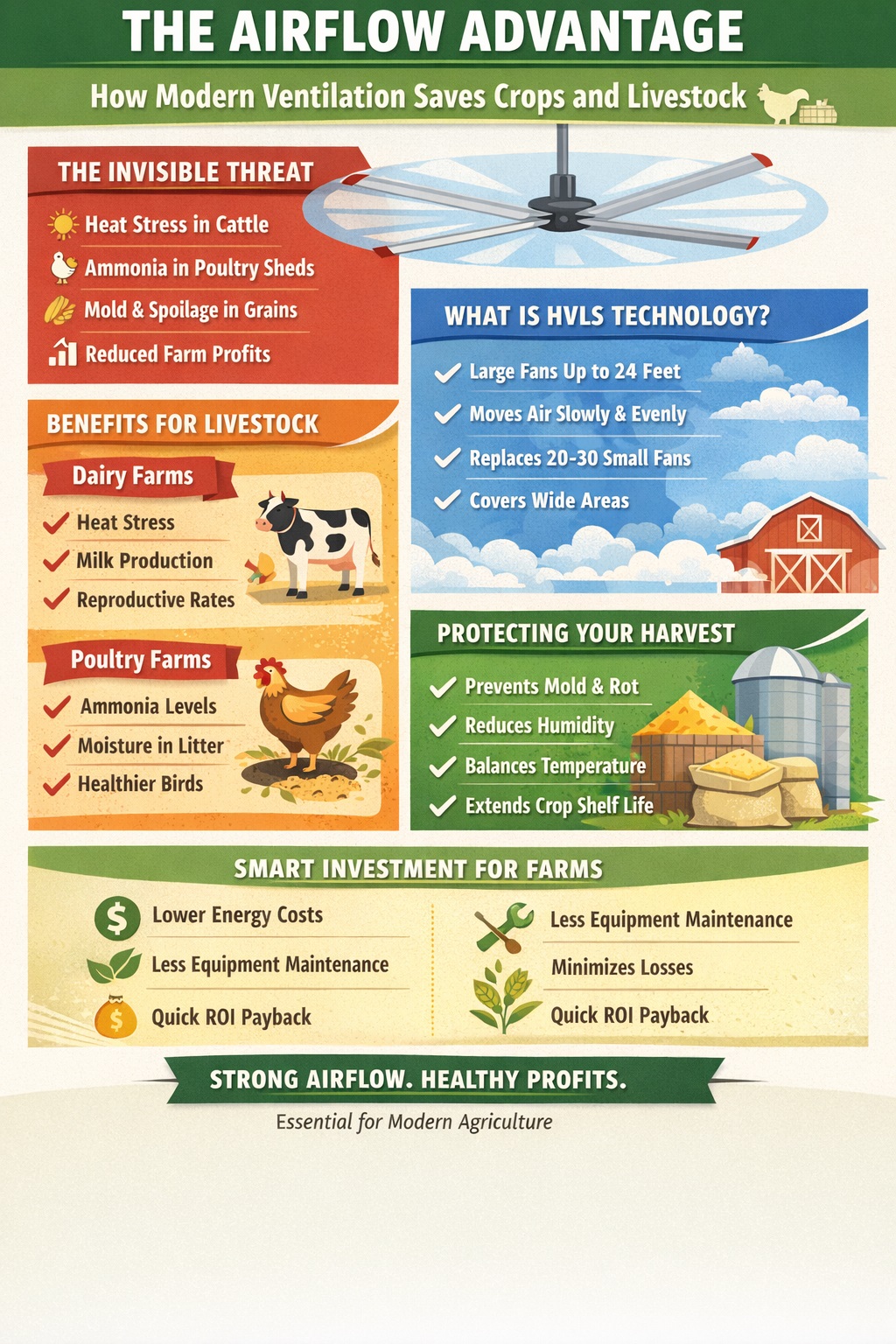
These fans feature distinctively long blades—sometimes spanning over 24 feet in diameter. Instead of chopping the air, they push a massive column of air toward the floor, which then radiates outward 360 degrees. For a large barn or storage facility, this means you can cover thousands of square feet with a gentle, consistent breeze using just a single unit.
Protecting Your Livestock Investments
If you are raising livestock, you know that comfort equals productivity. Heat stress is one of the biggest threats to profitability in dairy and poultry farming.
The Dairy Factor
Cows are essentially biological engines; they generate immense heat while digesting feed. When the ambient temperature rises, their ability to cool themselves drops, leading to reduced milk yield and lower reproduction rates.
By installing fans from a specialized HVLS fans manufacturer, you create a “wind chill” effect. The air moving over the cows’ skin aids in evaporative cooling, effectively lowering the temperature they feel by several degrees. This keeps feed intake up and milk production steady, even during the hottest months of the year.
Poultry and Air Quality
In poultry farming, the challenge is often air quality. Ammonia and moisture from litter can cause respiratory issues and foot problems in birds. Industrial ceiling fans help by constantly mixing the air layers. This continuous circulation dries out the litter and prevents ammonia from settling at the bird level, resulting in a healthier flock and better weight gain.
How Proper Airflow Protects Crops and Livestock
| Agricultural Area | Problem Caused by Poor Airflow | How HVLS / Industrial Ceiling Fans Help | Result for Farmers |
|---|---|---|---|
| Dairy sheds | Heat stress reduces milk yield | Creates wind-chill effect and evaporative cooling | Stable milk production |
| Poultry houses | Ammonia buildup and wet litter | Continuous air mixing dries litter | Healthier birds, better weight gain |
| Grain warehouses | Condensation and mold growth | Destratifies air and balances temperature | Reduced post-harvest losses |
| Vegetable storage | Hot spots cause spoilage | Uniform airflow prevents moisture pockets | Longer shelf life |
| Farm labor areas | Excessive heat and fatigue | Gentle, wide-area cooling | Improved worker efficiency |
“Fasal Bachao“: Saving the Harvest
The work doesn’t stop after the harvest. Storing grains, potatoes, onions, or other perishables requires precise climate control. In large silos or warehouses, heat naturally rises to the ceiling, leaving the floor cold. This difference in temperature leads to condensation—the enemy of stored crops.
Moisture leads to mold, fungus, and rot. Industrial ceiling fans solve this through a process called destratification. They gently force the warm air down from the ceiling to mix with the cooler air at the floor. This thermal equalization eliminates hot spots and condensation, ensuring that the crop you worked so hard to grow remains in premium condition for the market.
Selecting the Right Equipment with HVLS Fans in Agriculture
Farms are tough environments. They are dusty, often humid, and sometimes filled with corrosive fumes. You cannot simply buy a standard warehouse fan and expect it to last in a barn. This is why choosing the right industrial ceiling fans manufacturer is critical.
When you are scouting for a big industrial fans supplier, look for these specific agricultural features:
- Sealed Motors: Ensure the fan has a high IP rating (IP55 or higher) so that dust and moisture cannot get inside the motor.
- Maintenance-Free Gearboxes: Modern fans often use direct-drive motors which eliminate the need for oil changes and gearbox maintenance—a huge time saver for busy farmers.
- Corrosion Resistance: Look for anodized aluminum blades and stainless steel safety cables, especially if the fans will be installed in livestock sheds where ammonia levels can be high.
Why HVLS Fans Outperform Traditional Farm Ventilation
| Feature | HVLS Fans | Small High-Speed Fans |
|---|---|---|
| Air coverage | Thousands of square feet | Limited to small areas |
| Energy consumption | Very low | High (multiple units required) |
| Noise level | Quiet and smooth | Noisy |
| Maintenance | Minimal (direct drive) | Frequent servicing |
| Suitability for farms | Designed for dust & humidity | Often fail in farm conditions |
| Long-term cost | Low | High |
The Cost vs. Value Perspective
It is natural to look at the upfront cost of these massive units with hesitation. However, the economics of HVLS Fans in Agriculture are built on long-term savings.
Because one large fan can do the work of 20 to 30 small high-speed fans, your electricity consumption drops largely. Furthermore, the cost of installing messy wiring for dozens of small fans is eliminated. Most importantly, the return on investment comes from what you don’t lose—saving a few tons of onions from rot or keeping milk yields high during a heatwave often pays for the system within a few seasons.
Conclusion
Upgrading your farm’s ventilation is one of the most practical investments you can make. It protects your animals, preserves your crops, and lowers your energy overhead.
Whether you are retrofitting an old shed or building a new facility, consult with a trusted big industrial fans supplier to analyze your specific square footage and ceiling height. Good airflow isn’t just a luxury; it is an essential tool for the modern farmer.