How Long Can You Keep Plants Covered During a Freeze?
Covering plants before a freeze can be the difference between a little cosmetic damage and a dead garden — but once the covers are on, a fair question follows: how long can they safely stay on? Leave them too briefly and the cold gets in; leave them for days and the cover itself starts harming the plant. This guide gives the time limits, the daily uncovering rule, and the signs of over-covering.
How Long Can You Keep Plants Covered During a Freeze?
Most plants handle being covered for 12 to 48 hours without any harm, and that window covers the great majority of freeze events. For a one-night freeze, the routine is simple: cover the plants before sunset, then uncover them the next morning once temperatures climb above freezing. For an extended freeze that lasts several days, plants can stay under cover longer, but they still need light and air — if the daytime temperature reaches about 40°F (4°C), remove or loosen the covers so the plants can breathe, then cover them again before the next cold night. The one thing not to do is set the covers and forget them: a cover left in place for days on end trades cold damage for moisture, heat and light problems, which defeats the purpose of protecting the plant in the first place.
The Daily Rule: Uncover as Soon as Temperatures Rise Above Freezing
The safest habit is to remove cold protection once temperatures are above 32°F (0°C), because a covering left on into a warm, sunny day can overheat the plant inside and stress it — sometimes more than the cold would have. Extension advice makes the same point: there is no single “magic number” for covering, because what matters most is how long the temperature stays below freezing, not the lowest reading alone. Timing at the other end matters too: do not uncover too early in the morning while frost is still sitting on the ground. Gardeners who grow under cover face the same balance — as our look at why the film on a hoop house matters more than the frame on a clear fall night explains, the covering material only helps while the cold lasts. If you grow in a greenhouse, a greenhouse temperature sensor and controller takes the guesswork out of deciding when to open up and when to stay closed.
What Happens If You Leave Plants Covered Too Long?
A cover protects by trapping the earth’s warmth around the plant, but the same sealed space creates problems once the freeze has passed. Sunlight is blocked, so the plant cannot photosynthesise properly. Humidity builds up under the fabric, and that trapped moisture encourages mould and fungal growth and can rot stems and leaves. On a sunny day the air inside heats up fast, so a plant can effectively cook at midday and then face the cold again at night. The visible results are yellowing or soft leaves, mould or fungal patches, and weak, leggy growth once the plant is uncovered. Covers should protect a plant, never suffocate it — which is why the daily check matters more than the cover itself. If the forecast was wrong and the night never dropped below freezing, no harm is done by having covered, provided you still remove the cover in the daylight.
How to Cover Plants the Right Way
Good covering technique is what makes the time limits above work. Freezing temperatures damage plants because the water inside their cells expands and ruptures the cell walls, leaving blackened leaves and mushy stems — a cover slows that heat loss and shields the foliage from frost. Work through these points before the cold arrives:
- Cover before sunset, so the warmth stored in the soil during the day is trapped under the fabric.
- Drape the cover all the way to the ground and secure it, so cold air cannot sneak in underneath — the ground is where the heat you are trapping comes from.
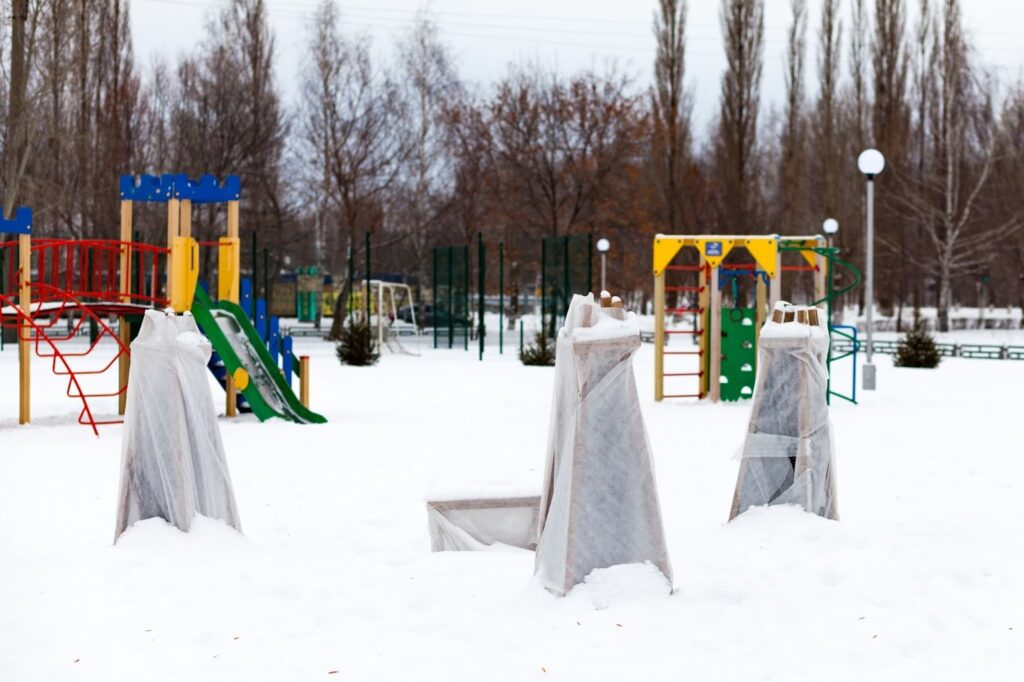
- Use breathable material such as frost cloth, old sheets, lightweight blankets or burlap, and use stakes or supports where needed so fabric does not rest heavily on foliage.
- Keep plastic off the leaves: plastic traps moisture, can freeze onto foliage, and heats up like a greenhouse in sun. If plastic is all you have, put a fabric layer between it and the plant.
- Water the soil a day before the freeze — moist soil holds heat better than dry soil and insulates the roots — and add 2–3 inches of mulch around the base, kept slightly away from the stems.
For a deeper breakdown of materials and techniques, read this guide: best way to protect plants from a freeze.
How Long to Keep Plants Covered, by Freeze Type
How long a cover should stay on depends on the kind of cold you are dealing with. A frost warning means temperatures are expected to drop to 32°F (0°C) or below, with ice crystals forming on exposed surfaces; a freeze warning means temperatures at or below 28°F (−2°C) for several hours, cold enough to kill non-hardy plants outright. Match the cover time to the event:
| Freeze type | How long to keep covered | Best practice |
|---|---|---|
| Light overnight frost | 8–12 hours | Remove the cover mid-morning, once frost has gone |
| One-day hard freeze | 12–24 hours | Remove once temperatures rise above freezing |
| Multi-day freeze | Up to 48 hours at a stretch | Vent or uncover for a few warmer daylight hours, re-cover at sunset |
| Prolonged cold snap | As needed, checked daily | Monitor daily and allow airflow whenever temperatures allow |
Which Plants Need Covering — and Which Can You Skip?
Not every plant needs protection, and covering everything wastes time you could spend on the plants that genuinely need help. Established, cold-hardy plants usually tolerate freezing temperatures without any cover at all unless conditions turn extreme. Concentrate on the vulnerable ones:
| Cover these first | Usually safe to skip |
|---|---|
| Tropical and subtropical plants (hibiscus, banana, bougainvillea, young citrus) | Cold-hardy perennials such as lavender, coneflowers, hellebores and sedum |
| Frost-sensitive annuals (marigolds, zinnias, petunias, impatiens) and tender vegetables (tomatoes, peppers, basil) | Cold-season vegetables such as kale, spinach, broccoli and carrots, unless the cold is prolonged and severe |
| Newly planted shrubs and trees, and plants carrying active new growth | Established trees and shrubs with strong root systems and thicker bark |
| Potted succulents and any plant growing in a container | Dormant deciduous plants, unless recently pruned or planted |
Choosing a Cover Material
The material decides how much warmth the cover holds and how safely the plant can stay under it. Proper frost cloth is the benchmark: a lightweight, breathable fabric that traps soil heat while still letting light and moisture through, typically keeping the plant 4–8°F (about 2–4°C) warmer than the air outside — heavier-weight cloth can hold up to about 10°F, depending on fabric weight and thickness. Household stand-ins work well in a pinch:
| Material | Strengths | Watch out for |
|---|---|---|
| Frost cloth / plant blanket | Breathable, reusable, lets light and moisture through; keeps plants about 4–8°F warmer | Choose a weight suited to how severe your freezes are |
| Old sheets, towels, blankets | Free, moderate insulation, good in dry freezes | Heavy when wet; support them so they do not crush foliage |
| Burlap | Breathable and sturdy for shrubs | Less insulating than a proper frost blanket in a hard freeze |
| Cardboard boxes | Quick rigid shelter for small shrubs and potted plants overnight | Single-night fix; soggy cardboard loses its strength |
| Plastic sheeting or tarps | Waterproof outer layer in an emergency | Never let it touch foliage; traps condensation and overheats in sun — always pair with a fabric layer |
Before and After the Freeze: Two Habits That Matter
What you do around the freeze matters almost as much as the cover itself. Beforehand, water the plants well a day ahead, aiming at the root zone rather than the leaves, and mulch around the base to hold soil warmth in. Container plants deserve special attention: their roots sit above ground and the soil in a pot freezes faster than soil in the ground, so move pots into a garage, shed or covered patio, group them together to share warmth, and lift them slightly off cold concrete. Houseplants that live outdoors in the warm months, like the one in our ponytail palm care guide, should come inside. Afterwards, resist two urges: do not fertilise around a freeze, because it pushes out tender new growth, and do not prune damaged growth straight away. Dead stems actually insulate the base of the plant, and cutting early can trigger fresh growth that the next cold snap will kill. Wait until spring, then judge what is truly dead.
Frequently Asked Questions
Can I leave plants covered for a week during a long cold snap?
Not in one unbroken stretch. Across a multi-day freeze, uncover plants for a few hours during the warmest part of the day so they get light and air, then re-cover them at sunset. Only if temperatures stay below freezing all day — for example a fall into the teens that never recovers above 32°F — should covers stay on around the clock, and even then they should be checked daily.
At what temperature should I remove plant covers in the morning?
Remove them once temperatures rise above 32°F (0°C) and the frost has cleared, typically mid-morning. If the day is heading for about 40°F (4°C) or warmer, covers should definitely come off or be loosened, because the air underneath heats up quickly in sunshine.
Is plastic or cloth better for covering plants?
Cloth is better. Breathable fabric allows air circulation and prevents the condensation that rots stems, while plastic can freeze onto leaves, trap moisture against the plant and overheat like a greenhouse in the sun. Use plastic only as an outer layer over fabric, never directly on foliage.
What if I covered my plants and it never actually froze?
Nothing is harmed — you have only spent a little time. There is no damage from covering on a mild night, as long as you still take the covers off in the daylight so the plants get their light and airflow.
How do I know if a plant survived the freeze?
Damage usually shows quickly as wilting, brown or mushy leaves, but appearances deceive: some plants look worse a few days after a freeze while their roots are still alive. Do not prune or dig anything out straight away — wait for warmer weather and watch for new growth before deciding a plant is dead.
Final Thoughts
So, how long can you keep plants covered during a freeze? Long enough to get them through the cold — usually 12 to 48 hours — but not so long that trapped moisture, blocked light and midday heat stress them instead. Cover before sunset, uncover once temperatures rise above freezing, vent on warmer days during a long cold spell, and re-cover each evening while freezing nights continue. Done that way, covers are a simple, effective protection that helps the garden recover quickly once warmer weather returns.
Guide and expert input: JC’s Landscaping — https://www.jclandscapingllc.com/