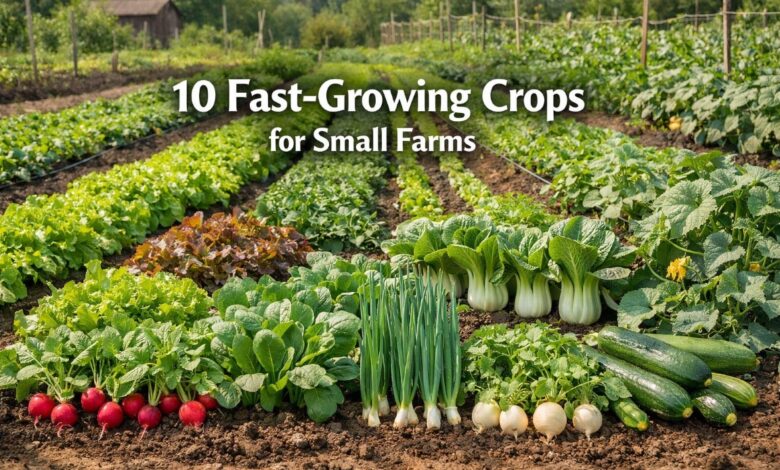
10 Fast-Growing Crops for Small Farms
Fast-growing crops can help to lower the risk and also increase how many times land can be used. Additionally, farmers can get their returns much faster. This way small farmers get more profits and have a lot more freedom to adjust to any changes in the weather or growing conditions, especially if they are in an intensive production system or if the growing season is very short.
What Makes a Crop Grow Fast?
A fast, growing crop is one that can be grown from seed to the point of harvest within a period of 30, 70 days. Such crops provide an excellent opportunity for succession planting and thus enable multiple harvests to be carried out within a single growing season. Fast, growing crops offer a great way for growers to complete short growing cycles and thus be able to plant other crops that take longer to mature.
Common attributes:
- Short vegetative periods (less than six weeks).
- Germination that occurs early (within 5–10 days).
- 30 to 60 days to reach maturity.
- Small-scale growth pattern.
Vegetables will not only depend on crop selection but also on the condition of the soil, which is a major factor in how quickly they get to harvest. The FAO soil management guidelines, in this context, emphasize that one of the ways nutrient availability and soil structure can be improved is through the increased use of organic matter in the soil. This can be done by adding compost and other organic inputs, which will enable the soil to develop nutrients faster through root growth and also give the first harvest of the short, cycle crops.
1. Radishes (25–30 Days)
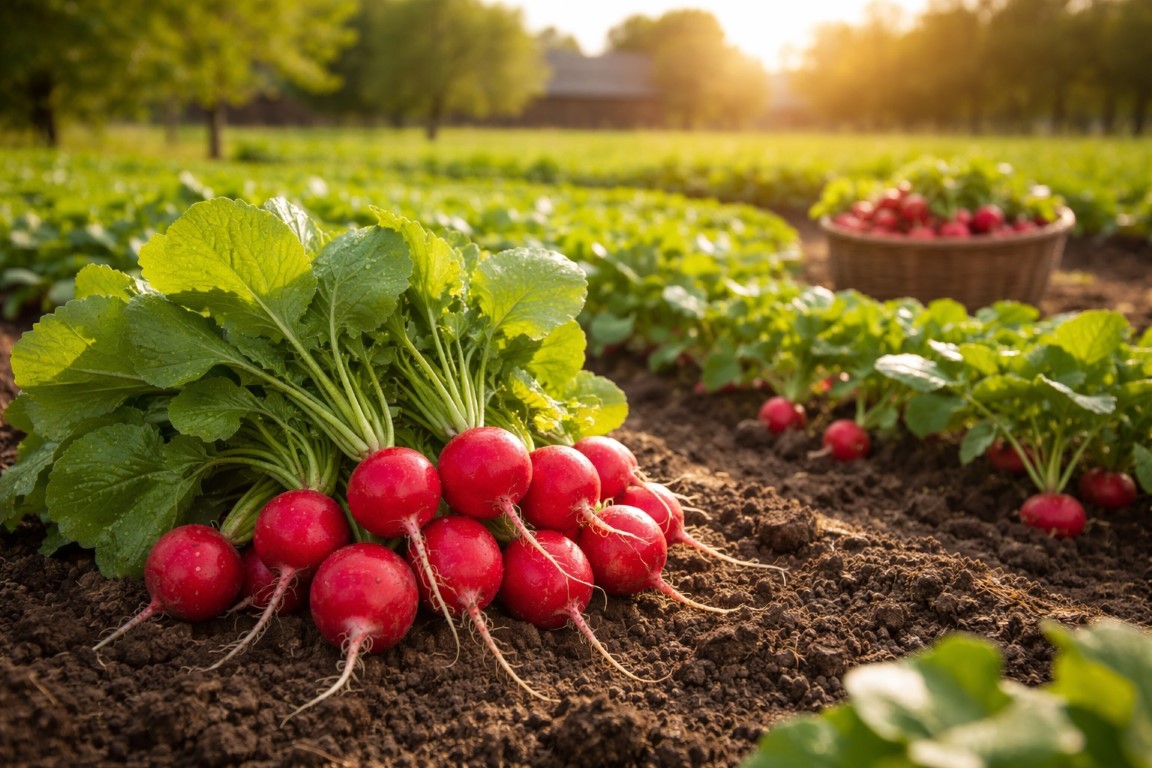
Why do radishes suit small farms?
The Radishes are among the root crops that mature the quickest, and radish grows well in poor soil and needs minimal space, making it a perfect crop for a little plot of ground.
Key facts:
- Germination lasts three to five days.
- Cherry Belle needs 25 days to mature.
- Five to seven tonnes are produced each acre.
- Profit per sq. m: High in urban markets.
For instance, early spring or fall harvests are made possible by good weather, which speeds up the production of morning and white ice.
2. Lettuce: (30 to 45 days)
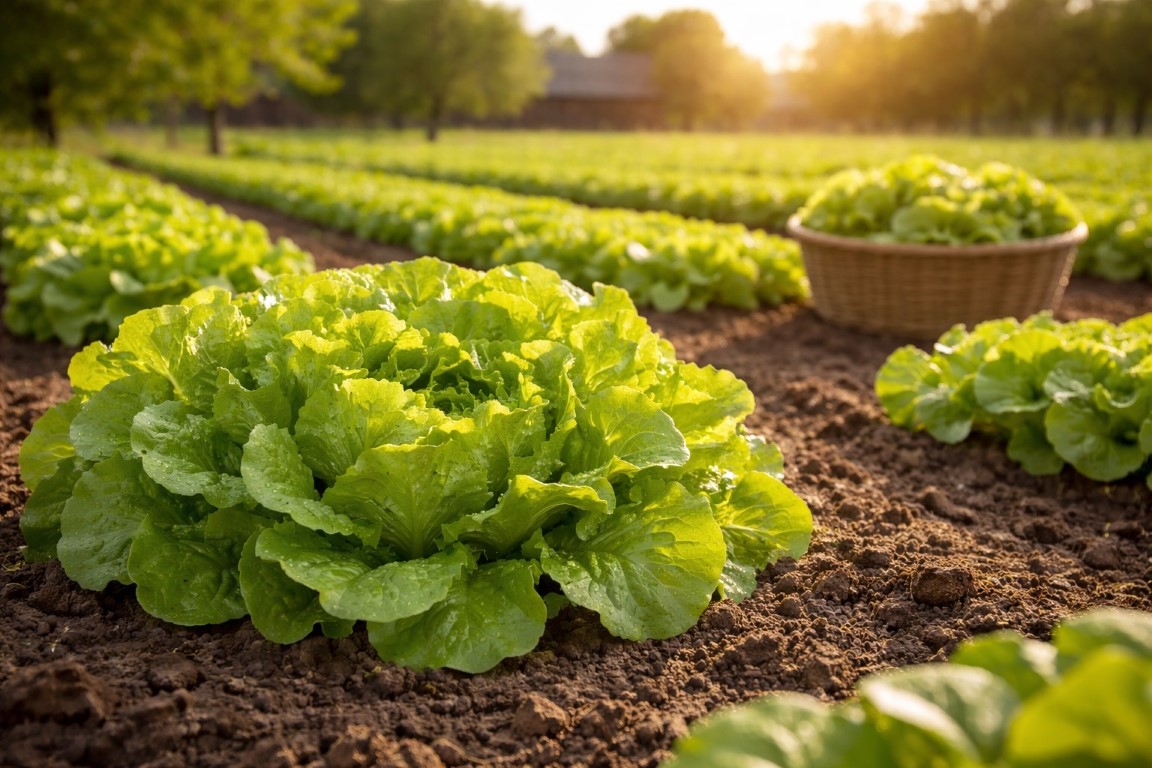
How does lettuce perform in short cycles?
Loose, leaf and baby lettuces are fast, growing plants. The cut, and, come, again method allows for multiple harvests from the same plants.
Key facts:
- Around 4–7 days for Germination.
- 30 days for the first harvest.
- Crop life span: 45–50 days.
- Buttercrunch and Salad Bowl are good cultivars.
Note: Lettuce is a crop that grows well in the cooler seasons of spring and fall when protected by row covers.
3. Spinach: (28 to 40 Days)
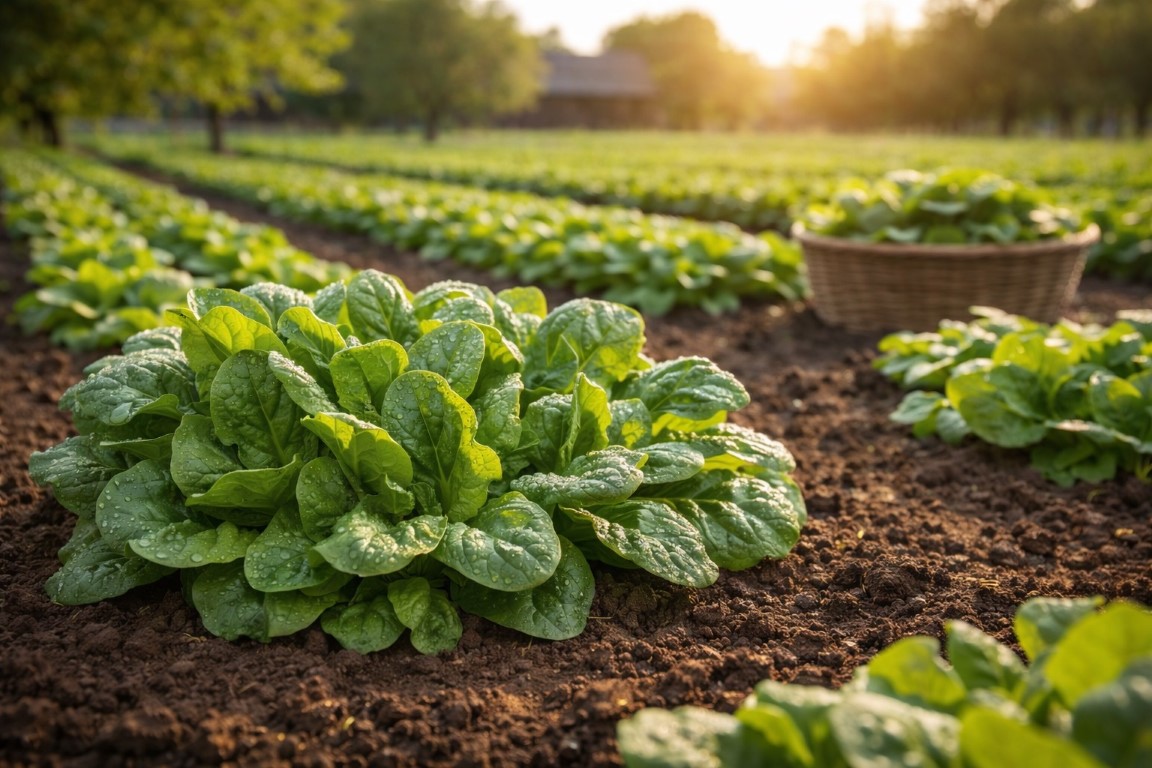
Is spinach a crop that small-scale farmers can profit from?
Definitely. Spinach is a low-input crop that can withstand light frost and grows quickly.
Key facts:
- 7–10 days for germination.
- The harvest window is 28–40 days.
- Baby leaves should be spaced two inches apart.
- The average yield is 6–8 tonnes per acre.
Example: Bloomsdale Long Standing is a variety that is able to resist heat and can therefore be used to extend harvest windows in warmer zones.
4. Arugula: (20 to 35 Days)
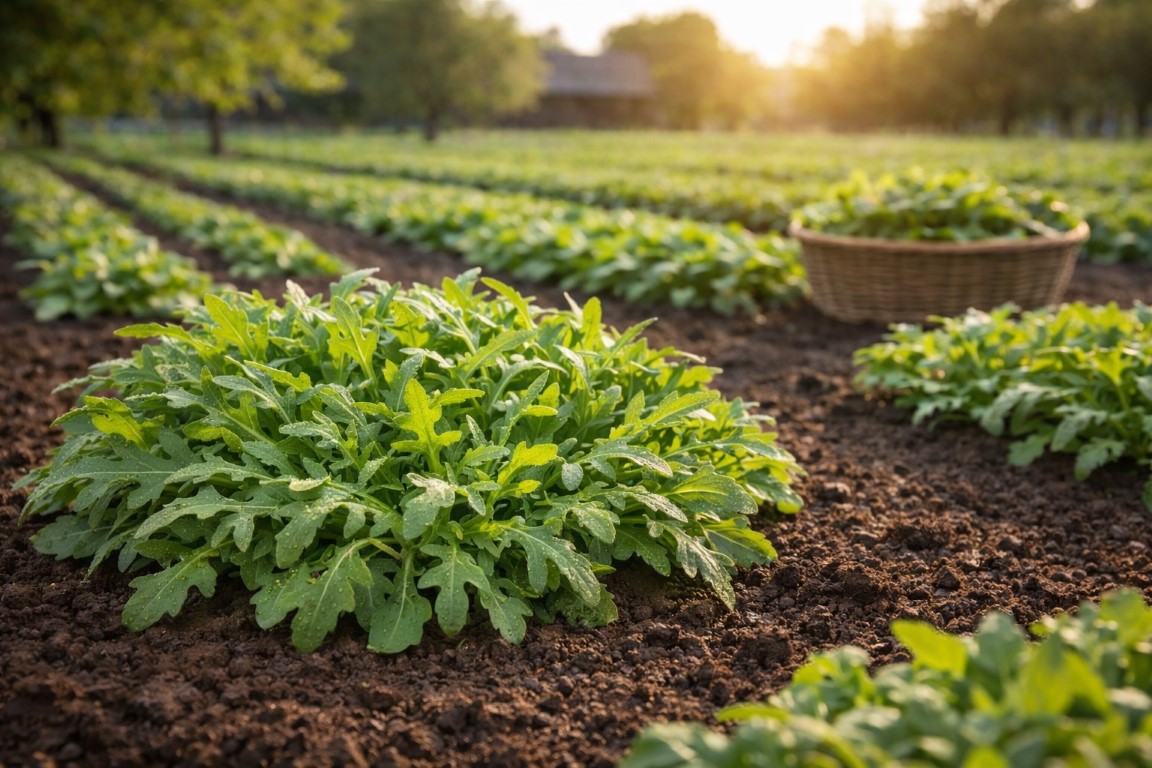
Why is arugula favoured in fast crop cycles?
Arugula can be cut less than a month after it is sown, as it germinates in two to three days. It is a container, compatible and a good option for high tunnels.
Key facts:
- Germination: two to three days.
- Maturity: twenty to twenty-five days.
- Frequency of harvest: Every ten days (baby leaves).
- The ideal pH range for soil is 6.0–7.0.
Tip: Arugula is a popular component of gourmet salads and dining establishments.
5. Green Onions (Scallions): (50 to 60 Days)
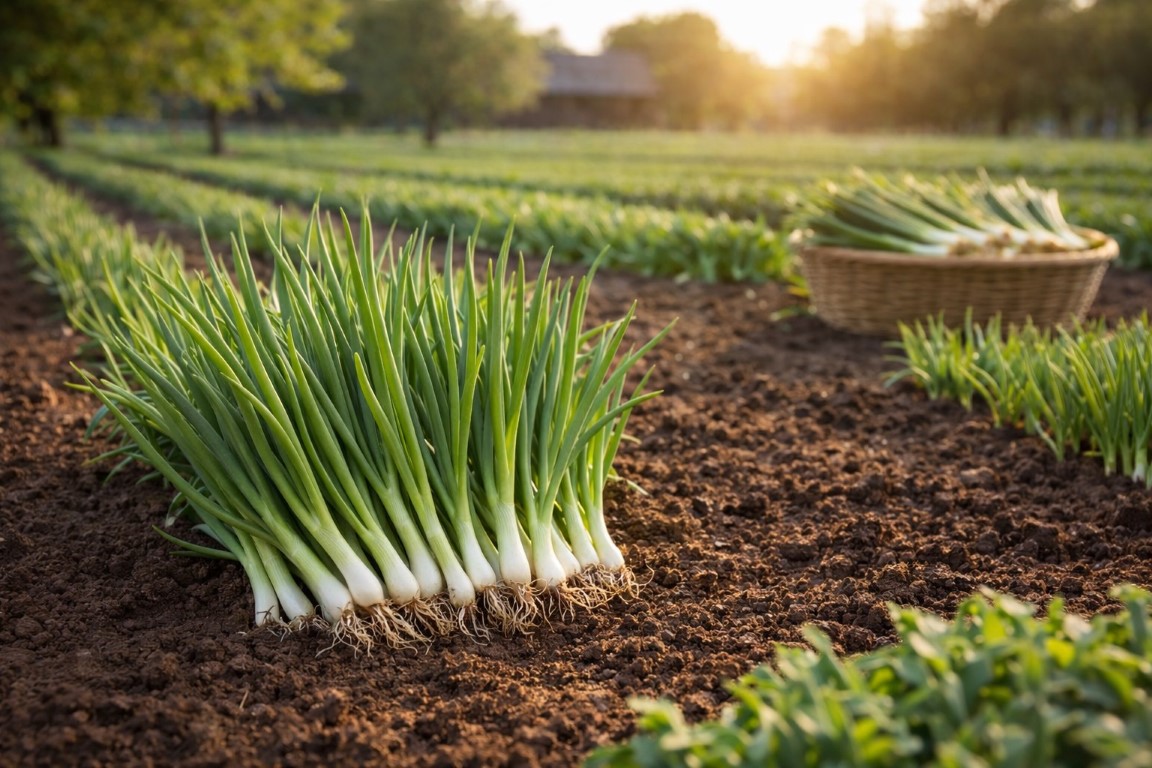
Do scallions grow fast enough for rotation crops?
Yes. Scallions can be quickly grown from either seeds or transplants. They are fast, growing and take up very little space.
Key facts:
- 7–10 days for germination.
- 55–60 days before maturity.
- The yield is 1012 tonnes per acre.
- Varieties: Evergreen, White Lisbon White, Hardy.
Note: Succession planting allows continuous harvests for more than 90 days.
6. Bok Choy: (30 to 45 Days)
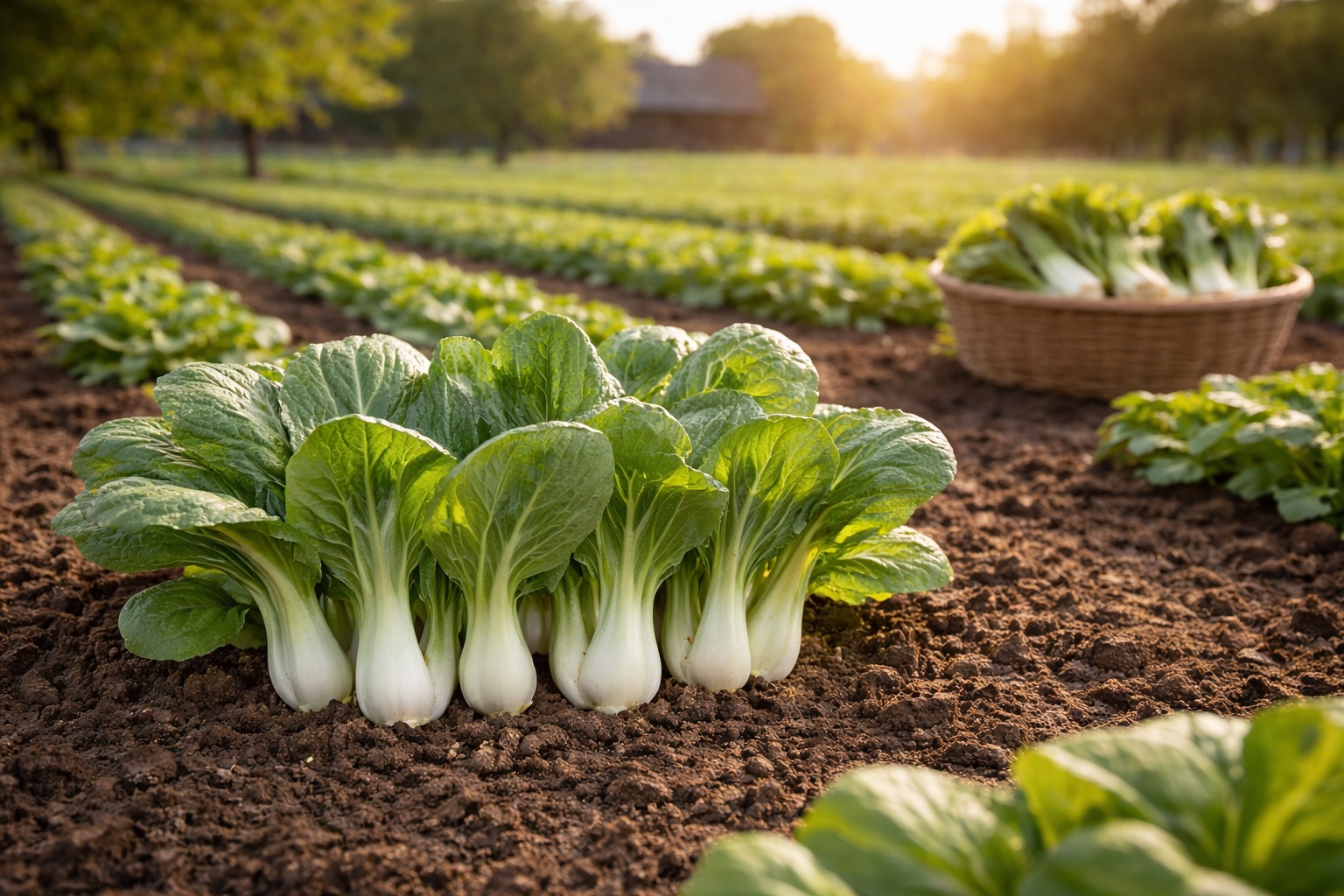
What makes bok choy a smart, fast crop?
Bok choy matures rapidly, is frost-tolerant, and adapts to small beds or containers.
Key facts:
- 4–8 days for germination.
- 30 to 45 days for harvest.
- Standard types: Joi Choi and Mei Qing Choi
- Uses: Market greens, stir-fries.
Tip: Choose dwarf varieties for denser planting and quick turnover.
7. Turnips: (30 to 60 Days)
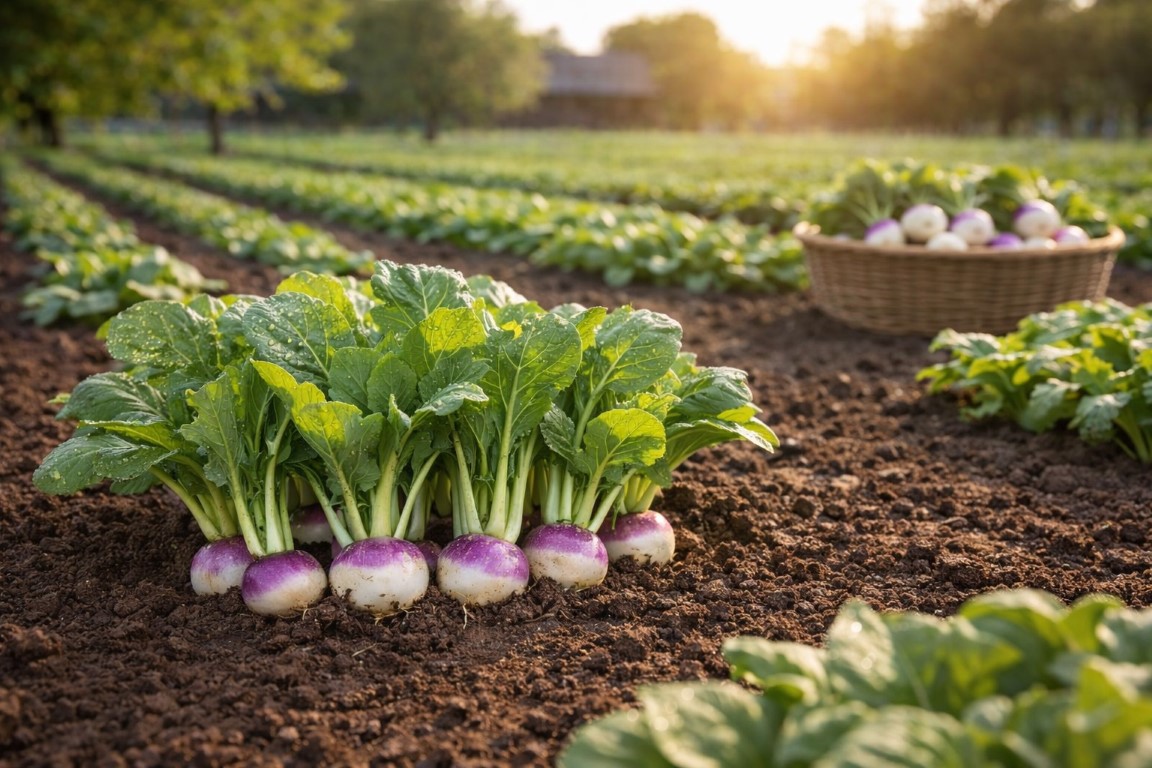
Can turnips provide dual, use yields?
Yes. Both the roots and the leaves can be harvested by farmers. Turnips are now considered a versatile crop with twice as much market potential.
Key facts:
- 3-6 days for germination.
- Harvesting roots: 35–60 days.
- Harvesting leaves: 25–30 days.
- Hakurei and Purple Top are high-yielding cultivars.
Insight: Profit margins would be elevated by marketing hakurei turnips as gourmet salad ingredients.
8. Bush Beans: (45 to 60 Days)
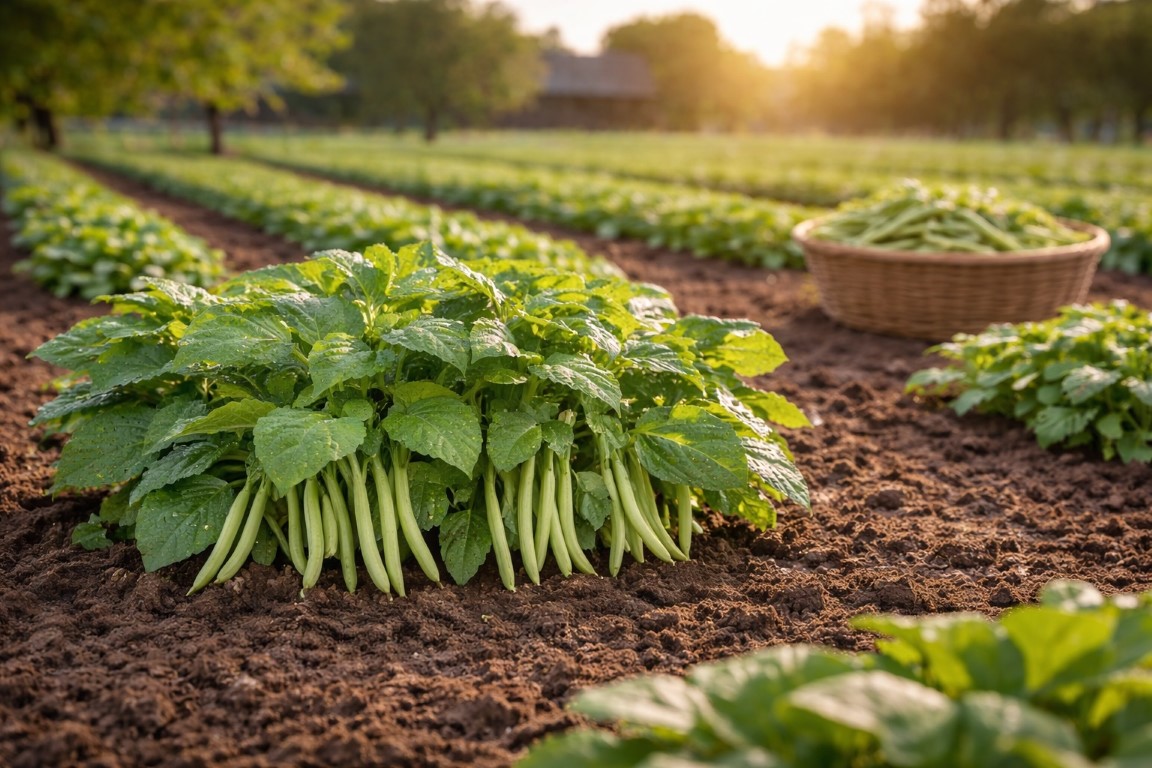
Do beans offer fast turnover and high productivity?
Yes. Bush beans mature faster than pole types and fix nitrogen, improving soil fertility.
Key facts:
- Germination takes six to ten days.
- It takes 50–60 days to reach maturity.
- 1,200–2,400 pounds for every 1,000 square metres.
- Varieties: Provider, Contender.
Advantage: Beans are popular in CSA shares and local markets. They also require low maintenance.
9. Zucchini (Summer Squash): (45 to 60 Days)
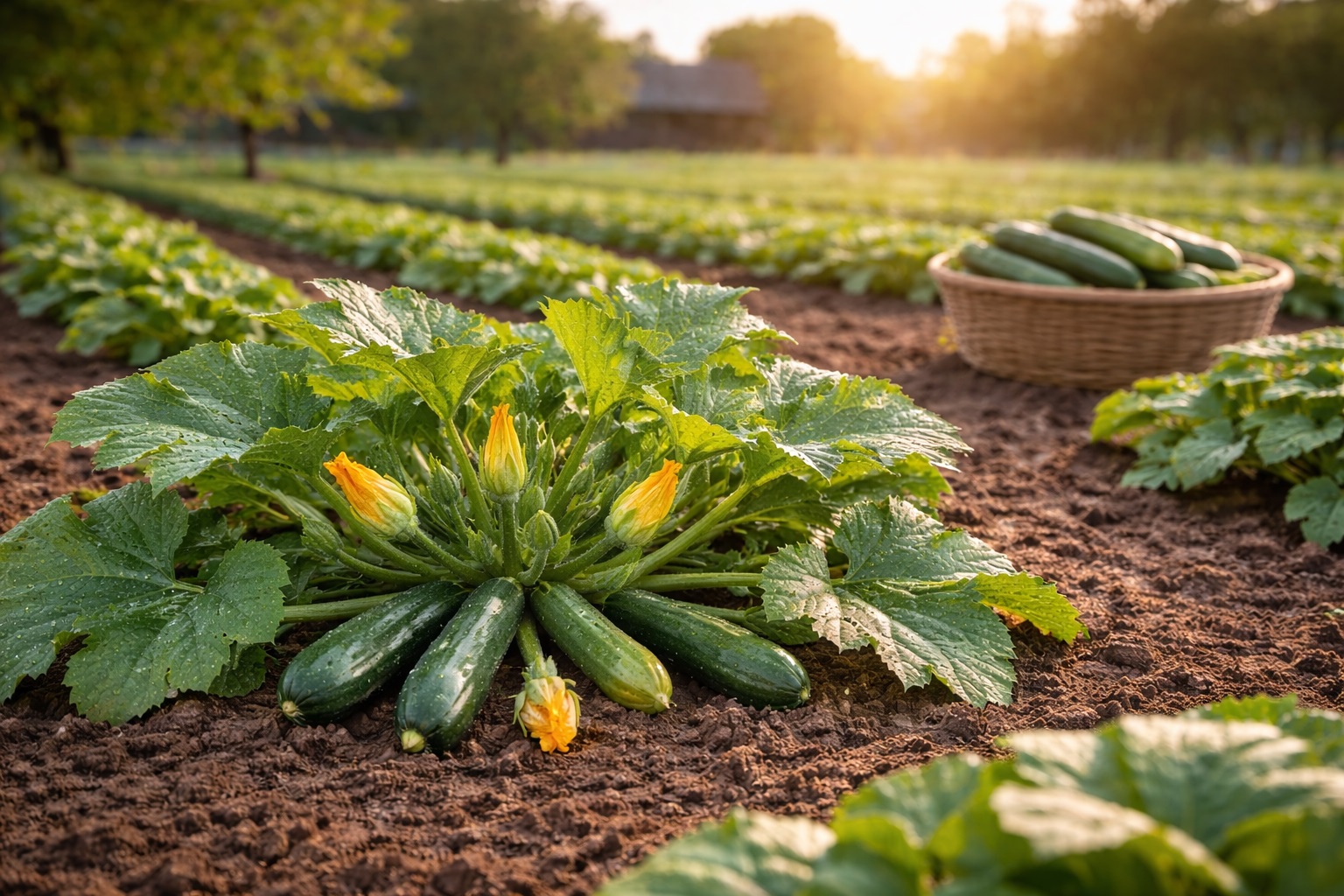
Why is zucchini a profitable, fast-growing crop?
Zucchini produces abundantly in a short window. Early harvests command high prices.
Key facts:
- Five to seven days for germination.
- 45 days for the first harvest.
- Weekly yield: 4–10 fruits per plant.
- Dunja and Black Beauty are the best choices.
Take caution: To avoid large fruit and preserve quality, harvest every two to three days.
10. Cucumbers: (50 to 65 Days)
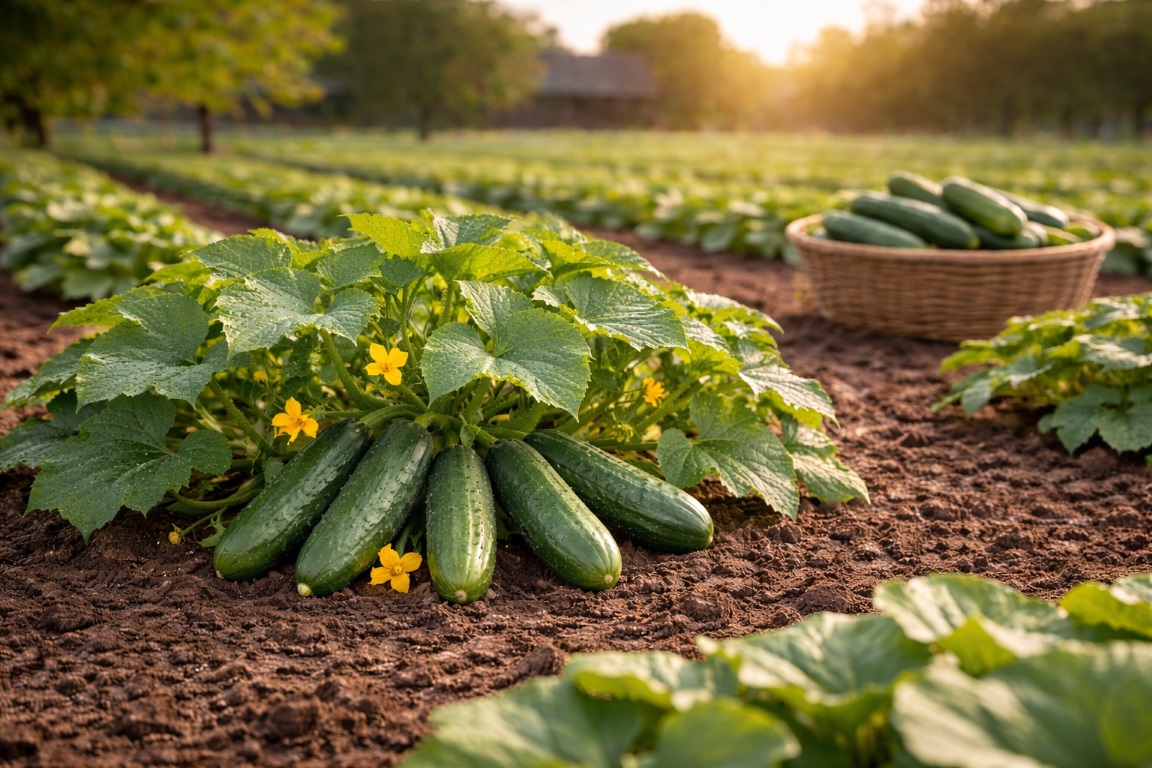
How do cucumbers fit into fast-growing crop systems?
Cucumbers produce a lot and germinate quickly. Trellising maximises ventilation and available space.
Key facts:
- 3–7 days for germination.
- 50–60 days for maturity.
- For every 100 plants, 500–800 fruits are produced.
- Marketmore and Muncher (pickling) are two varieties.
Tip: Advice: For seedless fruits and higher yields, cultivate parthenocarpic types in greenhouses.
Summary Table: Fast-Growing Crops for Small Farms
| Crop | Days to Harvest | Yield/Area Estimate | Key Varieties | Notes |
| Radishes | 25 to 30 | 5–7 tons/acre | Cherry Belle and White Icicle | Ideal for intercropping |
| Lettuce | 30 to 45 | 6–10 tons/acre | Salad Bowl and Buttercrunch | Harvesting by cut-and-come is possible. |
| Spinach | 28 to 40 | 6–8 tons/acre | Bloomsdale and Space | Cool-season crop |
| Arugula | 20 to 35 | 1.5–2 tons/acre | Rocket and Astro | Fastest-growing leafy green |
| Scallions | 50 to 60 | 10–12 tons/acre | Evergreen Hardy White | Grows well in succession |
| Bok Choy | 30 to 45 | 8–10 tons/acre | Joi Choi and Mei | Frost and heat tolerance |
| Turnips | 35 to 60 | 10–12 tons/acre (roots) | Hakurei and Purple Top | Dual-use: roots and greens |
| Bush Beans | 50 to 60 | 1,200–2,400 lb/1,000 sq.m | Provider and Contender | Fix nitrogen in soil |
| Zucchini | 45 to 60 | 10–15 tons/acre | Dunja and Black Beauty | Harvest every 2–3 days |
| Cucumbers | 50 to 65 | 500–800 fruits/100 plants | Marketmore and Muncher | Trellis for space efficiency |
What Are the Best Practices for Growing Fast, Growing Crops?
Small, scale farmers may raise crop speed and output by:
1. Soil health
- Increase fertility and structure by applying organic materials and compost.
2. Irrigation efficiency
- In Irrigation Systems the Drip irrigation conserves water and improves yield per square metre.
3. Succession planting
- Stagger sowing every 7–14 days to extend harvests.
4. Crop rotation
- Helps to avoid disease accumulation and keeps soil nutrients in balance.
5. Season extension tools
- Using reliable seeds, basic nutrients, and crop care materials from a trusted agriculture marketplace helps maintain uniform growth.
Which Crops Can Be Grown Twice in One Season?
fast growing plants in zones 5 9 crops allow for doubling or even tripling the plantings each season in some cases:
- Radishes: up to 4 cycles in spring-fall.
- Lettuce: 3+ cycles with shaded summer planting.
- Turnips and spinach: spring and fall cycles.
- Arugula and bok choy: replant every 2030 days.
As a result, both the diversity of crops harvested and productivity per square metre rise.
Which Fast-Growing Crops Yield the Highest Profits?
High-value markets favour:
- Baby lettuce mixes: up to $20–30 per lb.
- Arugula and other specialty greens are a local restaurant premium.
- Cucumbers and zucchini become a good source of profit only during the early season, when prices are at their highest.
- Turnips and bok choy: Asian vegetable markets are willing to pay more for fresh, top, quality produce.
Farms using CSA or direct-to-market models can maximize returns from these crops.
Concluding Remarks: Why Are These Crops Perfect for Small Farms?
The rapid growth of crops allows farmers to increase the profitability of their resources by growing more of the shorter, season produce. By setting up efficient planting practices and carrying out a short, term vegetable rotation programme(s) to fertilise the soil and generate income, farmers have the means to react more swiftly to market changes, thus enabling higher profits per metre of land.