Integrated Pest Management (IPM): The Best Methods for Contemporary Farms in Pakistan
Overview of Integrated Pest Control
Integrated pest management (IPM) is the global benchmark for sustainable agriculture, is used by the Food and Agriculture Organization (FAO), by the World Health Organization (WHO) and by the State governments, including the Ministry of state Food Security & Research (MNFSR) of Pakistan which employs between 38 and 42 percent of the working population and generates 19 to 22 percent of Pakistan’s GDP. But weeds, diseases and insect attacks cost Pakistani farmers 15-25 percent of the total crop output during each season.
A vicious circle of pesticide resistance, environmental harm, and rising input costs brought on by the conventional strategy, which mostly depends on chemical pesticides, puts food security and farmer livelihoods in danger.
Integrated insect management (IPM) is a scientifically proven, environmentally responsible strategy which integrates multiple insect management strategies to reduce statistically significant insect populations below economic injury levels while minimizing risks to people, animals and the environment. IPM does not try to eliminate all pests but rather a threshold called the Economic Threshold Level (ETL), which is the point where the economic damage from pests is likely to surpass the economic cost of the control measures.
Two. IPM’s Four Fundamental Pillars
2.1 Cultural Controls and Prevention
Changing agricultural methods to make the environment less pest-friendly is the first and most economical layer of IPM. Reactive interventions are no longer necessary thanks to prevention:
Crop rotation is the process of breaking the life cycles of pests by switching up the host crops (for example, in Punjab, switching between cotton and wheat stops the cycles of Helicoverpa armigera).
2.2 Pest Observation and Identification
IPM is essentially an information-based method. Interventions need to be based on accurate, field-based surveillance, not on spray schedules based on a calendar.
At least twice weekly field scouting to determine damage, population and insect presence, at critical crop growth stages.
Sticky cards and pheromone traps are effective in detecting important pests at an early stage such as fruit flies, pink bollworm and Fall Armyworm.
Threshold based decision making: Often, the ETL for wheat aphid is 20-25 aphids/tiller and intervention is only needed when ETL is surpassed.
Digital tools: MNFSR and Provincial agencies are expanding the use of satellite crop monitoring systems and mobile-based pest reporting apps in Pakistan.
For detailed information on emerging pest threats, see our companion resource on Fall Army Worm & its Control.
2.3 Biological Regulation
Biological management being applied to reduce the pest population, involves diseases, parasitoids and natural predators. It is one of the most environmentally-friendly aspects of the IPM program:
Parasitoids: To combat lepidopteran egg masses in cotton and sugarcane, the Pakistan Agricultural Research Council (PARC) and provincial agricultural departments mass-raise Trichogramma species.
Natural enemy conservation: Avoiding the use of broad-spectrum pesticides, maintaining field edges in bloom and not spraying when parasitoids are active in large numbers will help conserve in-field biocontrol agents.
Microbial pesticides: Beauveria bassiana formulations are registered in Pakistan for whiteflies and Bacillus thuringiensis (Bt) products are registered in Pakistan for caterpillar pests.
2.4 Last-Resort Chemical Control
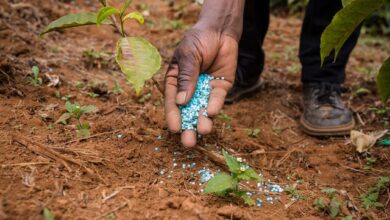
Chemical intervention should be considered when biological and preventative methods have proven to be insufficient to control pest populations when they reach ETL. But IPM carefully manages the use of pesticides to minimize the development of resistance and harm to the environment:
- Choose selective pesticides: Use pesticides that are effective against the specific pest(s) and that do not harm beneficial insects.
- Apply when pests are most susceptible, which is usually when they are young larvae or nymphs. Don’t plant at bloom times to maintain pollinators.
- Use of suitable application equipment: A well calibrated Power Sprayer ensures correct pressure and coverage, reduces drift to non-target areas and saves up to 20-30% pesticide.
- Rotate classes of pesticides: Rotating between pesticides with different IRAC (Mode of Action) numbers to delay resistance.
- Observance of PHI (Pre-Harvest Interval): Ensure that all times between the last application and harvest as mentioned in Pakistan Pesticides Ordinance 1971 and as specified in the product label are adhered to.
3. Land Preparation and Equipment in IPM
Proper land preparation is integral to any IPM programme. Thorough tillage disrupts soil-dwelling pest stages — pupae, eggs, and overwintering adults — exposing them to environmental extremes and natural predators, while also improving drainage to reduce conditions favourable for fungal pathogens.
In Pakistan’s smallholder context (average farm size 2.6–5 acres), mechanised land preparation is increasingly accessible. A reliable Power Tiller enables timely and thorough seedbed preparation, incorporates organic matter, and buries crop residues carrying pest inocula — all critical steps before a new crop cycle begins under an IPM framework.
- IPM land preparation best practices include:
- Deep ploughing (20–25 cm) before the kharif season to bury cotton bollworm pupae and expose them to sunlight and birds.
- Laser land levelling to eliminate low-lying areas where standing water promotes root diseases.
- Green manuring with Sesbania or sunhemp to suppress soil-borne pathogens via biofumigation before transplanting.
- Incorporation of well-decomposed FYM to build beneficial soil microbial communities that suppress plant pathogens.
4 Fifth. Pakistan’s Crop-Specific IPM Calendars
4.1 Punjab and Sindh Cotton (Gossypium hirsutum)
Pre-sowing involves deep plowing, choosing Bt-certified seed, and applying imidacloprid (5 g/kg seed) to the seed.
Stage of vegetation: Check twice a week for whiteflies, thrips, and jassids. If aphid ETL (250 aphids/100 leaves) is reached, release 50,000 eggs/ha of Chrysoperla.
Install pink bollworm pheromone traps (1/ha) during flowering and boll development. Only spray when the ETL is broken.
Maturity: Use a deep plow to kill overwinter bollworm pupae and remove stubble as soon as possible.
4.2 Punjab and KPK Wheat (Triticum aestivum)
Treat seeds with carboxin + thiram or tebuconazole to prevent Karnal bunt and loose smut.
Tillering: Keep an eye out for Hessian flies and Russian wheat aphids. Malaoxon spray should only be used if there are more than 20–25 aphids per tiller.
Heading: Use propiconazole to treat yellow rust (Puccinia striiformis) when 5% of the flag leaf area is affected.
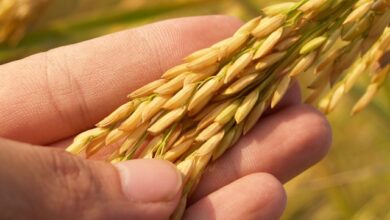
4.3 Sindh and Punjab Rice (Oryza sativa)
Nursery: Use tricyclazole to treat seeds for blast (Pyricularia oryzae) and maintain a healthy seedbed.
Transplanting: To prevent stem borers, use a push-pull technique with napier grass borders.
Tillering to panicle: release Trichogramma at 1.5 lakh/ha at egg peak; capture yellow stem borer pheromones.
4.4 Orchards and Vegetables
IPM incorporates sticky fruit fly traps, canopy management, targeted use of botanical extracts (neem-based formulations), and kaolin clay particle films as physical pest deterrents for fruit orchards and vegetable crops. See our article on Pest and Disease Control Methods in Plantations for a thorough overview of managing pests and diseases in perennial crops.
5. Essential Farm Equipment for IPM Implementation
IPM practices are significantly enhanced by the use of appropriate, well-maintained farm machinery. Two categories of equipment are indispensable for Pakistani farmers implementing IPM:
5.1 Land Preparation Equipment
Timely and thorough tillage is a cornerstone of IPM pest prevention. The Power Tiller is the most widely adopted and cost-effective mechanised tillage solution for smallholder farms across Pakistan. It enables:
Deep inversion tillage to disrupt soil pest pupation zones
Precise seedbed preparation that promotes uniform crop germination and reduces competition from weeds
Efficient incorporation of organic amendments and crop residues
Adaptability across varied terrain including paddy fields, orchards, and rain-fed hill plots
7.2 Pesticide Application Equipment
The efficiency and safety of the chemical application will depend greatly on the type and calibration of the application equipment even if the chemical application is required under IPM protocols. A good Power Sprayer has a number of benefits over the traditional knapsack sprayer that are favoured by IPM:
Targeted low volume application with adjustable pressure that will save chemicals per hectare.
Smooth distribution of droplet size minimising spray drift to adjacent fields and water bodies.
Engine power for complete coverage of tall crops such as sugarcane, maize and orchard trees.
Time efficiency: threshold timed interventions in the very limited “optimal” window of the application provided by the IPM protocols
8 In conclusion
IPM lowers input costs, delays the emergence of resistance, protects natural enemy populations, and puts Pakistani agriculture in a position to comply with international food safety standards by combining preventive cultural practices, systematic monitoring, biological control, and threshold-based chemical interventions.
For Pakistan’s agricultural community, switching from calendar-based pesticide usage to evidence-based integrated management is not only an agronomic suggestion but also a financial need.
See our comprehensive guides on Fall Army Worm & its Control and Pest and Disease Control Methods in Plantations for more information on particular pest problems in Pakistan. Check out Hyundai Power Pakistan’s Power Tiller and Power Sprayer product lines for automated solutions to assist your IPM program.
9. Key References & Official Resources
Government of Pakistan & International Organisations:
- Ministry of National Food Security & Research (MNFSR)
- Pakistan Agricultural Research Council (PARC)
- Department of Agriculture, Government of Punjab
- Agriculture Department, Government of Sindh
- National Locust Control Centre, Pakistan
Related Articles:
- Fall Army Worm & its Control — fasalbachao.com
- Pest and Disease Control Methods in Plantations — fasalbachao.com
Agricultural Equipment: