Precision Agriculture Technologies: How Data-Driven Farming Boosts Yield and Reduces Wastage
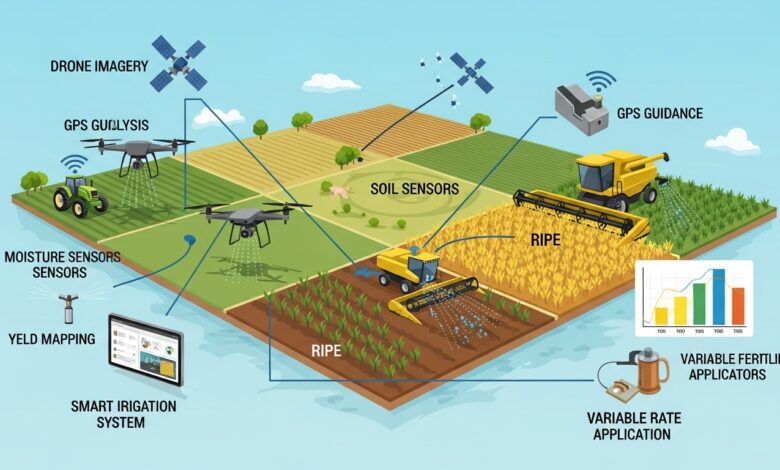
During the last several years, a major change has been seen in the way farmers operate. Traditional methods based on simple observation are not the only ways farmers have been using. They are now actively employing digital instruments, sensors, satellite pictures, and even on-the-spot data processing to take wiser steps. This change – which is referred to as precision agriculture or data-driven farming – is allowing farmers to enhance their output, trim the waste of their inputs and maintain the earth for future generations.
With the global food demand forecasted to grow by 70% by 2050 (FAO), Precision Agriculture Technologies can be considered the most vital way of saving nature while still increasing yield.
What Is Precision Agriculture?
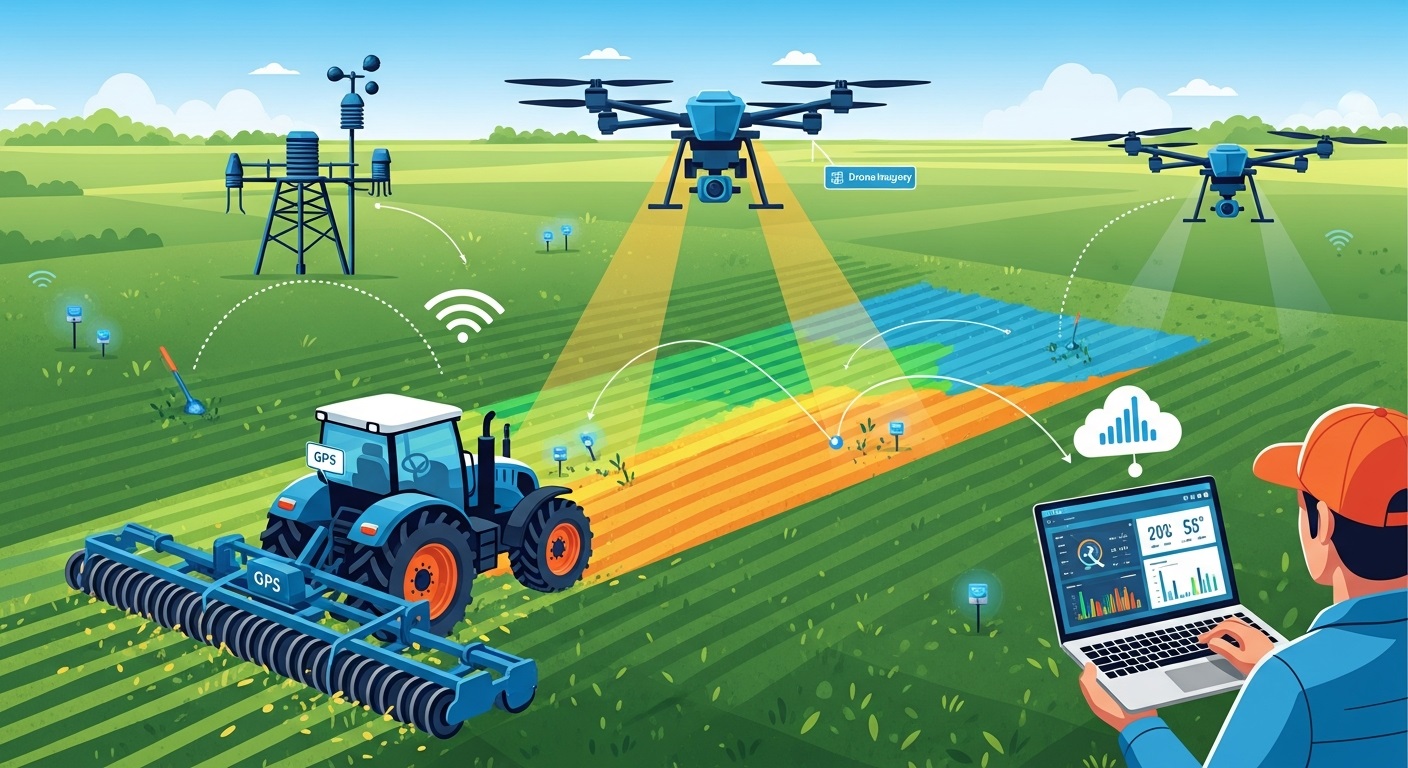
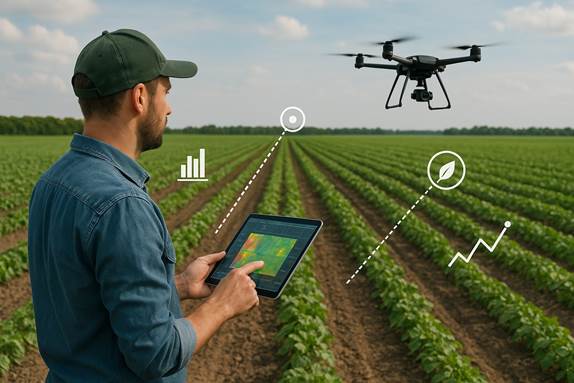
Precision agriculture is a method of farming that relies on data, tech, and mechanization to make the crop-growing process highly efficient and detailed. It means that if a farmer wants to water, fertilize, or spray for pests, he does not have to do the whole field, but he can use some live-data and treat only the areas that really need it.
According to Dataintelo, “The precision agriculture market is experiencing robust growth, with a market size of approximately USD 8.5 billion in 2023, projected to reach USD 17.0 billion by 2032, reflecting a compound annual growth rate (CAGR) of about 8.2%.”
Precision Agriculture Technologies include:
- IoT-based sensors for soil moisture, nutrient levels, and temperature.
- Drones and satellite imagery for crop health monitoring.
- GPS-guided tractors and equipment for accurate planting and spraying.
- AI and machine learning for predictive analytics and yield forecasting.
- Farm management software to centralize data and track performance.
The outcome is a more efficient and sustainable system that boosts yield while conserving water, fertilizers, and energy.
Also check out: Advancements in Precision Agriculture: Boosting Crop Yields in Pakistan
Why Data-Driven Farming Matters Today
Traditional farming has become more difficult due to rising climatic uncertainties, declining soil fertility, and increasing resource costs. Data-driven agriculture is a solution to these problems as it allows:
- To bring more precision in resource use
- To make better decisions from predictions
- To increase the efficiency of work
- To reduce the losses of the crops and the wastage of inputs
How Precision Agriculture Technologies Boosts Yield
1. Soil and Crop Monitoring for Better Decisions
One of the main advantages of precision agriculture technologies is the real-time monitoring of the soil. Different sensors fixed in the soil measure various parameters such as pH, water content, and nutrient availability.
In what ways yield is enhanced:
- First of all, farmers are able to spot nutrient deficiencies at an early stage.
- Secondly, the use of fertilizers becomes less wasteful.
- Thirdly, the development of plants becomes normal and healthy.
As an instance, the farmers utilizing soil-monitoring networks declared that 20–25% of the yields were elevated due to the promptness of nutrient and water supply adjustments.
2. Optimized Irrigation Through Smart Water Management
Water scarcity is becoming a growing concern. With agriculture accounting for 70% of global freshwater usage, efficient irrigation is essential.
Data-driven irrigation improves:
- Water-use efficiency
- Crop hydration timing
- Prevention of over-irrigation and waterlogging
Using smart irrigation technologies, farms have recorded:
- Up to 40% reduction in water usage
- 10–15% increase in overall crop productivity
IoT-enabled systems ensure every part of the field receives just the right amount of water based on soil moisture data and weather forecasts.
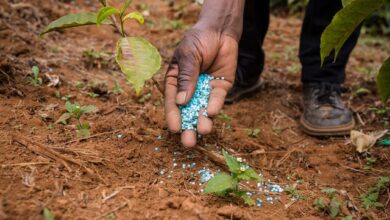
3. Precision Fertilizer Application
Besides merely doubling the costs, excess fertilizer also has a negative impact on the soil. Precision agriculture is a perfect solution to such a problem as it gradually eliminates the use of fertilizers.
Some of the benefits are:
- Fertilizer wastage being reduced by 15-20%
- Improved nutrient intake
- Reduced contaminations of the environment
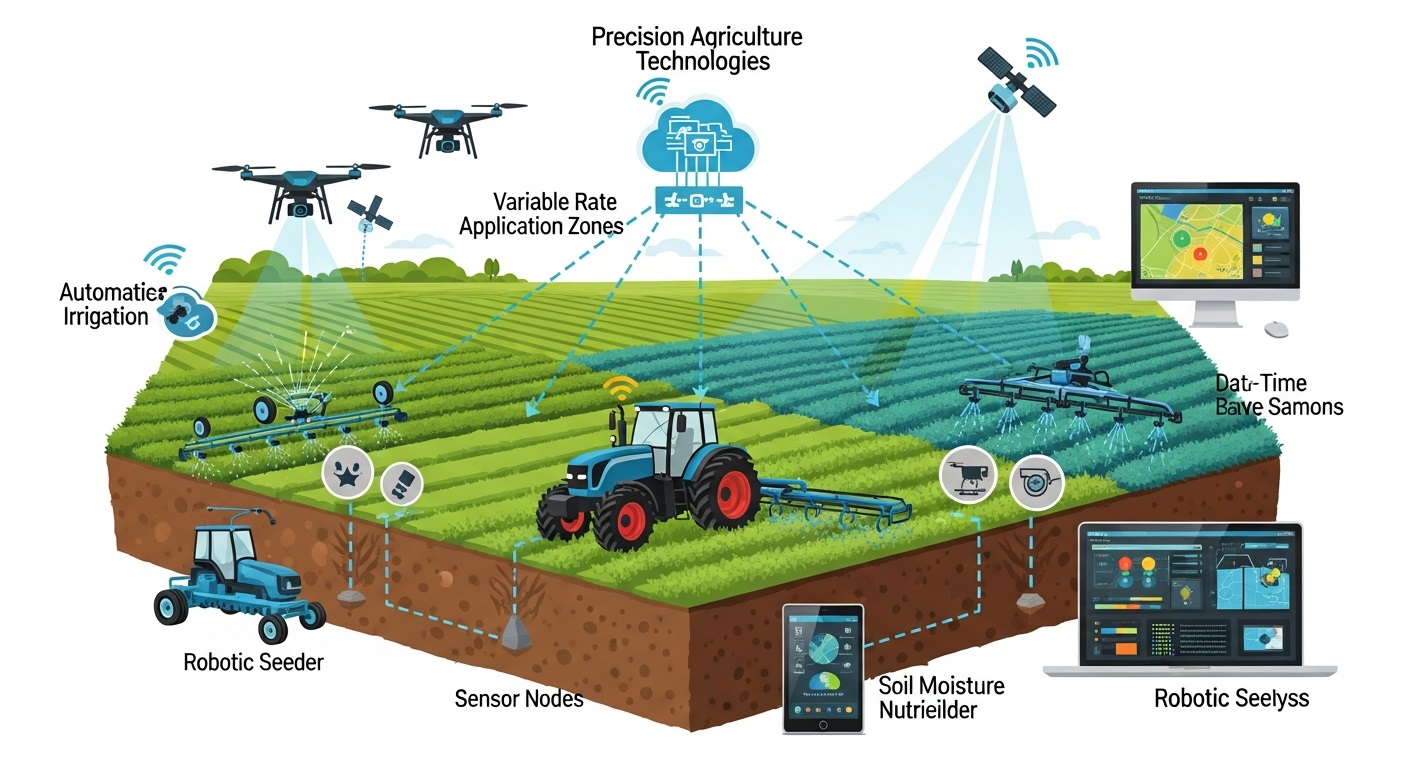
With the help of Variable Rate Technology (VRT), the agricultural machinery can make real-time decisions about the amount of fertilizer to be used based on the condition of the soil
4. Early Disease and Pest Detection
Drones and AI-powered imaging are there to find out the changes in the crops caused by pests or diseases which might not be visible to the naked eye for a long time.
Advantages:
- Initially, the loss of crops is decreased by 30% through such interventions
- It skips the spraying of pesticides all over the fields
- Decreases the costs of chemicals input
The detection at the right moment means the difference between the survival of the whole harvest of the season, particularly in the case of expensive crops.
5. Improved Planting Accuracy
GPS-guided tractors and seeders are able to do the planting of seeds with exact spacing and also at the right depth.
Impact on yield:
- More crop uniformity
- Better soil-to-seed contact
- Decrease in seed wastage
Research indicates that precision planting is responsible for a 10–25% increase in production, mainly in such crops as maize and soybeans.
Here is another informative article on Precision Agriculture & Farming Drones: How Aerial Technology is Optimizing Agriculture
How Precision Agriculture Reduces Wastage
1. Lower Input Wastage (Water, Fertilizers, Pesticides)
When farms resort to precise measurements instead of estimations, they do not overuse inputs. Besides that it is a way of saving money, it is also a way of keeping
| Input | Traditional Farming Usage | Precision Agriculture Usage | Reduction (%) |
| Water | High | Controlled, sensor-based | 30–40% |
| Fertilizers | Often excessive | Variable Rate Application | 15–20% |
| Pesticides | Blanket spraying | Targeted, need-based | 25–30% |
2. Reduced Post-Harvest Losses
Proper data-driven forecasting helps farmers plan:
- Harvest timing
- Storage conditions
- Transport logistics
Post-harvest losses that, at a global level, may represent up to 14% of total production, can be reduced in a significant way just by better decision-making.
3. Efficient Resource Allocation
Farmers can determine areas of their fields that have lower yields and thus use human power, water, and fertilizers more efficiently and effectively.
This brings about:
- Greater return on investment per acre
- Less labour wastage
- Better operational control
By means of real-time dashboards, the people in charge of the farms receive the opportunity to oversee and evaluate all the activities carried out on the farm.
Environmental Benefits of Precision Agriculture Technologies
In addition to increasing productivity and lowering expenses, precision agriculture is also beneficial to the environment.
Some of the main environmental benefits are:
- Reduced direct greenhouse gas emissions mainly from nitrous oxide due to the adoption of precision fertilization practices
- Improved soil organic matter and microbial biomass
- Lower chemical runoff into water bodies through real-time monitoring and precise applications
- Conservation of freshwater resources through efficient irrigation
As climate change makes farming more volatile, data-driven insights enable farmers to adjust faster and in a more eco-friendly way.
Challenges in Adopting Precision Agriculture
Even though Precision Agriculture Technologiescan be a very effective tool, the transition is still being slowed by some issues:
1. Heavy Investment in the Beginning
For example, drones, sensors, and automated tractors may cost a lot.
2. Need for Digital Skills
Farmers must be trained to understand data and use digital tools efficiently.
3. Problems with Connection
Most of the time, remote areas do not have stable internet networks which are necessary for real-time updates.
4. The Difficulty of Data Management
The huge amount of data from sensors and satellites needs appropriate storage, processing, and security.
On top of these problems, it is still possible due to government programs, subsidies, and user-friendly digital platforms that precision agriculture becomes a reality for small and medium farmers.
The Future of Data-Driven Farming
With the continuous advancements of AI, IoT, and automation, precision agriculture is going to be changed radically over time. The major changes it will have in the future are:
1. Autonomous farming equipment
Efficiency will be raised through the utilization of driverless tractors, AI-based sprayers, and robotic harvesters.
2. Predictive analytics for climate resilience
Models will be able to predict droughts, rainfall patterns, pest infestations with high accuracy.
3. End-to-end farm automation
Centralized systems will be the ones in charge of planting, monitoring, irrigation, and harvesting.
4. Blockchain-enabled traceability
Farmers will have the ability to trace their products from the time of planting till the time of sale, thus giving a boost to food safety.
Such changes indicate that the coming decade will be the time of great change in farming efficiency and sustainability.
Conclusion
Precision Agriculture Technologies are changing the agricultural industry of the future by integrating various technologies such as data analytics, automation, and environmental stewardship. The farming method which heavily depends on data is still considered as a mere option but it is gradually turning into a must because of the benefits it brings such as increased output, less wastage, and better decision-making.
In a world where issues such as food security, climate change, and resource scarcity become more and more serious, precision agriculture is still able to provide a strong, eco-friendly, and expandable solution for the agricultural sector of the future.