Farmhouse Maintenance Checklist: Protecting Agricultural Homes from Water Damage, Electrical Faults, and Winter Risks
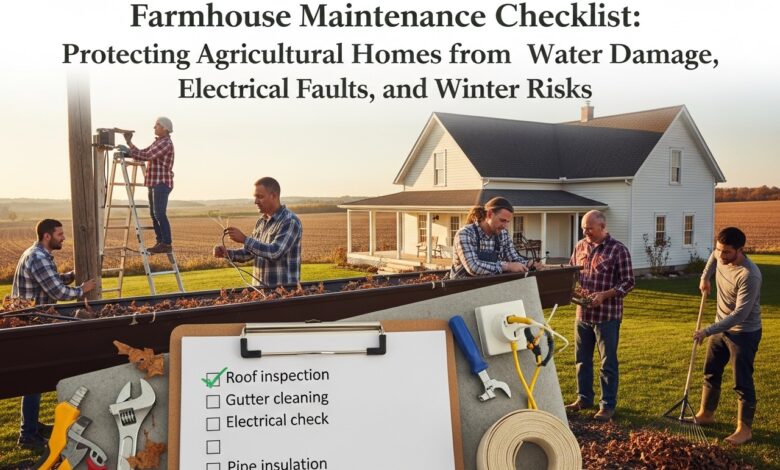
Farmhouses deal with a whole different set of headaches than your average home. Out in the country, you’re often working with aging systems, private wells, miles of pipe, and weather that just doesn’t quit barraging you with snow, rain and storms. Whether you live there full-time or use the place for farming, keeping everything in shape and working order with Farmhouse Maintenance matters for your family, your animals, your crops, and your gear.
Here’s a down-to-earth checklist to help you dodge water problems, electrical mishaps, and the worst of winter.
1. Keep an Eye on Your Water System
Most farmhouses pull water from wells, boreholes, or pipes that run from who-knows-where. Leaks can sneak up on you, sometimes for weeks, and by the time you spot the problem, the damage is done.
What to watch for:
- – Damp patches on floors, walls, or down in the basement.
- – Outdoor taps or irrigation lines that drip or look wetter than they should.
- – Water pressure that suddenly drops which is a sign something’s wrong in the pipes.
- – Well pumps and filters that haven’t seen a service in a year.
Water isn’t just a mess; it ruins insulation, weakens the structure, and can lead to mould spreading to your storage or livestock areas. Catch issues early and you’ll save yourself a headache.
2. Stop Pipes from Freezing
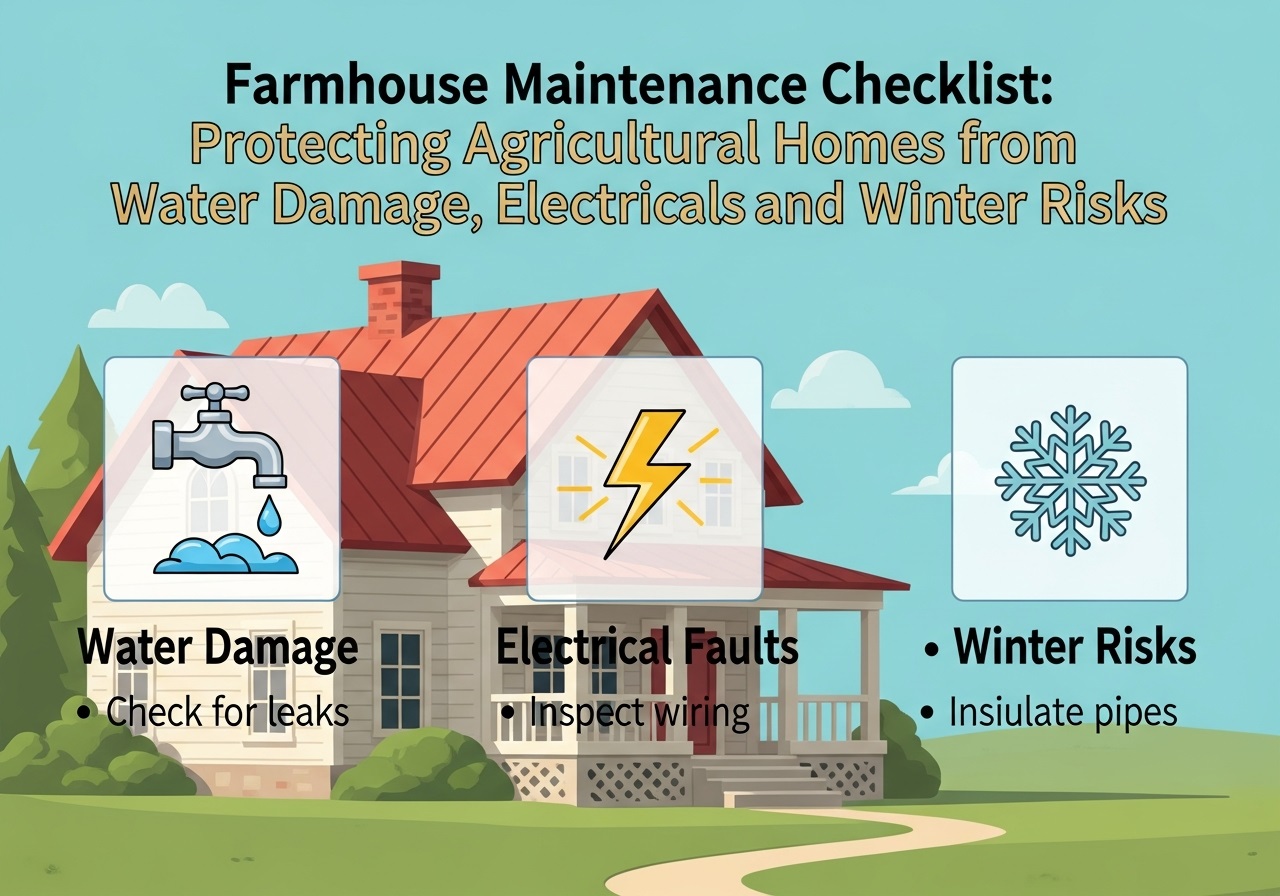
Farmhouses almost always have pipes running through unheated spots such as barns, outhouses, old extensions. When the temperature drops, those pipes freeze and burst, flooding everything.
What helps:
- – Wrap all exposed pipes, inside and out, with insulation.
- – Use heat tape where it gets really cold.
- – Don’t let any room drop below freezing, even if you rarely use it.
- – Shut off and drain outdoor taps and irrigation before winter hits.
Nobody wants to deal with soaked feed, ruined floors, or trashed equipment. A little prep now keeps costs and stress down later on.
3. Clean Out Gutters, Roofs, and Drains
Open country means your roof and gutters catch all sorts of junk such as leaves, dust, whatever the wind brings in. Let it pile up and you’re asking for leaks, foundation trouble, or pools of water right where you don’t want them. Winter can even bring ice dams that rip gutters off.
Stay on top of it:
- – Clean gutters at least twice a year.
- – Check the roof for missing shingles, rusty patches, or gaps.
- – For older roofs, bring in a pro every few years.
It’s easier to fix a loose shingle than a flooded attic.
4. Don’t Mess Around with Electrical Safety
Old wiring, extra buildings, heavy machinery means that farmhouses put a lot of strain on their electrical systems. One bad wire can start a fire, fry your gear, or give someone a nasty shock.
Keep this in mind:
- – Look for frayed wires or signs rodents have chewed through insulation.
- – Test outlets. If they spark or feel hot, replace them.
- – Make sure barns and sheds have grounded circuits.
- – Upgrade ancient fuse boxes to something modern.
- – Keep your electrical panels accessible, dry, and clean.
And always have the number for a good emergency electrician nearby. Out in the sticks, help takes longer to arrive, so don’t take risks.
5. Get Outbuildings Ready for Winter
Barns, garages, grain stores etc these need just as much attention. Cracks, drafts, or a broken heater can turn nasty fast when the weather turns.
Check for:
- – Cracked concrete floors.
- – Weak beams or panels that could give way.
- – Gaps letting in wind or critters.
- – Heaters or vents that aren’t working.
Strengthen these spots now so your animals, equipment, and harvest stay safe when the next cold snap hits.
6. Take Care of Heating and Ventilation
Good heat keeps everyone comfortable and stops damp from taking over. Bad ventilation means condensation, mould, and poor air.
Get a pro to inspect:
- – Boilers and stoves.
- – Chimneys.
- – Fans and exhaust systems.
Safe, efficient heating isn’t just about comfort, it cuts fire risk and keeps bills down.
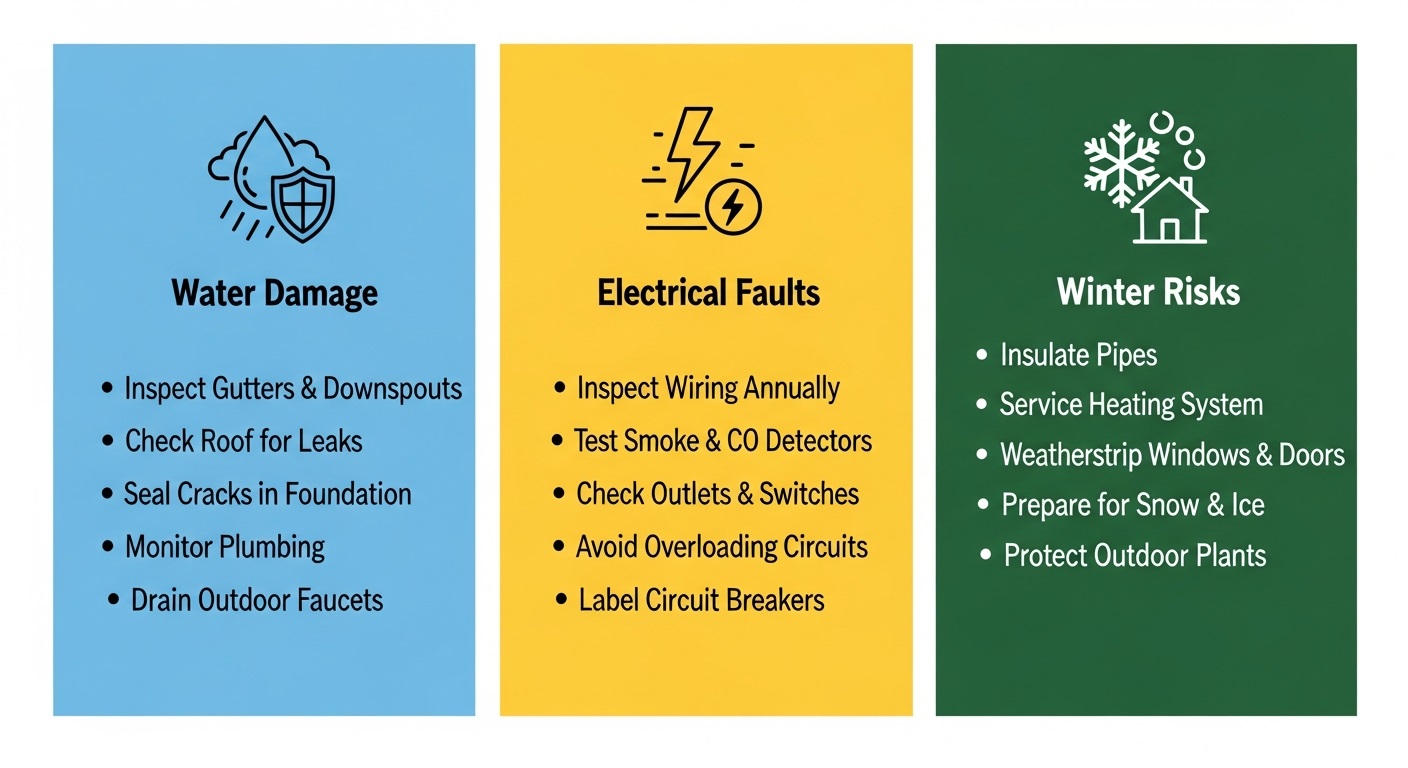
Farmhouse Maintenance Checklist – Summary Table
| Category | What to Monitor | Why It Matters | Key Actions |
|---|---|---|---|
| 1. Water System | Damp spots, dripping taps, low pressure, overdue pump/filter service | Prevents mould, structural weakening, insulation damage | Inspect pipes and well systems regularly; fix leaks early; schedule annual servicing |
| 2. Prevent Freezing Pipes | Exposed or uninsulated pipes in barns, outhouses, and old extensions | Frozen pipes burst and cause major flooding and equipment damage | Insulate pipes; use heat tape; keep rooms above freezing; shut off & drain outdoor lines before winter |
| 3. Gutters, Roofs & Drains | Blocked gutters, piles of debris, missing shingles, rusty or cracked areas | Prevents leaks, foundation damage, ice dams, and water pooling | Clean gutters twice yearly; inspect roof each season; hire professionals for older roofs |
| 4. Electrical Safety | Frayed wires, rodent damage, sparking or hot outlets, old fuse boxes | Reduces fire risk, equipment failure, electrical shocks | Replace damaged wires/outlets; ensure grounded circuits; upgrade outdated panels; keep electrical areas dry |
| 5. Winter-Ready Outbuildings | Cracked floors, weak beams, gaps, faulty heaters or vents | Protects livestock, machinery, and harvested crops from cold and storms | Repair structural issues; seal gaps; service heating/ventilation; strengthen weak spots |
| 6. Heating & Ventilation | Inefficient boilers, clogged chimneys, non-working fans or exhaust | Controls dampness, reduces fire risk, saves energy | Get professional inspection for boilers, stoves, chimneys, and ventilation systems |
Conclusion
Looking after a farmhouse is about more than just avoiding repairs. You’re protecting your home, your family, and everything you work for. Stay on top of water, wiring, and anything winter might wreck, and you’ll keep your farm running without the drama.
And if something electrical goes wrong, call in the pros such as an emergency electrician. In the country, a little extra caution can save you a lot of trouble.
For more information and such informative blogs, do check out our Agriculture Blog.