Main Tips for Agriculture Test
Preparing for an agriculture test in Punjab starts with knowing exactly what you are preparing for. The main entry-level officer posts of the Agriculture Department, Government of the Punjab — Agriculture Officer, Cotton Inspector, Farm Manager and the related BPS-17 posts — are filled through a written test conducted by the Public Service Commission, and the paper is made up of 80% subject-related material and 20% General Knowledge. This page lists the posts, shows the paper pattern at a glance, gives the preparation tips that this page has always carried, and ends with a set of practice MCQs so you can check yourself.
The main BPS-17 posts in the Agriculture Department, Punjab
The main BPS-17 posts related to the Government of the Punjab, Agriculture Department are as follows:
- Agriculture Officer / Cotton Inspector / Farm Manager
- Instructor in the Agriculture Training Institutes
- Water Management Officer
- Agriculture Research Officer
- Research Officer
All these posts require preparation of a test which is conducted by the Public Service Commissions of the provinces in Pakistan — in Punjab, the Punjab Public Service Commission (PPSC).
Agriculture test pattern at a glance
| Item | Detail |
|---|---|
| Posts covered | Agriculture Officer / Cotton Inspector / Farm Manager, Instructor (Agriculture Training Institutes), Water Management Officer, Agriculture Research Officer, Research Officer |
| Grade | BPS-17 |
| Test conducted by | Public Service Commissions of the provinces (PPSC in Punjab) |
| Subject-related portion | 80% of the test |
| General Knowledge portion | 20% of the test |
| Key preparation material | Production technologies of major and minor crops; “Basics of Agriculture” and “General Agriculture” |
How to prepare the subject portion
The tests are comprised of 80% subject-related material and 20% General Knowledge, so the subject portion deserves most of your time. It can mainly be prepared by studying the following material:
- Production technologies of all major crops in Pakistan — especially their varieties, seed rates and sowing times.
- Production technologies of important minor crops (fodders, medicinal plants, etc.).
- The MCQs given on this website, as these are especially selected for preparation — for example the set on Agri-MCQs #18: agriculture information by electronic media in Punjab.
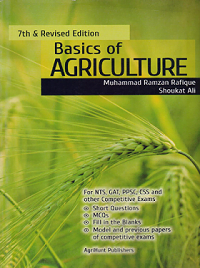
- Books exclusively on agriculture, especially Basics of Agriculture and General Agriculture.
All these tips may be used to get top marks in all kinds of agriculture-related tests. Before the test, also solve a recent paper, such as the PPSC past paper 2023 for the post of Agriculture Officer / Cotton Inspector / Farm Manager, and then move on to the Agri-MCQs #19 for the Principal / Senior Agriculture Officer PPSC test if you are preparing for the senior posts.
Practice MCQs for the agriculture test
The first questions test the posts and the paper pattern itself; the rest are drawn from agriculture information and media in Punjab — a favourite area in these tests. Answers are given with each question.
Practising with MCQs is not just convenient — the evidence supports it. A meta-analysis by Adesope and Trevisan (2017, Review of Educational Research) found that practice testing produces better results than restudying, with multiple-choice questions especially useful for memorising material. Feedback matters just as much: Douglas, Wilson and Ennis (2012) found that 70% of students said feedback on MCQ practice tests helped them learn from their mistakes — which is why every question in this set carries its answer with it.
1. Agriculture Officer / Cotton Inspector / Farm Manager are posts of which grade in the Agriculture Department, Punjab?
- A. BPS-16
- B. BPS-17
- C. BPS-18
- D. BPS-19
Answer: B — BPS-17
2. In Punjab, the written test for the post of Agriculture Officer is conducted by:
- A. National Testing Service
- B. Punjab Public Service Commission
- C. Federal Public Service Commission
- D. A departmental selection committee
Answer: B — Punjab Public Service Commission
3. The subject-related portion of the agriculture test is:
- A. 50%
- B. 60%
- C. 80%
- D. 90%
Answer: C — 80%
4. The General Knowledge portion of the agriculture test is:
- A. 20%
- B. 30%
- C. 40%
- D. 10%
Answer: A — 20%
5. The Water Management Officer post belongs to:
- A. Irrigation Department, BPS-16
- B. Agriculture Department, BPS-17
- C. Livestock Department, BPS-17
- D. Agriculture Department, BPS-18
Answer: B — Agriculture Department, BPS-17
6. The subject portion of the test should mainly be prepared from:
- A. Production technologies of the major crops
- B. World geography
- C. Current affairs only
- D. English grammar
Answer: A — Production technologies of the major crops (varieties, seed rates, sowing times)
7. Which books are especially recommended for preparation of the agriculture test?
- A. Everyday Science
- B. “Basics of Agriculture” and “General Agriculture”
- C. Pakistan Studies
- D. Principles of Economics
Answer: B — “Basics of Agriculture” and “General Agriculture”
8. A farmer in Punjab can get guidance from the Agriculture Department on the helpline:
- A. 0800-15000
- B. 0800-17000
- C. 0800-29000
- D. 7272
Answer: B — 0800-17000 (available 8 AM to 8 PM)
9. Zaraat Nama, the Urdu farm magazine of the Directorate of Agricultural Information, Punjab, is published:
- A. Every week
- B. Every two weeks (fortnightly)
- C. Every month
- D. Every two months
Answer: B — Fortnightly
10. Which directorate of the Agriculture Department, Punjab is responsible for spreading agricultural information among farmers?
- A. Directorate of Agricultural Information
- B. Directorate of Pest Warning
- C. Directorate of Agriculture Marketing
- D. Directorate of Soil Survey
Answer: A — Directorate of Agricultural Information
11. The Directorate of Agricultural Information, Punjab is based at:
- A. Agriculture House, Lahore
- B. University of Agriculture Faisalabad
- C. Civil Secretariat, Lahore
- D. Ayub Agricultural Research Institute
Answer: A — Agriculture House, Lahore
12. The agricultural TV programme produced for farmers by the Agriculture Department, Punjab is:
- A. Haryali
- B. Ziraat Nama
- C. Zamindara
- D. Khaiti
Answer: B — Ziraat Nama
13. “Utam Kheti”, the best-known farm radio programme among Punjab farmers, is broadcast from Radio Pakistan:
- A. Lahore
- B. Faisalabad
- C. Multan
- D. Bahawalpur
Answer: C — Multan
14. A farmer can talk free of cost to agriculture experts on crops and livestock by dialling the Bakhabar Kissan helpline:
- A. 7272
- B. 2244
- C. 0303-0300000
- D. 0800-17000
Answer: C — 0303-0300000
15. Telenor’s free Khushaal Zamindar advisory service for farmers is accessed by dialling:
- A. 700
- B. 7272
- C. 2244
- D. 8070
Answer: B — 7272
16. Bakhabar Kissan keeps farmers informed through:
- A. Market rates and weather forecasts
- B. Crop and livestock advisories
- C. SMS, IVR and a mobile app
- D. All of these
Answer: D — All of these
17. The University of Agriculture Faisalabad started in 1906 as:
- A. Punjab Agricultural College and Research Institute, Lyallpur
- B. West Pakistan Agricultural University
- C. Agriculture College, Multan
- D. Government Agriculture College, Lahore
Answer: A — Punjab Agricultural College and Research Institute, Lyallpur
18. Which of the following is a private agricultural magazine circulated in Punjab?
- A. Zaraat Nama
- B. Jadeed Ziraat
- C. Ziraat Nama (TV)
- D. Haryali
Answer: B — Jadeed Ziraat (Zaraat Nama is the government magazine of the Directorate of Agricultural Information)
Frequently asked questions
Who conducts the Agriculture Officer test in Punjab?
The Punjab Public Service Commission (PPSC). In the other provinces, the tests for the same posts are conducted by their own Public Service Commissions.
What is the pattern of the agriculture test?
The test is comprised of 80% subject-related material and 20% General Knowledge.
Which Agriculture Department posts are BPS-17?
Agriculture Officer / Cotton Inspector / Farm Manager, Instructor in the Agriculture Training Institutes, Water Management Officer, Agriculture Research Officer and Research Officer.
Which books are best for the agriculture test?
Books exclusively on agriculture — especially “Basics of Agriculture” and “General Agriculture” — together with the production technologies of major and minor crops and regular MCQ practice.
Disclaimer: These tips and practice questions are study aids based on past papers and published sources; they cannot guarantee any test result. Always rely on the official syllabus and the recruiting authority’s latest notification.