Planning Your Homestead Calendar Around Livestock Breeding Season
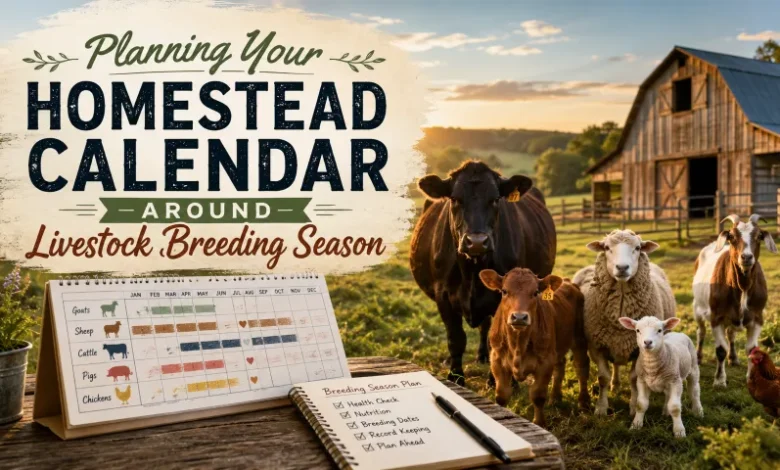
Running a homestead with multiple types of livestock means juggling several different calendars at once, and cattle have one of the longer timelines to plan around. Chickens hatch in three weeks. Goats are pregnant for about five months. Cows take considerably longer, and if you don’t build your entire Homestead Calendar around that reality, you end up caught off guard by a due date that snuck up faster than expected, or worse, arrived in the middle of a season when you’re least prepared to handle it.
When I first started homesteading using Homestead Calendar, I treated each animal’s schedule as a separate, isolated thing to track. It didn’t take long to realize that approach was a recipe for missed preparation windows, since the timelines overlap in ways that create real scheduling conflicts if you’re not looking at the whole year together.
Mapping Breeding Windows Backward From Target Dates
I start my planning each year by mapping out breeding windows for every animal on the property, working backward from when I want calves, kids, and other offspring to arrive. For cattle specifically, I want calves born in early spring, which means counting backward from that target date using the typical cow gestation period to figure out exactly when breeding needs to happen the previous summer.
This backward-planning approach forces you to think about the entire arc of the year in advance rather than reacting to each stage as it arrives. It also highlights potential conflicts early. If your ideal calving window overlaps with your goat kidding season or your peak garden harvest time, you’ll want to know that months in advance rather than discovering it the week both events actually happen at once.
How This Affects Feed and Labor Planning
That backward planning affects more than just breeding schedules. It determines when I need extra hay on hand, when I schedule vet visits for pregnancy checks, and when I start prepping the barn stalls for calving. Miss the window on any one of these, and you’re improvising during the exact weeks you can least afford to be unprepared.
Feed planning in particular benefits from this longer view. Knowing months in advance that you’ll have a pregnant cow needing additional nutrition during late gestation, at the same time you’re also managing other seasonal demands on your hay supply, lets you order or produce enough in advance rather than scrambling to find extra hay during a shortage or price spike that coincides with your animal’s greatest nutritional need.
Building in Buffer Time for the Unexpected
One adjustment I’ve made over the years is building buffer time into my Homestead Calendar rather than planning around exact dates. Breeding doesn’t always take on the first attempt, weather can delay outdoor work, and calving dates can shift by a week or two in either direction even with a confirmed breeding date. I now plan my barn prep and kit checks to start a few weeks earlier than the absolute earliest possible date, rather than cutting it close to the average expected timeline.
This buffer has saved me more than once, particularly in years when breeding took an extra cycle or when an early calf arrived before my original calendar accounted for. A calendar with built-in flexibility handles these normal variations far better than one built around a single precise date with no room for adjustment.
Using a Shared Calendar for the Whole Household
If more than one person helps manage your homestead, a calendar that only lives in your head isn’t much use to anyone else. I’ve moved my breeding and birthing calendar to a shared physical wall calendar in the barn, visible to anyone doing chores, rather than keeping the information in a personal planner only I check. This has paid off more than once when I’ve been away and someone else needed to know whether a particular cow was getting close to her due date without having to track me down first.
A shared calendar also creates a natural point of accountability. When breeding and birthing windows are visible to everyone helping with the operation, tasks like final barn prep or kit checks are less likely to slip through the cracks simply because more than one person is aware of the approaching timeline.
Adjusting the Plan as You Gain More Experience
It also helps to keep a simple running record from year to year of actual breeding dates alongside actual calving dates, rather than relying purely on general gestation averages each season. Over several years, this personal record can reveal patterns specific to your own herd or even specific individual cows, some of which may consistently run a few days longer or shorter than the general average, information that’s far more useful for your specific planning than a generic number alone.
My Homestead Calendar planning has changed considerably since my first year raising cattle, mostly because I’ve learned where my own estimates tended to run optimistic. Early on, I planned barn prep and kit checks right around the average expected due date, only to find myself underprepared when a calf arrived earlier than that average. I’ve since shifted my entire planning window earlier by roughly two weeks across the board, treating the earliest reasonable date as my actual planning deadline rather than the statistical average.
This kind of adjustment only comes from paying attention across multiple seasons and being honest with yourself about where your planning fell short in previous years. Keep notes each season on what worked and what didn’t, and let that feedback genuinely reshape next year’s calendar rather than starting from scratch with the same assumptions every time.
The Homesteaders Who Handle This Well
It’s also worth revisiting your calendar mid-season rather than only at the very start of the year. Weather delays, an unexpected illness, or a missed breeding cycle can shift your timeline after you’ve already made your initial plan, and checking in every month or two lets you catch those shifts early enough to adjust your hay orders, vet scheduling, and barn prep accordingly, rather than discovering the mismatch only when a due date arrives earlier or later than your original plan accounted for.
The homesteaders I know who handle calving season smoothly every year aren’t the ones with the fanciest barns or the most expensive equipment. They’re the ones who treat their calendar as seriously as their fencing, mapping out every breeding and birthing window months in advance instead of reacting to dates as they arrive.
If you’re managing multiple types of livestock on your property, take an afternoon this year to map out every breeding and birthing window on a single calendar, rather than tracking each animal separately. Seeing the whole picture at once is what turns a chaotic, reactive season into one where you’re consistently a step ahead of what your animals actually need.