Compact Farm Equipment That Improves Productivity on Small Farms
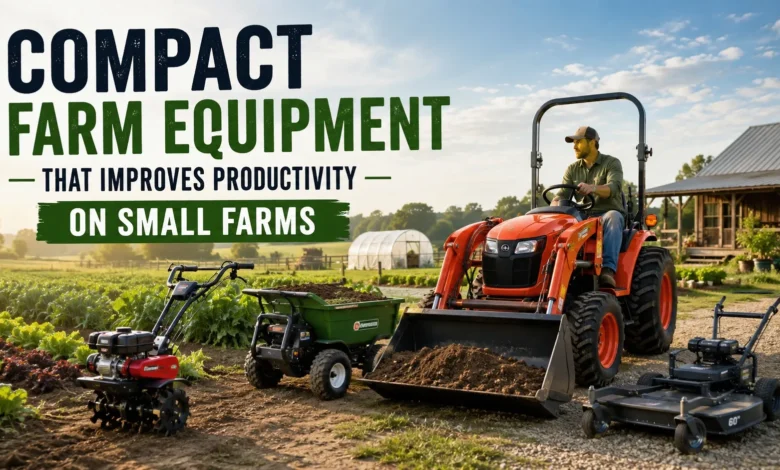
Small farms depend on efficiency. Time, labor, and land use all matter more when space and resources are limited. Modern compact farm equipment helps farmers complete heavy tasks faster without needing large industrial machines. From digging and loading to lifting and transport, the right machines reduce workload and improve output.
This guide explains practical compact farm equipment choices and how they improve daily farm operations.
Compact Equipment for Daily Farm Operations
Small farms need machines that can handle multiple roles. One machine often replaces several manual tools.
Farmers today focus on:
- digging and excavation
- soil preparation
- material handling
- loading and transport
Compact equipment gives flexibility without high operating costs.
A reliable source for farm equipment options and tractor guides can be found here: https://farmersequipment.org/
This platform helps farmers understand machine specifications, use cases, and practical buying decisions.
Compact Equipment Overview — Side-by-Side Comparison
The table below compares the most common compact equipment types used on small farms, covering typical use cases, land size fit, cost ranges, and skill requirements.
| Equipment | Best For | Land Size | Avg. Cost (USD) | Attachments | Skill Level |
| Compact Tractor (e.g. MF GC1720) | Multi-purpose: plow, till, haul | 1–50 acres | $12,000–$30,000 | 10+ types | Moderate |
| Towable Backhoe | Trenching, drainage, fence posts | Any size | $4,000–$12,000 | Limited | Moderate |
| Sub-Compact Tractor | Orchards, tight spaces, hobby farms | Under 5 acres | $8,000–$18,000 | 6–8 types | Easy |
| Mini Excavator | Precision digging, landscape work | Any size | $20,000–$60,000 | Specialized | Advanced |
| Compact Skid Steer | Loading, grading, clearing | 1–20 acres | $25,000–$50,000 | 15+ types | Moderate |
| Walk-Behind Tractor | Market gardens, row crops | Under 2 acres | $1,500–$6,000 | 4–6 types | Easy |
Note: Prices are market estimates as of 2025. Always verify current pricing with local dealers. A reliable resource for specifications and buying guides is available at farmersequipment.org.
Towable Backhoe for Excavation and Digging Work
Digging is one of the most time-consuming tasks on a farm. Manual digging slows down projects like irrigation installation, drainage systems, and fencing.
A towable backhoe solves this problem by providing portable digging power.
Key uses include:
- trench digging for irrigation lines
- drainage installation
- fence post holes
- light excavation work
- small land clearing tasks
It works well for farms that do not require a full-size excavator but still need digging power.
The table below shows estimated time comparisons between manual digging and using a towable backhoe across common farm tasks.
| Task | Manual Time | With Backhoe | Time Saved |
| Trench 100 ft irrigation line | 8–10 hours | 1–2 hours | ~80% |
| Install 20 fence posts | 4–6 hours | 1–1.5 hours | ~75% |
| Dig drainage channel (50 ft) | 6–8 hours | 1–2 hours | ~78% |
| Tree stump removal | 3–5 hours | 0.5–1 hour | ~82% |
| Land clearing (0.25 acre) | 10–14 hours | 2–4 hours | ~72% |
A detailed equipment option for digging work can be found here: https://farmersequipment.org/product/towable-backhoe-for-sale/
This type of machine helps reduce labor time while increasing precision in small-scale excavation projects.
Farmers use it for both seasonal and emergency land management tasks, especially when soil conditions require controlled digging.
Compact Tractor for Versatile Farm Work
Tractors remain the backbone of modern farming operations. They handle multiple jobs with attachments, making them one of the most valuable machines on a farm.
Compact tractors are ideal for:
- plowing and tilling soil
- hauling loads
- operating attachments
- grading land
- lifting heavy materials
They provide strong performance while remaining easy to maneuver in tight farm spaces.
One example of a reliable compact tractor option is the Massey Ferguson GC1720, which is widely used in small farm operations for its balance of power and simplicity. More details about this model can be found here: Massey Ferguson GC1720 for sale
This type of machine is especially useful for farmers managing mixed tasks like landscaping, light construction, and crop maintenance.
Its compact design allows it to work efficiently in orchards, small fields, and homestead farms where larger tractors cannot operate easily.
Popular Compact Tractor Models Compared
The table below compares five widely used compact tractor models across key performance and cost factors.
| Model | HP | PTO HP | Lift Cap. | Transmission | Est. Price | Best For |
| Massey Ferguson GC1720 | 17.5 | 14.4 | 680 lb | CVT | ~$13,500 | Small homesteads |
| John Deere 1025R | 23.9 | 17.8 | 681 lb | Hydrostatic | ~$17,000 | Hobby farms |
| Kubota BX23S | 21.6 | 16.6 | 680 lb | Hydrostatic | ~$18,500 | Loader/backhoe use |
| LS MT225E | 24.5 | 20.3 | 1,322 lb | Sync shuttle | ~$14,200 | Budget value pick |
| Mahindra eMax 25L | 24.7 | 21.5 | 1,433 lb | Hydrostatic | ~$15,800 | Higher lift needs |
Why Compact Farm Equipment Matters in Modern Farming
Farming has shifted toward efficiency-driven systems. Farmers no longer rely only on manual labor or oversized machines.
Compact equipment provides:
- lower fuel consumption
- reduced labor costs
- faster task completion
- better land control
- multi-function capability
These benefits help small farms remain competitive in modern agriculture.
Equipment flexibility is also important. A single tractor or backhoe can support multiple attachments, reducing the need for separate machines.
Also check out: Tractor Time Calculator: Estimate Field Work Duration
Five-Year Total Cost of Ownership Comparison
The table below compares the five-year cost of relying on manual labor and rented equipment versus owning a compact tractor.
| Cost Factor | Manual + Rental | Compact Tractor (Owned) | Difference |
| Upfront cost | $0 | $14,000–$20,000 | Higher initial outlay |
| Annual labor cost | $6,000–$10,000 | $1,000–$2,500 | Save $4,000–$8,000/yr |
| Annual equipment rental | $2,000–$5,000 | $0 | Save $2,000–$5,000/yr |
| Annual fuel + maintenance | ~$200 | $1,200–$2,000 | Higher by ~$1,500/yr |
| 5-Year Total (estimated) | $40,000–$75,000 | $27,000–$44,000 | Net saving: $13K–$31K |
Key insight: Most farmers who purchase a compact tractor reach their breakeven point within 2 to 4 years, depending on operation size and the amount of labor previously hired or outsourced. After breakeven, the annual savings compound significantly.
Choosing the Right Equipment for Your Farm
Selecting farm equipment depends on:
- land size
- soil type
- crop type
- workload frequency
- budget range
Small farms benefit most from compact, multi-purpose machines. They reduce long-term costs while improving daily productivity.
Farmers should focus on equipment that can handle multiple tasks instead of single-use machines. Here is a table for easy decision:
| Your Situation | Recommended Equipment | Key Reason | Budget |
| Under 2 acres, row crops | Walk-behind tractor | Tight bed spacing, low overhead | Low |
| 2–10 acres, mixed use | Sub-compact tractor + attachments | Versatility in limited space | Medium |
| 10–50 acres, crop + livestock | Compact tractor (20–40 hp) | Power and efficiency for daily tasks | Medium |
| Primarily irrigation/trenching | Towable backhoe | Portable, cost-effective excavation | Low–Medium |
| Heavy loading and grading | Compact skid steer | Superior attachment range and speed | High |
| Orchard / tight tree rows | Sub-compact tractor (narrow) | Maneuverable between tree rows | Medium |
Final Thoughts
Modern farming requires efficiency and adaptability. Compact machines like tractors and towable backhoes help farmers complete essential work faster and with less effort.
The combination of digging tools and compact tractors creates a strong foundation for productive small farms.
Farmers who invest in the right equipment gain better control over time, cost, and output.