Bonsai Tree Care: Daily and Weekly Routines for Your Trees
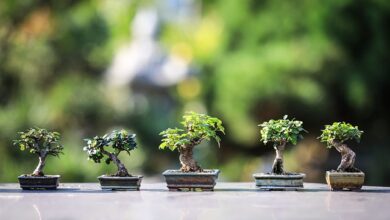
A bonsai is not a special kind of plant. It is an ordinary tree or shrub — a juniper, a maple, a fig — grown in a shallow container and kept small by pruning, wiring and root work, so that it looks like a mature, ancient tree in miniature. The tree itself is not dwarfed. Your routine is what keeps it small, and your routine is also what keeps it alive.
That is why bonsai tree care is best thought of as a rhythm rather than a rescue service. Four things hold the tree up: consistent moisture without waterlogging, enough light, seasonal pruning and wiring done on time, and repotting every two to five years before the roots run out of room. None of these is difficult. All of them fail when they are left until the tree looks unhappy.
This article covers the ongoing routine only — the daily checks, the weekly jobs and the seasonal work. If you have not chosen or potted a tree yet, start with our complete guide to domestic bonsai and come back here once the tree is on your bench.
Bonsai tree care as a routine: daily, weekly, seasonal
Most of bonsai care takes two minutes a day. The daily job is a moisture check and a quick look over the tree. The weekly jobs are small: a pinch here, a wire check there, a feed on schedule. The seasonal jobs are the bigger ones — pruning, repotting, moving trees into winter shelter — and each has a right window and a wrong one.
| When | The job | What you are looking for |
|---|---|---|
| Every day | Palm or chopstick test on the soil; water thoroughly if dry | Dry surface, fallen leaves, wilting tips, pests under leaves |
| Every week | Pinch soft new shoots; check every wired branch; turn the pot a quarter turn | Wire starting to press into bark; shoots shading out the interior |
| Every 1–2 weeks in the growing season | Feed at low dose | Steady, compact growth — not long soft shoots |
| Seasonally | Structural pruning, candle work on pines, winter shelter checks | Shape, dormant buds, soil moisture in storage |
| Every 1–5 springs, by species | Repot and root prune | Roots circling the pot; water draining slowly |
Watering: the one job you do every day
Water when the soil surface feels dry, not when the calendar says so. The test used at the Arnold Arboretum’s bonsai collection is disarmingly simple: press the palm of your hand flat on the soil surface. If it feels dry, water. If it still feels cool and damp, walk away. A less calloused palm feels slight dampness better than fingertips, which is one reason the flat-hand test beats a poke.
When you do water, water properly. Fill the pot to the top, let it drain through, then fill it a second time — a double dousing, so the whole root ball gets wet rather than just the top layer. The root ball behaves like a sponge: a light sprinkle wets the surface and leaves the middle dry. Thorough watering less often is always better than frequent light watering.
- No fixed schedule. A large tree in a small pot may need water every day in spring and on every rainless summer day; the same tree in winter may go days between drinks.
- Summer can mean twice a day. The aim is compost that stays just moist, and a dry week in winter can catch you out just as easily.
- The chopstick test settles arguments: push a wooden chopstick about 1.5 inches into the soil, leave it 5 seconds, and pull it out. Dark and damp means wait. Pale and dry means water.
- Water the soil, not the leaves. Droplets sitting on foliage in strong sun can leave burn spots.
Light and placement: set it once, then leave it alone
Outdoor species — juniper, pine, maple, elm — belong outside all year, and sun-loving trees such as Juniperus chinensis and Pinus thunbergii want a genuinely sunny spot, around six hours of direct sun as a working target. Japanese maple (Acer palmatum) is the exception on most benches: morning sun with shade through the hot afternoon suits it better than a full day of glare.
Indoors, the rules flip. Tropical trees need the brightest spot you have — a south, west or east window — and indoor humidity around 40–60 percent if you can manage it. A pebble tray under the pot, topped up with water, raises the humidity right where the tree sits. Misting the leaves does very little; the damp is gone in minutes.
Whatever spot you choose, commit to it. Sudden changes of position are behind a large share of leaf drop, especially with ficus. A tree that has settled into one light level and one temperature rhythm reads any abrupt move as a change of season, and answers by dropping leaves it then has to regrow.
Soil: the mix your whole routine stands on
Bonsai soil is an engineered root medium, not garden soil in a smaller pot. It has to drain freely — water should run straight through and out of the drainage holes without pooling — while still holding enough moisture between waterings. Regular potting soil stays wet too long in a shallow pot, and wet, airless soil is what rots roots.
Most growers today use mostly inorganic particles. The standard modern mix is equal parts akadama, pumice and lava rock, with the dust and fines sifted out first, because fines clog drainage. Older recipes work on a different logic and are worth knowing about: the Arnold Arboretum’s traditional mix is coarse sand (1 to 3 mm), screened loam and peat, and some older recipes added a little superphosphate or relied on organic feeds. Treat the soil as part of the plant, not as packaging it arrived in.
| Mix | Recipe | Best for |
|---|---|---|
| Modern standard | Akadama : pumice : lava rock, 1:1:1 | Most trees; the safe default |
| Thirstier deciduous | Akadama : pumice : lava rock, 2:1:1 | Maples and elms that drink hard in leaf |
| Traditional, conifers | 1/2 coarse sand, 1/4 loam, 1/4 peat | Pines and junipers, Arnold Arboretum style |
| Traditional, deciduous | 1/3 sand, 1/3 peat, 1/3 loam | Deciduous trees on the same system |
| RHS compost mix | 2 parts peat-substitute compost, 2 parts sharp sand or grit, 1 part John Innes No 3 | Growers who prefer a compost-based mix |
Pruning through the season: little, often, and on time
Pruning splits into two jobs. Structural pruning sets the tree’s shape and is done once, in its proper season. Maintenance pruning is the weekly pinch-and-trim that keeps the silhouette tight and builds ramification — the fine, twiggy branching that makes a bonsai look old. Young trees get structural pruning about once a year; established trees need trimming several times a year to stay balanced.
Timing follows the tree type. Major work on deciduous trees belongs in late winter to early spring, before growth starts. Conifers and other evergreens take their major work in autumn or winter and light pruning at almost any time; junipers and hinoki cypresses are usually pinched through early to mid summer. Pines are their own case: as the candles lengthen in late spring, twist or cut off half to two-thirds of each candle. Japanese maples should be hard-pruned in autumn or early winter, not spring, when cuts can bleed sap.
At a real pruning session, expect to remove at least 50 percent of the new growth — the Arnold Arboretum works to that figure. For ramification, let a shoot run out, then pinch it back to one or two leaves, leaving two to four nodes. Skip this and the outer canopy thickens until it shades the interior branches, which then die back — death by self-shading is slow, and by the time you see it the branch is gone. The same patience with a pair of scissors underlies good topiary, if your shaping ambitions ever outgrow the pot.
Wiring: check it every week, take it off in time
Wire holds a branch in a new position until the wood sets there — often a more horizontal line, which is what gives an old tree its settled, aged look. Choose copper or aluminium wire about one-third the diameter of the branch: a 6 mm branch takes a 2 mm wire. Anchor the wire at the base, around the trunk or a stronger branch, before you start wrapping, or the coil will slip as you bend.
The weekly part of wiring is the check, because wire left on too long girdles the branch it was meant to improve. A branch in active growth can start pressing into its wire within weeks, and a spiral scar can take years to heal — or never heal at all. Work to two rules:
- Off before it bites. Branches typically set in a few months. The moment bark starts swelling against a coil, cut the wire off at every turn with wire cutters. Never unwind it; unwinding twists the branch you just set.
- Never longer than one growing season. A full year is the outer limit, not the target. If the branch has not set, take the wire off anyway and rewire. Nylon fishing line, used as a guy wire to pull a branch down, avoids the girdling problem altogether for simple corrections.
Feeding: little and often, and never to a sick tree
A shallow pot holds a thimbleful of nutrients, so a bonsai needs feeding through the growing season — but dilute, always. The RHS pattern is a balanced liquid feed at a low dose every two weeks while the tree is growing. The Arnold Arboretum goes weaker still: a very dilute solution, around 0.01 percent nitrogen, phosphorus and potassium, every one to two weeks in spring until mid-July, then every two to three weeks through October, stopping in November as the trees go dormant. Half strength is the safe ceiling for ordinary liquid feeds.
Traditional solid feeds still have their place: powdered oil-cake pellets and bonemeal, laid on the soil surface, release slowly and suit trees on an organic nitrogen regime. Whichever you use, hold to the old rule — fertilizer is not medicine. A weak tree gets water, shade and time. Feeding a sick tree pushes soft growth it cannot support and usually finishes what the problem started.
Repotting: the big job every few springs
Repot in early spring, before new growth starts — mid to late March in a temperate northern climate — because the tree then has the whole season to rebuild roots. How often depends on the tree’s speed, and the honest test is to slide the tree out of its pot in early spring: roots circling the inside of the pot mean it is time, whatever the calendar says.
| Tree | Repot every | Why |
|---|---|---|
| Fast growers (birch and other vigorous young trees) | About 1 year | Roots fill a small pot quickly |
| Most bonsai, including smaller and younger trees | 2–3 years | The standard cycle |
| Pines and other slow growers | 3–5 years | Slow root growth, resent disturbance |
| Large hinoki cypress and big mature trees | 4–5 years | Large root balls change slowly |
The method is steady rather than delicate. Trim about 2 to 3 centimetres of roots and old soil from the sides and bottom of the root ball — roughly an inch. Cut out any root thicker than a pencil: thick roots store and anchor, but the small feeder roots do the drinking, and a circling thick root can become a lethal girdling root. Then set the tree back in its original container, or one an inch larger or smaller at most, with fresh soil worked in around the roots. Water well and keep it in a shady, sheltered spot until it has settled. And never repot a weak or sick tree; repotting is surgery, and surgery waits until the patient is strong.
Seasonal care and winter storage
Temperate trees need winter. Dormancy is not optional for a pine, maple or juniper — it is how the tree survives the cold and resets for spring — so the worst winter care is a warm living room. Soil in the ground has great insulating power; a pot above ground has almost none, which is why the roots, not the branches, are what winter protection is for.
In milder parts of the United States, minimal protection is enough: the tree stays outside, sheltered from wind, with the pot on the ground or buried to its rim. Where nights regularly fall below about 15 °F, use a cold frame or unheated building. The professional benchmark is the Arnold Arboretum’s cold store, held at 33 to 36 °F: trees go in fully dormant — around Veterans Day, November 11, in its Boston-area example — and come out before growth starts, around Patriots Day, April 19. Total darkness does a leafless dormant tree no harm. In storage, check the trees once a week and water about once a month, only when the soil has dried.
Tropical trees reverse every part of this. Bring them indoors before nights drop below about 60 °F, give them your brightest window, and expect slower growth, less water and no feeding until spring.
Troubleshooting: what the tree is telling you
Overwatering kills more bonsai than drought does. Soil that never dries keeps roots in a bath, and the end of that road is black, mushy roots and a tree that wilts while sitting in wet soil — at that point the fix is emergency repotting into dry, open mix, not more water.
Leaves are the other bulletin board. Yellowing leaves with no other change usually mean a watering problem, too much or too little. Sudden leaf drop after a move points at the move itself, or at a cold draft or a dry, heated room. Leggy growth — long gaps between the leaves — is a light complaint: the tree is stretching toward a window it cannot reach. Wire scars belong in this list too; a spiral groove is a diary entry recording the week you did not check.
Indoors, expect spider mites, mealybugs and scale sooner or later. Catch them early on your daily look-over and insecticidal soap handles most outbreaks without drama. Pests found late, on a tree already weakened by bad light and stale air, are a different and longer story.
Beginner species that forgive a learning routine
Start with a species whose habits match the room or bench you actually have. For indoors, Ficus retusa and Ficus benjamina are the standard indoor bonsai — tolerant, fast to respond, quick to forgive a missed watering — and our guide to bonsai figs covers their training in depth. Schefflera arboricola, the Hawaiian umbrella tree, is the other easy indoor choice.
Outdoors, Juniperus chinensis is the classic outdoor bonsai: hardy, long-lived and happy in full sun. Japanese maple brings the best fall color on the bench, and Chinese elm is the diplomat of the group, coping indoors or out. Check any outdoor species against your USDA Hardiness Zone before you buy — a tree that cannot take your winters will not be saved by any routine. And if the small-scale growing habit takes hold, a miniature garden is the natural next project on the same windowsill.
Frequently asked questions
How often should I water my bonsai?
There is no fixed schedule. Check the soil every day with the palm or chopstick test and water thoroughly, until it runs from the drainage holes, whenever the surface has dried. In summer that can be daily or even twice a day; in winter, much less often. The check is daily even when the watering is not.
Can a bonsai live indoors?
Yes, if it is a tropical or subtropical species. Ficus, Carmona and Schefflera live indoors year-round in bright light. Temperate species — juniper, pine, maple, elm — cannot: they need winter cold to stay dormant, and a heated room through winter weakens and eventually kills them.
Why is my bonsai losing leaves?
Check water, light and drafts first, in that order. A sudden move, a cold draft, dry heated air and overwatering account for most cases, and ficus drops leaves at almost any abrupt change. A tree that has simply been moved usually releafs once it settles in one spot.
When should I repot my bonsai?
In early spring, mid to late March in temperate climates, just before growth starts. Smaller and younger trees need it every 2 to 3 years; large, slow trees every 4 to 5 years. If roots are circling inside the pot when you slide the tree out in spring, do not wait for the calendar to agree.