How to Start a Profitable Poultry Farm Business: From Poultry Farm Business Plan to Poultry Feed Mill
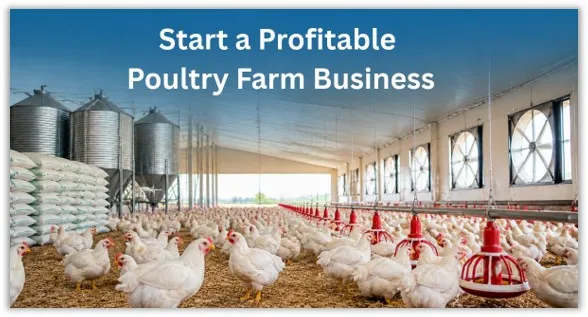
The poultry industry is one of the significant parts of agriculture, which offers eggs, meat, and poultry to the customers, restaurants, retailers, and the processing industries. For aspiring entrepreneurs, there are various business opportunities that they can take into consideration, and these include poultry farms, commercial farms, and integrated farming businesses. Nevertheless, setting up and running a successful poultry farm requires more than just rearing the chicken; it requires financial planning, management, disease control, good customers, among others.
Information on the Poultry Farming Enterprise
The first thing to do would be choosing the category of poultry farming enterprise that will suit capital, skills, and demand for products. Forms of poultry farming enterprises are as follows:
- Broiler Poultry Farming: It involves chickens for meat production. The profitability depends on growth rate, feed efficiency, survival rate, and charges in the market.
- Layer Poultry Farming: This entails keeping the layers of hens for egg production for business purposes. The profitability of this business depends on egg laying efficiency, feed efficiency, egg quality, and prices in the market.
- Breeder Poultry Farming: This entails breeding breeder chickens to produce fertile eggs.
- Backyard Poultry Farming: This is small-scale farming using simpler farming methods.
- Combined Poultry Farming: This is where breeding, hatching, raising, feed production, and poultry product processing are done in one company.
OECD Countries Poultry Meat Production, 2021-2026:
| Year | Production (000’ Tons) |
| 2021 | 137,278.12 |
| 2022 | 139,086.82 |
| 2023 | 141,936.08 |
| 2024 | 144,577.32 |
| 2025 | 148,182.72 |
| 2026 | 151,435.01 |
The Production of Poultry Meat in OECD countries has risen constantly from 137,278.12 thousand tons in 2021 to 144,577.32 thousand tons in 2024. As per the OECD-FAO Agricultural Outlook 2025-2034, the production is expected to increase to 148,182.72 thousand tons in 2025 and will further increase to 151,435.01 thousand tons in 2026. In total, the numbers show a rise of around 10.3% during the period 2021 to 2026.
Business Plan Presentation for Poultry Farm Business Project
The features of the business model, the market, the production capacity, the capital, and the operations are included in a poultry farming business plan. The major components that need to be included in the business plan are the following:
Market Evaluation: Find possible customers, competitors’ products, customers’ needs, and seasonal variations.
Production Preparation: Analyze the number of birds, accommodation facilities, production time, and output.
Costs of Beginning: Estimate the cost of accommodations, equipment, water, aeration, and storage space.
Budgeting: It estimates preliminary investment, overheads, profits, cash flow & ROI.
Risk Assessment: Estimate the risk of infection of birds, differences in the cost of feed, differences in selling price and delayed payment by consumers.
Choosing Suitable Place and Infrastructure
The selection of the right place is critical when it comes to the cost of transport, availability of required facilities and keeping the birds in good condition. Entrepreneurs must choose such a place where there is pure water, electricity, roads, proper drainage facilities and adequate space. The housing facility must be according to the type of poultry, environment and system of production.
Some of the important facilities that must be put in place include poultry houses, feeding and drinking facilities, storage facility for dry feeds, waste disposal facilities, and access control facilities. It is recommended that before putting up such structures, entrepreneurs seek information about land usage and environmental regulations.
Estimation of Costs Involved in Starting Up a Business
The capital required for the establishment of the poultry farm depends on factors such as capacity, land preparation, construction, machinery, and automation level. Small-scale farming and automated commercial farming cannot be analyzed under the same cost estimates. They include:
- Land and Construction: Buying/leasing of land, land preparation, drainage & poultry houses.
- Equipment: It includes Feeders, watering facilities, ventilation systems, lighting, and other equipment.
- Birds’ Purchase: Chicks/Pullets/Breeding birds depending upon the mode of conducting business.
- Birds’ Feed and Veterinary Care: Food items, vaccines, medicines, and expert supervision.
- Labour Charges and Utilities: Payment to workers and utility bills.
- Working Capital: Money for recurring costs and unexpected possibilities.
Poultry Feed Management and Nutrition
The feed management process directly impacts the cost of running a poultry farm, as well as the birds’ health, growth, and profitability. Starter, grower, and finisher feeds are needed for broilers, while balanced feeds are required for layers. Feed management involves:
- Purchase of High-Quality Feeds: Work with reliable suppliers and confirm specifications, batches, and storage.
- Food Consumption Minimization: It should be ensured that the feeding kit is properly used to in such a way that the birds can get their food easily without causing wastage.
- Conversion Ratio: Calculate the amount of food needed per addition of live weight in case of broilers and in case of layers, it should be in relation to egg production.
- Food Storage: Keep the food dry and safe from insects and chemicals.
- Water Supply: Provide clean water to birds continuously.
Keeping Birds Healthy and Practising Biosecurity
It is important to ensure prevention of diseases to help keep the birds healthy for the successful running of the farm business. Diseases can lead to high mortality, low productivity, and high medical expenses. Biosecurity measures will prevent access to the chicken houses to keep birds healthy and free from infections. Good health management is also characterized by following the vaccine schedule by the veterinarian, ensuring there is no abnormal death rate or behavior among the birds, and providing clean feed and water. In the event of the occurrence of disease symptoms, it is advisable to seek veterinary advice and dispose of carcasses and other waste produced by the birds. Record keeping is important for identifying problems in the flock.
Marketing & Sales Channels Development
Truthful clients play an important role in earning profit from the poultry business. The possible clients can be wholesalers, retailers, restaurants, hotels, meat processing companies, and individual buyers. The businessman needs to understand customer’s needs, volume of orders, quality, time of delivery, and terms of payment prior to increasing production. It is necessary to take care of such marketing activities as collection, sorting, storing eggs, meat processing and food safety. Farmers have to control seasonal demand, prices, transport costs, and losses.
Global Chicken Meat Exports, 2023–2025:
| Year | Global Chicken Meat Exports (000’ Tons) |
| 2023 | 13,531 |
| 2024 | 13,733 |
| 2025 | 14,023 |
Chicken meat export levels increased from 13.531 million tons in 2023 to 13.733 million tons in 2024 by about 1.5%. According to USDA estimates, the export volume is projected to increase to 14.023 million tons in 2025 by 2%.
Exploring the Poultry Feed Mill Business
Whereas the poultry farming business is stable, one can venture into setting up a feed mill that will produce feeds for the farms or even other clients outside. The production of feeds is done through the processing of feeds according to their formulations. But it is important to note that venturing into such a business requires more money, appropriate machines, expertise, and quality control. A feed mill may need:
- Grinders: To grind the materials to the desired particle size.
- Mixer Units: To mix the ingredients in accurate amounts.
- Pellet Machines: Used to make pellets if the selected feed product demands them.
- Cooling and Screening Systems: Useful for preparing processed feeds for handling and packing.
- Storage and Bagging Systems: Used to protect ingredients as well as finished feed products.
- Control of Quality Systems: Help in analyzing ingredients and analyzing total feed.
Poultry Farming Industry Evolving Trends:
The poultry industry is evolving in feed management, bird health, and technology, creating new opportunities for entrepreneurs who are planning to start a poultry farm/feed mill.
- Managing Feed Cost Through Better Formulation: Maize and soybean meal prices can affect the overall cost of poultry production. Farmers should compare feed suppliers, monitor feed conversion ratio, and check whether feed wastage is increasing. Those planning a feed mill can explore enzyme-based formulations and alternative ingredients, but these should be tested for nutritional value and safety before use.
- Low-Cost Automation for Poultry Farms: Automatic feeders, nipple drinkers, and temperature monitoring systems can help reduce feed wastage and manual work. New entrepreneurs need not install every system at the beginning. They can first identify the main problem on their farm and invest in equipment that can deliver measurable savings.
- Heat Stress Management: High temperatures can affect bird growth, feed intake, and egg production. Farmers should consider proper ventilation, roof insulation, reliable water supply, and backup power while planning poultry houses. These facilities are particularly important in areas that experience hot summers.
- Growing Demand for Processed Poultry Products: The poultry segment is seeing a shift to chilled and frozen products along with conventional sales of live birds. Entrepreneurs can analyse demand from hotels, retailers & meat shops before investing in processing, cold storage, or packaging facilities. Starting with confirmed buyers can help reduce the risk of investing in unused capacity.
Entrepreneurs should select trends based on their investment capacity, local climate, feed availability, and customer requirements. Rather than adopting every new technology, it is better to start with improvements that solve an existing problem and offer clear business benefits.
Monitoring Success and Growth
While monitoring the output of the poultry enterprise, one needs to reflect effectiveness in terms of the cost of operation, mortality, feed conversion ratio, egg production, price and cash flow. It is important for entrepreneurs to periodically assess their costs, including labour costs, veterinary costs, electricity costs, and transportation costs. Business growth can only be attained after the business has proven to be profitable through efficiency in operation. The farmer can assess the efficiency of his business in terms of feed supply, housing of birds, bird diseases, and marketing of birds before venturing into other areas. Among the areas of growth are expanding the flock sizes and establishing a processing factory as well as a poultry feed mill.
Do check out Boer Goat Farming: The Complete Guide to Origin, Price, Care and Profit
Sustainable and Profitable Poultry Farming Business
An authentic way to start a poultry farming profession is to have suitable planning, facilities, nutrition, disease control, and good marketing techniques. This can be achieved by knowledge how to understand market demand and manage production costs while building a strong connection with customers. The poultry feed market plays a great influence on profitability in terms of feed quality and cost differences. According to Pristine Market Insights, entrepreneurs can make good investments through an analysis of the market demand, competition, and other changes taking place within the supply chain. An entrepreneur who creates a poultry feed mill will have the ability to earn more profits.
Author Bio: Sandhya Jadhav is a research analyst specializing in the food and beverages industry. She focuses on market research, industry trends, business opportunities, and emerging developments across agriculture, food processing, and related value chains. Her insights help readers understand market dynamics and make informed business decisions.