Boer Goat Farming: The Complete Guide to Origin, Price, Care and Profit
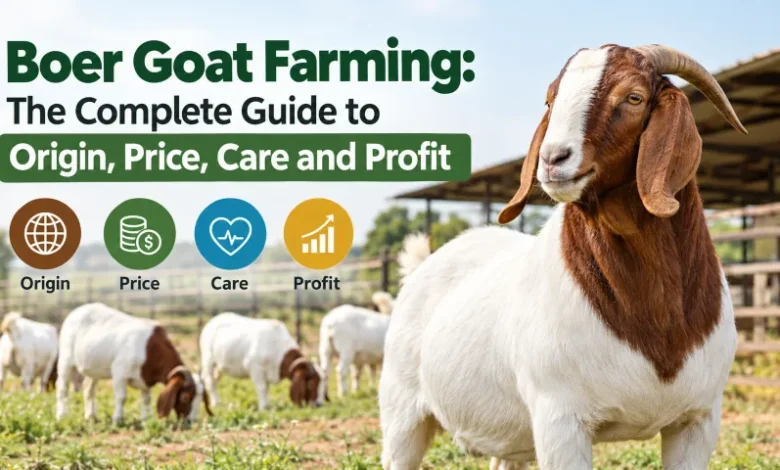
Ask ten goat farmers which meat breed they’d pick if they could only keep one, and a good number of them will say the same thing: the Boer. It’s big, it’s fast-growing, it’s calm enough to handle, and buyers know exactly what they’re getting. That reputation didn’t come from clever marketing. It came from decades of selective breeding on dry, rough South African farmland.
But a famous breed isn’t automatically a good business. The Boer goat can make you real money, or it can quietly eat your savings through feed bills, worm problems and an overpriced starter herd. The difference usually comes down to a handful of decisions you make before the first kid is born.
This guide walks through all of it in plain language: where the breed came from, how much a Boer goat costs, what a healthy doe looks like, how to feed and house the herd, and where the profit really comes from. Whether you’re thinking about three goats on a small plot or a few hundred on commercial land, you’ll find something useful here.
Boer Goat Breed at a Glance
| Feature | What to Know |
| Main purpose | Meat production |
| Home country | South Africa |
| Coat | White body, red or brown head, short smooth hair |
| Birth weight | About 3 to 4 kg (6.5 to 9 lb) |
| Mature doe weight | About 80 to 100 kg (175 to 220 lb) |
| Mature buck weight | About 90 to 130 kg (200 to 285 lb) |
| Litter size | Close to 2 kids on average |
| Gestation | Roughly 148 days |
| Best for | Meat farms, crossbreeding programs, small commercial herds |
| Biggest weakness | High purchase price and sensitivity to worms if poorly managed |
Boer Goat Origin: Where the Breed Really Comes From
The boer goat origin story is a bit murky, and honestly, that’s part of its charm. Nobody has a clean family tree. Most researchers believe the breed came from a blend of indigenous African goats, goats brought from India, Angora goats and some influence from European dairy goats. The early local herds were probably kept by the Namaqua people and by Bantu groups moving south. The modern South African Boer goat took shape in the early 1900s, when ranchers in the Eastern Cape began deliberately selecting for a goat that grew fast and carried more meat. The word “boer” simply means farmer in Dutch, which is a fair name for an animal built by farmers (Lu, 2001).
Things got more formal later. The South African Boer Goat Breeders’ Association was founded in 1959 and wrote the first breed standards. Performance testing, which measures things like growth rate and feed efficiency instead of just looks, began in 1970. That combination of “looks right” and “performs right” is a big part of why the breed spread so successfully to Australia, New Zealand, North America and beyond.
If you’ve seen people search for “goat boer” online, they’re almost always after the same animal. It’s just a different word order for the same famous South African meat goat.
The Five Types Recognised in South Africa
Not every goat sold as a “Boer” is the type you want for meat. South African breeders recognise five distinct types, and knowing the difference can save you from a bad purchase.
| Type | Main Features |
| Improved Boer | The main breeding line; best conformation and meat quality |
| Ordinary Boer | Good meat shape, short hair, mixed colour patterns |
| Long-hair Boer | Heavy coat, coarser meat |
| Polled Boer | Naturally hornless, but usually weaker conformation |
| Indigenous (veld) type | Long legs, variable and poorer build |
Most serious meat producers aim for the improved type, or for crosses that carry its genetics. Because quality varies so much from one breeder to another, it helps to compare animals before you buy. Looking through listings of Boer goats on Jiji gives you a sense of what pure and crossbred stock look like, which ages and sexes are commonly offered and where breeders are located, so you can plan farm visits close to home.
What Does a Boer Goat Look Like?
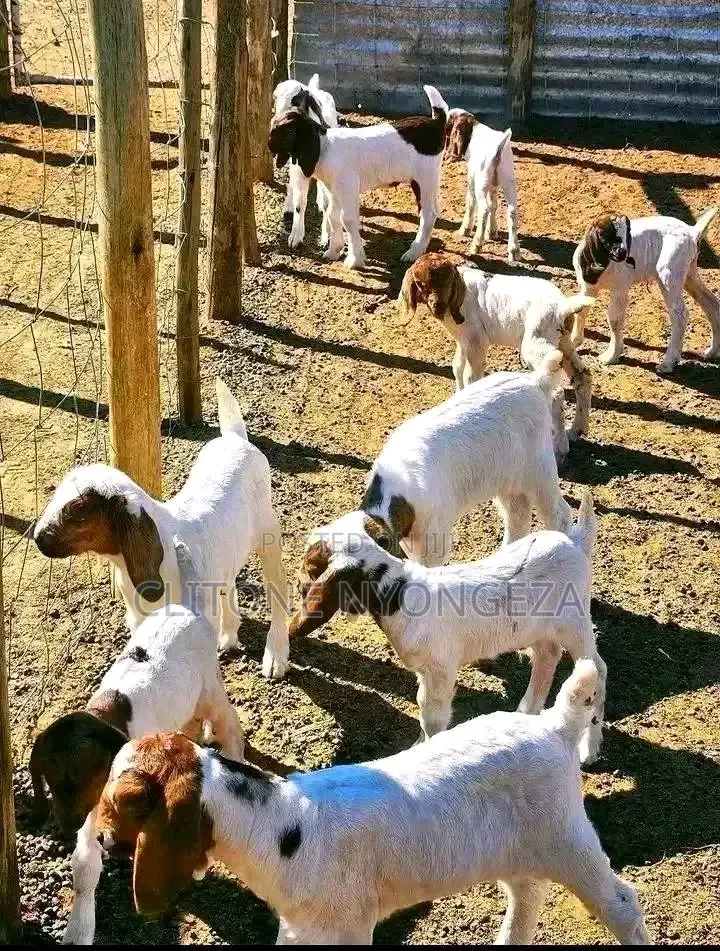
The classic Boer is easy to spot. It has a white body, a deep red or brown head, a broad chest, strong straight legs and long drooping ears. The hair is short and glossy. Horns are strong and curve backward. The body is deep and thick, with a heavy hindquarter, which is where the money cuts are.
Temperament matters just as much as looks. Boers tend to be calm and easy to work with, which is one reason beginners like them. They’re also good browsers. Research reported in the Lu paper found Boer diets in rangeland conditions were made up of roughly 82% browse and only 18% grass, meaning they happily eat leaves, shrubs and rough plants that cattle and sheep ignore. That’s useful if you have scrubby, weedy land you’d like to put to work.
One thing worth knowing before you buy: colour matters to some buyers. In a Nepalese study, farmers reported that consumers paid more for animals that showed the classic red-headed, white-bodied look, and that only crosses with fullblood Boer bucks held those features for a few generations. If you plan to sell breeding stock, the look counts. If you’re selling for the meat market, weight counts a lot more.
The Boer Goat Female: Choosing and Managing Does
Your herd is only as good as your does. A boer goat female does the heavy lifting on any farm: she produces the kids, feeds them, and passes on her traits to every generation after her. Spend more time choosing does than you do choosing bucks, and you’ll feel the difference within two kidding seasons.
Reproduction Facts Every Farmer Should Know
Boer does are unusual in a few helpful ways. They are only partly seasonal, so with decent feeding and care they can cycle through most of the year. They also tend to have twins often, and triplets show up regularly.
| Trait | Typical Figure |
| Heat cycle length | 18 to 21 days |
| Length of heat | About 37 hours |
| Gestation | About 148 days (just under 5 months) |
| Average litter size | Close to 2 kids |
| Does with twins | Around 50% |
| Does with triplets | About 10 to 15% |
| Return to heat after kidding | 37 to 60 days |
| Doe reaches puberty | Around 6 months |
| Bucks can start breeding | 5 to 6 months (lightly) |
| Does per buck | About 15 for young bucks, up to 25 for mature ones |
These numbers come from long-term South African work and are summarised in the Lu paper. The same source points out something important: breeding too young stunts growth, so it’s safer to breed by weight than by age alone (Lu, 2001).
What to Look For in a Good Doe
When you’re standing in a pen looking at a doe, check these things in order:
- Feet and legs. Straight, strong, with no limping or overgrown hooves.
- Body depth and width. A deep barrel gives room for twins.
- Udder. Well attached, two functioning teats, no lumps or hard spots.
- Teeth and jaw. Teeth should meet the dental pad properly. Bad mouths mean poor feeding and short working lives.
- Eyelid colour. Pink to red is good. Pale eyelids point to anaemia, often from worms.
- Kidding history. A doe that has raised twins without help is worth more than one that looks pretty.
- Temperament. A calm doe is easier to handle at kidding.
Milk production is usually good enough to raise multiple kids. Older research on Boer does measured around 1.8 to 2.5 kg of milk per day in the first 12 weeks of lactation, and later studies found similar ranges. That’s not dairy goat territory, but it’s plenty for twins.
Growth and Weight: How Fast Do Boer Goats Grow?
Fast growth is the main reason people choose this breed, so it helps to know what normal looks like. Under good pasture or feeding conditions, Boer kids can gain close to 200 grams a day in their first year, and some post-weaning animals do even better. Dairy goats in comparison gain far less before weaning.
| Age | Bucks | Does |
| Birth | 3 to 4 kg (slightly heavier) | 3 to 4 kg (about 0.5 kg lighter) |
| Weaning | 20 to 25 kg (44 to 55 lb) | 20 to 25 kg (44 to 55 lb) |
| 7 months | 40 to 50 kg (88 to 110 lb) | 35 to 45 kg (77 to 99 lb) |
| 1 year | 50 to 70 kg (110 to 155 lb) | 45 to 65 kg (100 to 143 lb) |
| Mature | 90 to 130 kg (200 to 285 lb) | 80 to 100 kg (175 to 220 lb) |
Treat these as a guide rather than a promise. Genetics, feed, disease pressure and management all move the numbers up or down.
Don’t be surprised if your own goats come in a little under these figures at first. Even the best animals slow down when feed is short, when kids are weaned too early or when they’re stressed by a move.
Boer Goat Price: What You Should Expect to Pay
This is the question everyone asks first, and the honest answer is “it depends.” The boer goat price you’ll see depends on your country, the animal’s age, registration status, bloodline, weight, and even the time of year. Meat prices go up before major festivals and holidays in many regions, which can nudge live animal prices up too.
Here are indicative price ranges based on recent US market guides for 2026. Convert to your local currency and expect real differences from one region to the next.
| Animal Type | Typical Price Range (USD) | Notes |
| Auction or feeder kid | $60 to $150 | Sold mostly for meat, usually no papers |
| Commercial kid (Boer or Boer cross) | $150 to $400 | Weaned, healthy, from a known farm |
| Commercial doe or buck | $200 to $800 | Depends on age, weight, kidding record |
| Registered breeding doe | $800 to $1,500+ | Papers, strong pedigree, proven lines |
| Quality breeding buck | $500 to $2,000+ | Top genetics can cost much more |
Baby Boer Goat Price
The baby boer goat price sits at the lower end of the scale, and that’s both good and bad news. A young kid costs less up front, but you’re paying for potential, not performance. You won’t know how that kid will grow, breed or mother until it’s a year old or more. Commercial kids from non-registered parents commonly fall in the $150 to $400 range, while registered fullblood kids from strong lines cost noticeably more. Bottle-fed babies may be cheaper to buy but take real time and effort to raise.
If you’re new, buying a few weaned kids is a reasonable way to learn. Just be realistic. A kid bought at 10 weeks won’t earn its keep for most of a year.
Prices Outside the US
Price patterns look different elsewhere. In the Nepalese hill study, for example, 6-month-old kids of 100% Boer cross were being sold into India for roughly NRs 2,500 to 4,000, while smaller farmers said they would only start raising Boer goats if live-weight prices came down to about NRs 500 per kg. In that region, the high cost of breeding stock was the biggest barrier for small farmers (Sapkota et al., 2016). It’s a good reminder that price isn’t only about the animal. It’s also about who controls supply.
What Pushes the Price Up or Down
- Registration and pedigree. Papers can double a price.
- Age and condition. Prime breeding age commands more.
- Proven performance. A doe with a record of twins is worth more than a doe with a good photo.
- Season. Prices tend to climb before major meat-buying holidays.
- Location. Scarce supply means higher cost.
- Colour and look. Show-quality animals cost more than meat-only animals.
A Practical Rule When Buying
If your plan is to sell kids for meat, don’t overpay for show-ring bloodlines you won’t use. Lu made this point back in 2001 and it still holds true: the value of a Boer goat should always be based on meat and carcass performance, because conformation alone won’t pay the bills.
How to Start Boer Goat Farming
Boer goat farming is simpler than it looks, but it isn’t careless farming. The goats are hardy, yet the breed rewards planning. Here’s a sensible order to follow.
Step 1: Decide Your Goal
Are you selling kids for meat, raising breeding stock, or producing crossbred animals for a local market? Each path needs a different budget. Meat farms can use commercial or grade does and one good buck. Seedstock farms need registered animals, careful records and marketing skills. Some farmers add a second enterprise to spread risk, and turkey farming is a common choice because it runs well beside small ruminants.
Step 2: Choose the Land and Check the Feed
Land and feed decide whether you make a profit. Goats are browsers, so mixed pasture with shrubs, weeds and trees suits them very well. Poor, bare ground means you’ll buy a lot of hay. A rough guide is around 4 to 8 goats per acre on decent mixed pasture, fewer on poor ground, and rotating paddocks helps keep worms down.
Step 3: Build Shelter and Fencing
Goats don’t need fancy buildings. They do need shelter that is dry, draft-free and well ventilated.
| Item | Practical Guide |
| Indoor space per adult | Roughly 15 to 20 sq ft (1.5 to 2 sq m) |
| Outdoor yard per adult | 200 sq ft (about 20 sq m) or more |
| Kidding pens | Separate pen about 4 x 4 ft or bigger |
| Floor | Raised slatted floors keep animals cleaner in wet climates |
| Fencing | Woven wire or sturdy mesh around 4 ft (1.2 m) high |
| Bucks | Separate, stronger pens, kept away from does outside breeding |
| Water | Clean, shaded, checked daily |
These are rule-of-thumb figures. Climate, breed size and local regulations may change what you need. Many Nepalese farmers in the study, for example, struggled with limited knowledge about proper improved-breed shed construction and management.
Step 4: Buy Healthy Starter Stock
Start small. Three to ten does and one good buck teaches you more than a big herd that overwhelms you. Always:
- Buy from a farm you can visit.
- Ask for health and breeding records.
- Check eyelids, hooves, teeth and udders yourself.
- Quarantine new animals for at least a few weeks.
- Get a local vet involved early.
Starting Herd Cost Example
| Item | Example Range |
| 5 commercial does | $1,000 to $4,000 |
| 1 breeding buck | $500 to $2,000 |
| Fencing and shelter | Varies a lot by country and land |
| Feed and minerals for year one | Depends on pasture quality |
| Vet, vaccines, deworming | Budget a yearly amount per head |
The figures above use the ranges from the price table. Your real costs will depend on your location, so treat this as a planning template, not a quote. Running the numbers before you buy stock saves money, and our farm calculator for profit, feed and housing shows how that kind of budgeting works for another meat enterprise.
Feeding Boer Goats Properly
Feeding is where beginners either save or waste the most money. Boer goats are efficient browsers, but they still need balanced nutrition, particularly during late pregnancy and lactation, when demand shoots up.
| Stage | Feeding Approach |
| Newborn kids | Colostrum in the first hours, then mother’s milk; start nibbling forage within a couple of weeks |
| Weaned kids and growers | Good forage plus a moderate-protein grower feed where pasture is poor |
| Dry does and bucks | Good forage and minerals; avoid letting them get too fat |
| Does before breeding | A short “flushing” boost in feed to encourage ovulation and twins |
| Late pregnancy and lactation | Extra energy and protein; a mature doe on poor pasture may need roughly 3 to 4 lb (1.5 to 2 kg) of hay daily plus grain supplement |
| All stages | Fresh water, loose goat minerals and salt available at all times |
A few practical notes:
- Don’t push protein too high. In a study of Boer-cross goats, diets with 18% and 24% crude protein did not improve weight gain compared with lower levels, which suggests extra protein can simply waste money.
- Use goat minerals, not sheep minerals. Goats need more copper than sheep.
- Change feeds slowly. A sudden jump to grain can cause digestive upset and, in the worst cases, sudden death.
- Keep hay clean and off the ground. Goats refuse dirty feed and waste a lot of it.
Breeding and Kidding Management
When to Breed
Doelings can reach puberty at about 6 months, but that doesn’t mean they should be bred then. Breeding by weight is a safer rule. Most farmers wait until the young doe has reached roughly 60 to 65 percent of her expected adult weight, which often means about 8 to 10 months. Waiting a little longer costs you a few weeks and protects her growth and long-term productivity.
Buck Care
A buck gives half the genetics of every kid, so he’s the most important animal on the farm. Keep him in good body condition before breeding, avoid overfeeding, and watch for underfeeding too. Research has shown that poor nutrition reduces testicle size and sperm quality in young Boer bucks.
Kidding Season Checklist
- Move heavily pregnant does to a clean, dry pen about a week before due date.
- Keep an eye out for signs: udder filling, restlessness, discharge.
- Be present but don’t interfere unless there’s a problem.
- Dip navels in iodine soon after birth.
- Make sure every kid nurses colostrum within the first few hours.
- Check that twins and triplets are all getting milk.
- Keep the pen dry and warm, especially in cold or wet weather.
- Timing breeding, kidding and vaccination around the seasons makes the workload much lighter, and a homestead calendar built around livestock seasons helps you plan it.
Because the breed tends to produce twins and sometimes triplets, many commercial farms aim for around three kiddings in two years, though that only works if the doe is well fed and in good condition. Pushing too hard burns out your best does.
Common Boer Goat Health Problems
Boer goats are hardy, but they aren’t invincible. One farm-based project in the United States reported that Boer-type goats tended to show weaker worm resistance than Kiko crosses, so don’t assume size equals toughness. Good prevention is cheaper than any treatment.
| Problem | Signs | Prevention and Response |
| Internal worms (especially barber pole worm) | Pale eyelids, weakness, swelling under the jaw, weight loss | Rotate pastures, use FAMACHA scoring, test faecal samples, and deworm only animals that need it, with vet guidance |
| Coccidiosis | Diarrhoea and poor growth in kids | Keep pens clean and dry, avoid overcrowding, ask the vet about prevention |
| Enterotoxemia (overeating disease) | Sudden death, bloat, depression | Vaccinate with CDT, change feed gradually |
| Pneumonia | Cough, nasal discharge, fever | Dry, draft-free, well-ventilated housing |
| Foot problems | Limping, bad smell from hooves | Trim hooves regularly, keep ground dry |
| Lice, mites, ticks | Scratching, rough coat | Regular checks, clean bedding, vet-recommended treatment |
| Urinary stones (mostly in males) | Straining, little or no urine | Balanced minerals, plenty of clean water; call a vet immediately |
| PPR (in affected regions) | Fever, mouth sores, diarrhoea | Follow local vaccination programmes |
The FAMACHA system is worth learning. You compare the colour of the inner lower eyelid against a chart, and treat only goats scoring 4 or 5, while leaving healthy ones alone. That protects dewormers from losing their effect, which is one of the biggest long-term headaches in goat farming.
A simple yearly health routine looks like this:
| When | Task |
| Every few weeks | Check eyelids and body condition; trim hooves as needed |
| Before breeding | Health check for bucks and does, adjust feed |
| 4 to 6 weeks before kidding | CDT booster for does so kids get protection through colostrum |
| After kidding | Navel care, check udders, monitor kids closely |
| At weaning | Vaccinate kids and watch for worms and coccidiosis |
| All year | Clean water, clean pens, minerals available |
Always follow your own vet’s advice on products and doses, since disease patterns and approved medicines differ by country.
Crossbreeding With Boer Bucks
Many farmers never keep a pure Boer herd at all. They keep local does and breed them to a Boer buck. It’s a very effective way to lift growth rates without spending a fortune on fullblood stock.
Research summarised in the Lu paper shows Boer crosses have improved birth weight, weaning weight, mature weight, kidding rate and carcass quality compared with many local breeds. In one trial, Boer x Spanish and Boer x Angora wethers gained noticeably more per day than purebred Spanish goats (Lu, 2001).
| Genotype (feeding trial) | Starting Body Weight | Average Daily Gain |
| Boer x Spanish | 24.4 kg | 154 g/day |
| Spanish | 19.5 kg | 117 g/day |
| Boer x Angora | 25.2 kg | 161 g/day |
In Nepal, farmers reported that Boer-type goats reached about 35 kg in roughly 6 months, while local Khari goats needed around 15 months to 2 years to reach the same weight. They also said Boer goats were less affected by seasonal changes and disease outbreaks, though they noted Boer animals carry more fat (Sapkota et al., 2016). Interestingly, the same study measured lower pure Boer daily gains at the research station than farmers expected, and pointed out that feed was scarce during that period. Genetics can only show up when the feed is there to support it.
Boer vs Other Meat Breeds
| Feature | Boer | Kiko | Spanish | Local/Indigenous |
| Size | Large, heavy muscling | Medium to large | Smaller | Usually small |
| Growth rate | Very fast | Good | Moderate | Slow to moderate |
| Parasite hardiness | Moderate; needs good management | Strong | Good | Usually good locally |
| Mothering | Good | Very good | Good | Often very good |
| Purchase price | Highest | Medium | Lower | Lowest |
| Best use | Meat, crossing | Rough conditions, low-input farms | Hardy foundation does | Foundation herd for crossing |
Is Boer Goat Farming Profitable?
It can be, but only when the basics are right. Profit comes from how many healthy kids you wean per doe each year, how fast they grow, and what you pay for feed and vet bills along the way.
The Lu paper includes a revealing example from extension budgets. When the kidding rate doubled, profit didn’t just double, it multiplied several times over, because most of the doe’s costs stay the same whether she raises one kid or two.
| Kids marketed (% of does) | Estimated return per doe (older US budget) |
| 75 | $0.80 |
| 100 | $6.30 |
| 125 | $11.80 |
| 150 | $17.30 |
| 175 | $22.80 |
| 200 | $28.30 |
The dollar figures are from old extension budgets, so don’t use them as today’s prices. What matters is the shape of the curve. Every extra live, healthy kid raised to market is almost pure margin (Lu, 2001).
Where the Money Actually Comes From
- Selling kids for meat at 5 to 8 months, when weight and market price line up.
- Selling breeding stock such as bucks and good does, if you have quality animals and a market.
- Selling crossbred kids to farmers who want fast growth without paying fullblood prices.
- Culled animals, which add a small but steady income.
Where the Money Leaks
- Overpaying for starter stock.
- Feeding grain to animals that should be on forage.
- Losing kids to cold, wet weather, worms or poor colostrum intake.
- Weak marketing, so animals sit on the farm eating feed.
- Skipping record keeping.
Lessons From a Real-World Study
The Nepalese research is a useful reality check. It found that farmers who adopted Boer goats tended to have more land, better access to credit, more training and higher awareness. Most farmers were raising the breed at their own risk, with little formal support, no clear insurance options and limited advice on housing. Yet demand for goat meat was strong, local supply was short, and kids were being exported at good prices (Sapkota et al., 2016).
The takeaway holds in almost any country: Boer goat farming rewards people who learn first, secure their feed, and buy animals at a price their business can carry.
Common Mistakes New Boer Goat Farmers Make
- Buying too many goats too fast. Learn on a small herd.
- Paying show-ring prices for meat goats.
- Ignoring parasites until animals are visibly sick.
- Poor fencing. Goats test every weak spot.
- Breeding doelings too early.
- Sudden feed changes.
- Keeping bucks with does all year, which gives you messy kidding dates and exhausted does.
- Not having a vet. Find one before you need one.
- No plan to sell. Know your buyer before you breed.
Frequently Asked Questions
What is a Boer goat mainly raised for?
Meat. The breed was developed in South Africa for fast growth, heavy muscling and good carcass quality. It’s also widely used as the sire breed for crossbreeding programs.
How much does a Boer goat cost?
Prices vary widely. Commercial animals often fall between roughly $150 and $800, while registered breeding stock can cost $800 to $1,500 or more, and top bucks can go higher. Local markets, season and pedigree all change the final figure.
What is the baby boer goat price?
Commercial Boer or Boer-cross kids commonly sell for around $150 to $400, depending on weight, health and parentage. Registered fullblood kids from strong bloodlines cost more, while auction kids sold for meat can be much cheaper.
How many kids does a Boer goat female have?
On average close to two. About half of does have twins and a smaller share have triplets, though first-time mothers usually have fewer.
How long are Boer goats pregnant?
Gestation lasts about 148 days, which is just under five months.
How big do Boer goats get?
Mature does usually reach about 80 to 100 kg (175 to 220 lb), and mature bucks about 90 to 130 kg (200 to 285 lb), depending on genetics and feeding.
Are Boer goats good for beginners?
They can be, because they’re calm and adaptable. The risks for beginners are the higher purchase price and worm management, so start small and work with a vet.
Can Boer goats be raised for milk?
Does produce enough milk for their kids, including twins, but they aren’t dairy goats. Raise them for meat, not for a milk business.
What is the best age to sell Boer kids?
Many farmers sell between 5 and 8 months, when kids have reached a good market weight. The right time depends on your local buyers, feed costs and market prices.
Final Thoughts
The Boer goat earned its reputation the slow way, through a century of selection in South Africa and decades of testing since. It grows quickly, breeds reliably and fits well into crossbreeding programs from Australia to the American South to the hills of Nepal.
But the breed won’t save a weak plan. Start with a clear goal, buy healthy animals at a price you can handle, put real effort into feed and parasite control, and track your numbers every season. Do those four things and Boer goat farming becomes less of a gamble and more of a steady, workable livestock business.
If you’re still weighing which animals suit your land, our livestock and poultry guides cover other options worth comparing.