Choosing Bioherbicides for Different Crops: Types, Examples, Application Methods and Timing
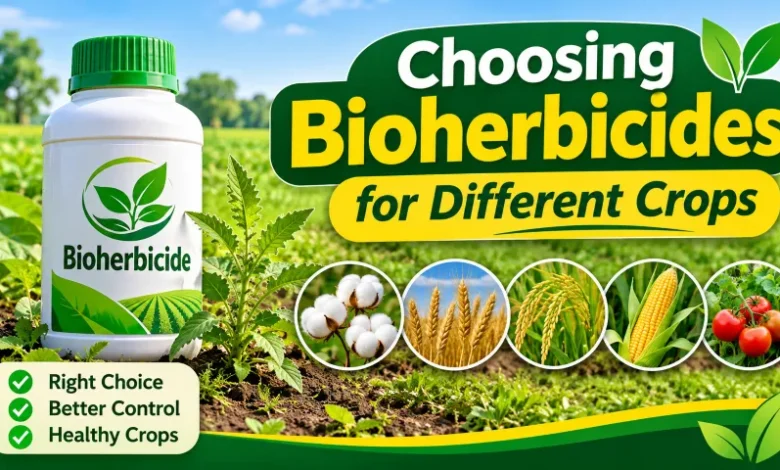
Bioherbicides are weed control products made from living microbes or natural plant-based compounds. The right one for your field depends on three things: the weed you are fighting, the stage it has reached, and the crop you need to protect. Some bioherbicides target a single weed species. Others burn down every green leaf they touch, your crop included. Mixing those two types up is the most common and most costly mistake.
Weeds are worth taking seriously. A 2021 review in the journal Plants notes that weed competition can cut yields by an average of 15 to 66% in direct-seeded rice, 18 to 65% in maize, 50 to 76% in soybean and 45 to 71% in groundnut. That is why farmers keep looking for weed control that works without leaving a heavy chemical footprint, and why natural herbicides are getting more attention every season.
This guide explains what bioherbicides are, the main types with real examples, how to match them to crop groups, and how to get the timing right.
What Are Bioherbicides?
Bioherbicides are weed control agents derived from microorganisms, or from toxins made by microbes, insects or plants. The Plants review describes them as a natural way to manage weeds, but it also makes an important point: natural does not mean harmless. Plant and microbial toxins can still affect non-target organisms, so they need careful handling like any other crop protection input.
You will also see them called natural herbicides or organic herbicides. These terms overlap, but they are not identical. A product is only suitable for certified organic farming if it meets the standards of the certification scheme you follow. For example, Emery Oleochemicals states that its pelargonic acid based bioherbicide range includes grades that are OMRI Listed for organic use, while other grades in the same range are not.
Advantages of Bioherbicides
The main advantages of bioherbicides are practical rather than magical:
- Short persistence. They break down quickly, so they are less likely to contaminate soil and water.
- Lower risk to non-target life. Many have little effect on beneficial organisms when used as directed.
- Resistance management. Allelochemical-based products often act in several ways at once, which lowers the risk of weeds becoming resistant.
- A fit for organic systems. Certain products can be used in organic production when they meet the certification requirements.
- Short re-entry times. One manufacturer lists a 4 hour restricted-entry interval for its pelargonic acid products, which makes field scheduling easier.
The flip side matters just as much. The same review identifies inconsistent performance as the biggest barrier to wider use, and a short half-life means a product may not stay active long enough to finish the job. Cost, narrow weed spectrum and registration rules add to the challenge.
Why the Global Bioherbicides Market Is Growing
Interest in bioherbicides is not just a farm-level trend. The global bioherbicides market is being pushed by the growth of organic farming. The report cites FAO figures showing organic practice in 188 countries in 2024, covering more than 96 million hectares and over 4.5 million farmers. Since conventional chemical herbicides are not permitted in organic production, these growers need other tools.
Regional patterns are worth knowing. According to the same report, the North America bioherbicides market leads globally, with the United States highlighted for strong agricultural research and policy support for lower-chemical farming. The US bioherbicides market benefits from that research base, while Asia Pacific is described as the fastest-growing region. The report also says microbial products and liquid formulations are the dominant segments.
A reality check keeps expectations sensible. The Plants review reports that bioherbicides still make up less than 10% of all biopesticides, and that by 2012 only seven were registered in the USA and six in Canada. So the global bioherbicides market is expanding, but it is still a small slice of overall weed control. Registration and availability differ from country to country, so always confirm what is legal and labelled where you farm.
Types of Bioherbicides and Real Examples
The table below compares the main types so you can see at a glance how they differ.
| Type | How it works | Selectivity | Speed | Bioherbicides example | Main limitation |
|---|---|---|---|---|---|
| Microbial (fungi, bacteria) | Infects the weed or produces toxins that weaken it | Usually targets specific weeds | Slow, often days to weeks | Collego (northern joint vetch in rice and soybean); Sarritor (dandelion in turf) | Sensitive to humidity, leaf wetness and temperature; narrow weed range |
| Botanical oils and plant extracts | Damage leaf membranes and tissue | Mostly non-selective contact | Fast, within hours | WeedZap (clove and cinnamon oil); Avenger (citrus based) | Can burn the crop too; short-lived, so repeat passes may be needed |
| Natural acids (pelargonic acid) | Rapid desiccation of green tissue | Non-selective contact | Very fast | EMERION grades from Emery Oleochemicals | Must be kept off the crop; deep-rooted perennials may regrow |
| Natural byproducts (corn gluten meal, mustard seed meal) | Release compounds that inhibit weed germination and growth | Soil applied, mainly before emergence | Slow | Corn gluten meal, mustard seed meal | Variable results and higher cost at field scale |
Product names come from the Plants review and the manufacturer page linked above. Availability depends on your country, so treat these as examples rather than recommendations.
Microbial bioherbicides
These use fungi or bacteria that attack a particular weed. Collego, based on a fungus, has been used against northern joint vetch in rice and soybean, and Sarritor targets dandelion in turf. Because they are living organisms, they behave very differently from a chemical spray. They need the right humidity, leaf wetness and temperature to infect the weed, which is why results can vary so much between fields and seasons. Research has also found that pairing the fungal product Phoma macrostoma with nitrogen fertiliser improved control of dandelion by 10 to 20%.
Botanical oils and plant extracts
Oils from clove, cinnamon, citrus and lemongrass are the most familiar natural herbicides for home gardens and small farms. They work by damaging leaf tissue, causing chlorosis and burning. That is a good result on weeds and a bad one on your crop. These are mostly contact products, so they are best used as directed sprays, not as a broadcast treatment over a standing crop.
Natural acids
Pelargonic acid is a fatty acid that occurs in plants such as pelargonium. As a herbicide it is a non-selective contact product. Emery Oleochemicals describes its version as a fast burndown option with visible results in about 15 minutes, labelled for pre-plant burndown, spot spraying and row middle weed control. Those are manufacturer claims, so check the product label and local trial data before relying on them.
Natural byproducts
Some farm and food-industry leftovers have weed-suppressing properties. Corn gluten meal has long been known to act as a pre-emergence suppressant, and mustard seed meal works through glucosinolates. In one study, brassica seed meals suppressed weeds and also increased carrot yield by boosting soil nitrogen.
Selective vs Non-Selective: Why It Matters for Your Crop
This is the single biggest factor in choosing the right product.
Selective bioherbicides go after particular weeds and leave the crop alone. Most microbial products fall into this group. They are gentle on the crop but only work if your weed is on the target list.
Non-selective bioherbicides act on contact with any green tissue. Botanical oils and pelargonic acid belong here. They are excellent for clearing a seedbed before planting or for spot treatment between rows, but they should not be sprayed over a growing crop.
A simple rule: if the product kills weeds within hours, assume it will damage your crop if it lands on it.
Choosing Organic Herbicides for Weeds by Crop Group
No single bioherbicide fits a whole crop group, so use these as starting points and confirm what is registered for your crop and region.
- Cereals (wheat, rice, maize, barley, oats): Non-selective products suit pre-plant burndown, clearing weeds before the crop emerges. In-crop options are limited. Research has shown sorghum water extract cut barnyard grass biomass by about 40% and raised rice yield by 18%, which points to the potential of plant extracts, though this is research rather than a ready-made field product everywhere.
- Pulses and legumes (lentil, beans, peas): Contact oils can injure legumes, so avoid spraying them over the crop. Targeted microbial products are more crop-safe where registered. BioMal, for example, was developed against round-leaved mallow in crops including lentil and flax.
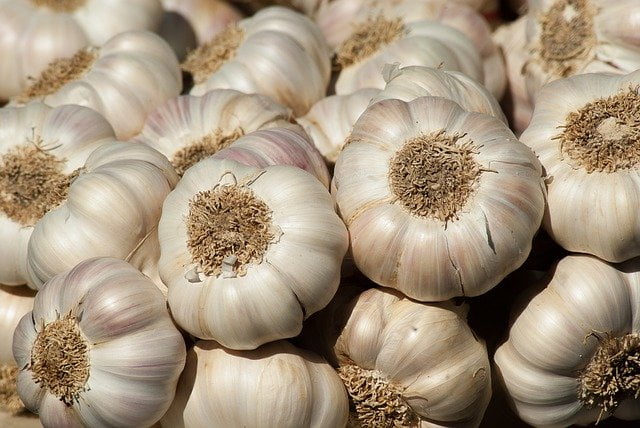
- Root and tuber crops (potato, carrot, onion, garlic): Pre-emergence suppression with seed meals shows promise, and shielded or spot application of contact products can handle weeds between rows.
- Vegetables (cabbage, tomato, pepper, spinach): Use pre-plant burndown and careful inter-row spot spraying. Keep contact products off leaves and stems.
- Orchards and fruit crops (citrus, apple, grape): Contact products can work along tree rows and in alleys if sprayed away from foliage and fruit. Devine, a microbial product, has been used against a specific vine weed in citrus groves.
- Cash crops (cotton, sugarcane, tea): Pre-plant burndown and row middle control are the safest uses for non-selective products. Always check what the label allows for your crop.
Before you spray anything, confirm what the weed actually is. Some plants that look like pests are useful, and there are many edible weeds and wild plants worth recognising. Correct identification also helps you pick between a selective and a non-selective product.
Bioherbicide Application Methods
How you apply a product changes how well it works. The Plants review stresses that droplet size, spray volume, nozzle type and equipment all affect efficacy.
- Foliar spray: The most common method. Use a boom or backpack sprayer and aim for even coverage of the weed leaves. Contact products need good coverage to work.
- Spot and band spraying: Ideal for non-selective products, applied only to the weed or between crop rows, with shielding to protect the crop.
- Pre-plant burndown: Spray existing weeds before sowing to give the crop a clean start.
- Soil application: Used for products such as seed meals and some microbial formulations. Soil moisture matters here, and the same review notes that soil type and moisture can change how well microbial agents perform.
Do not overlook water quality. Poor-quality water can reduce activity, speed up breakdown in the tank and block nozzles. Mixing with clean water improves consistency.
The Right Timing for Bioherbicide Application
Timing often decides whether a product works at all.
- Before planting or before weeds emerge. Pre-plant burndown and pre-emergence products have the best chance, because weeds are small and the crop is not yet exposed.
- Early post-emergence. Young, actively growing weeds are the most vulnerable. Spray when they are small and the crop is not in the line of fire.
- Avoid late applications. Large, mature or seeding weeds are much harder to control, and contact products may only scorch the top growth. Deep-rooted perennials can recover.
Weather matters as well. The Plants review lists light, temperature, humidity, rainfall and wind among the factors that influence results. In practice, microbial products generally need humid, mild conditions, while contact sprays work best on dry foliage with no rain forecast soon after. Check the label for rainfast periods and re-entry intervals.
Use Bioherbicides as Part of Integrated Weed Management
Researchers are clear that bioherbicides work best as one tool among several, not as a complete replacement for other methods. Crop rotation, mulching, competitive crop varieties and timely tillage all help.
Mulching is an easy place to start. If you grow wheat, you can estimate how much residue you will have available with a wheat straw calculator and use some of it as mulch to suppress weeds between rows. For more crop-specific guidance, browse the cultivation guides on fasalbachao.com.
Frequently Asked Questions
What are bioherbicides?
Bioherbicides are weed control products made from microbes, plant extracts or other natural compounds. They offer an alternative to synthetic herbicides, though they are best used alongside other weed management practices.
Can you give a bioherbicides example?
Collego (a fungal product for northern joint vetch), Sarritor (for dandelion in turf), clove oil based products such as WeedZap, and pelargonic acid products are all examples.
Are natural herbicides safe for crops?
Not automatically. Selective microbial products are generally crop-safe when used as labelled, but non-selective oils and acids can burn the crop if they touch it. Always test on a small patch first.
Do organic herbicides for weeds work as fast as chemical herbicides?
Contact products such as pelargonic acid can show visible effects within hours, but they may not kill deep roots. Microbial products work more slowly and depend on weather.
When is the best time to apply a bioherbicide?
For most products, apply before weeds emerge or when they are young and actively growing, in suitable weather and following the label.
Can bioherbicides be used in organic farming?
Some can, if they meet your certification standards. Check for approval from your certifier before you buy or use any product.
Final Thoughts
Choosing the right bioherbicide comes down to matching the product to the weed, the crop and the moment. Selective microbial products protect the crop but need the right conditions. Non-selective oils and acids act fast but demand careful placement. Used with sensible timing and as part of a wider weed management plan, bioherbicides can cut chemical use while keeping fields productive. Start small, read the label, and test before you scale up.
Author Bio:
Sandhya Jadhav is a research analyst specializing in chemicals, materials, and sustainable agricultural solutions. Sandhya focuses on emerging crop protection technologies, bio-based formulations, and environmentally responsible farming practices. Through research-driven insights, Sandhya explores how bioherbicides support effective weed management, crop health, and sustainable agricultural productivity.