Nasturtium – نسٹرشئم
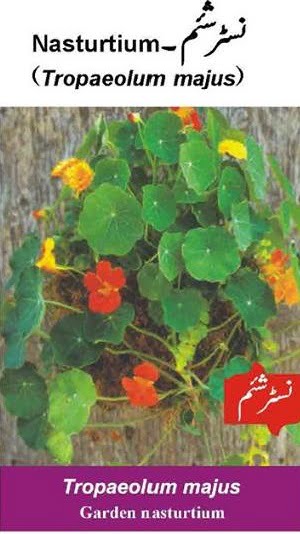

Garden Nasturtium — Tropaeolum majus
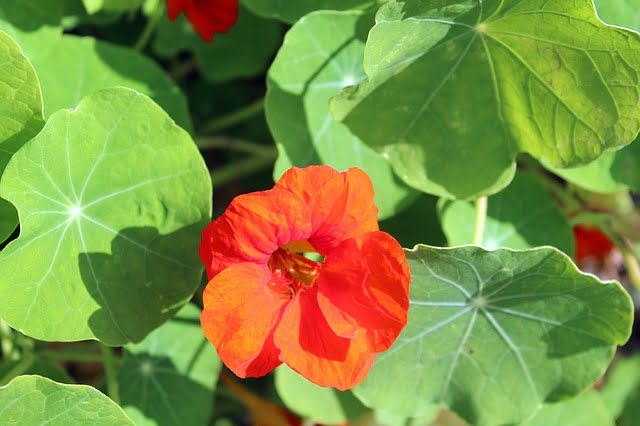
Nasturtium is grown using seeds in October November. The flowers present a stunning visual display in shades of yellow, orange, and red in Spring season.
Blooming Period
Nasturtium flowers begin opening from January through April. The plant grows best in full sun or partial shade — full sun produces the most abundant flowering. It can also be planted in partial shade though this tends to produce larger plants with fewer flowers.
Planting Method — Bedding
Nasturtium is well suited for ground bedding. Plant with a spacing of one foot between plants and one and a half to two feet between rows to allow adequate development, maintain good air circulation, and produce the best quality blooms over a longer flowering period. It can also be grown in pots.
Soil Requirements
Nasturtium actually prefers poor to moderately fertile, well-drained soil. Rich fertile soil encourages excessive leaf growth at the expense of flowers — one of the most common mistakes gardeners make with this plant.
Watering
Water moderately. Nasturtium is drought tolerant once established. Overwatering causes yellowing leaves and root rot.
Edible Plant
Both flowers and leaves are fully edible with a peppery flavor — widely used in salads, garnishes, and herbal cooking worldwide.
Pest Control Benefit
Nasturtium is a well-known companion plant — it attracts aphids away from vegetables and repels whiteflies, making it extremely valuable in kitchen gardens and vegetable beds.
Seed Saving
Nasturtium produces large easily visible seeds that can be saved and replanted each season — making it one of the most economical flowering plants for any garden.
Varieties
Two main growth habits are available — trailing/climbing varieties that spread up to 2 meters, and compact bush varieties ideal for containers, borders, and small garden beds.
Check out Flowers of Pakistan for more flowers information