Trees of Pakistan: A Guide to the Common and Native Trees

Pakistan is home to more than 430 tree species in 82 families and 226 genera, including 22 gymnosperms — from the cedar forests of the northern mountains to the shisham and kikar of the hot plains. The national tree is the Deodar (Cedrus deodara), a giant conifer whose Sanskrit name means “Wood of the Gods” and which grows 40–50 metres tall with a trunk up to 3 metres across. This guide lists the common and native trees of Pakistan in one place, grouped the way growers actually meet them: mountain and conifer trees of the north, shade and timber trees of the plains, flowering trees, and fruit trees. Every entry gives the English name, the local name used across Pakistan, and the scientific name, so a tree can be recognised in a nursery, a book or a forest alike. The list follows the same logic as the University of Agriculture Faisalabad’s Urdu reference on the useful trees of Punjab’s regions, which organises its trees region by region — because the first rule of tree selection in Pakistan is to match the tree to the soil and climate of its region.
A modern national reference, the 2024 book Trees in Pakistan, takes the same approach at country scale: it covers the widely distributed native, naturalised and introduced species that reach at least 15 metres, and for each one it gives the family, the English, Urdu and other local names, the distribution, the characteristics, the traditional uses and how to plant it. Its stated aim is conservation, and helping growers select species for plantations according to environmental requirements — the same match-the-tree-to-the-place rule that runs through this guide.
Trees of Pakistan at a glance
The table below is the quick reference: the best-known trees of Pakistan with their local names, scientific names and type. Longer notes on each group follow the table.
| Common name | Local name | Scientific name | Type |
|---|---|---|---|
| Deodar (national tree) | Deodar | Cedrus deodara | Mountain conifer |
| Chir Pine | — | Pinus roxburghii | Mountain conifer |
| Chilgoza Pine | Chilgoza | Pinus gerardiana | Mountain conifer |
| Chinar | Chinar | Platanus orientalis | Mountain shade |
| Walnut | Akhrot | Juglans regia | Mountain fruit/nut |
| Oak | — | Quercus semecarpifolia | Mountain |
| Horse Chestnut | — | Aesculus indica | Mountain |
| Poplar | — | Populus ciliata | Mountain / farm |
| Sheesham | Shisham / Tahli | Dalbergia sissoo | Plains timber |
| Kikar | Kikar | Acacia nilotica / Vachellia nilotica | Plains shade/timber |
| Neem | Neem | — | Plains shade |
| Siris | Siris | Albizia lebbeck | Plains shade |
| Sukh Chain | Sukh Chain | Pongamia pinnata | Plains shade |
| Arjun | Arjun | Terminalia arjuna | Plains shade |
| Banyan | Bargad | Ficus benghalensis | Plains shade |
| Peepal | Peepal | Ficus religiosa | Plains shade |
| Bakain | Bakain / Dharek | Melia azedarach | Plains shade |
| Phulai | Phulai | Acacia modesta | Dry-hills tree |
| Rohida | Rohida | Tecomella undulata | Arid-zone tree |
| Amaltas | Amaltas | Cassia fistula | Flowering |
| Dhak | Dhak / Palash | Butea monosperma | Flowering |
| Simbal (Silk Cotton) | Semal / Simbal | Bombax ceiba | Flowering |
| Kachnar | Kachnar | Bauhinia variegata | Flowering / food |
| Mango | Aam | Mangifera indica | Fruit |
| Jamun | Jamun | Syzygium cumini | Fruit |
| Falsa | Falsa | Grewia asiatica | Fruit |
| White Mulberry | Shahtoot | Morus alba | Fruit |
| Ber (Jujube) | Ber | Ziziphus jujuba | Fruit |
| Moringa | Sohanjna | Moringa oleifera | Fruit / food |
| Pomegranate | — | Punica granatum | Fruit |
Mountain and conifer trees of the northern areas
The northern mountains carry Pakistan’s conifer forests, and the Deodar stands at the top of the list: it is the national tree, grows 40–50 metres tall with a trunk up to 3 metres in diameter, and the Faisalabad reference places it at elevations of roughly 1,000–8,500 feet. Around it grow the other hill trees that define the northern landscape:
- Deodar (Cedrus deodara) — the national tree; a 40–50 m conifer of the high valleys, its Sanskrit name meaning “Wood of the Gods”.
- Chir Pine (Pinus roxburghii) — a pine of the lower hills, listed among the natives of the Rawalpindi area.
- Chilgoza Pine (Pinus gerardiana) — the pine listed in Pakistan’s tree flora for its edible chilgoza nuts.
- Kail — a hill tree covered in the original reference alongside Deodar and Walnut, with a lifespan figure of 120 years given in its entry.
- Chinar (Platanus orientalis) — the great shade tree of the northern valleys, also planted for shade in city lists.
- Walnut — Akhrot (Juglans regia) — the mountain nut tree, covered in the reference’s northern pages together with Almond and Pistachio.
- Oak (Quercus semecarpifolia) — the reference places oak at altitudes of 1,600–2,400 metres, in a cool 13–35 °C range.
- Horse Chestnut (Aesculus indica), Juniper (Juniperus excelsa) and Yew (Taxus wallichiana) — further mountain species in the national tree list.
- Poplar (Populus ciliata) — the reference gives poplar a height of 40–50 feet and covers it with the northern trees, together with Willow and Chinar.
What unites this group is altitude: these are trees of cool air and high ground, and the reference book treats them separately from the plains flora for exactly that reason — a Deodar or an oak planted on the hot plain is a tree in the wrong region.
Shade and timber trees of the plains
The plains run on a different set of trees — broad-leaved species that give shade over roads, fields and courtyards, and timber for furniture and construction. The most planted of them all is the shisham tree (Dalbergia sissoo, locally Shisham or Tahli), the classic timber and shade tree of Punjab. Beside it stands the kikar tree (Acacia nilotica, also classified as Vachellia nilotica), which the native-trees guide notes is widespread in Punjab. The neem tree appears in the Afforestation Lahore shade list alongside Sheesham, Arjun and Kikar, and the bakain tree (Melia azedarach, Bakain or Dharek) is given in the original reference as a tree of up to 50 feet. The remaining plains regulars are:
- Siris (Albizia lebbeck) — a standard plains shade tree in the national list and the second entry of the original book.
- Sukh Chain (Pongamia pinnata) — listed for shade in both the native guide and the Lahore planting list.
- Arjun (Terminalia arjuna) — a large shade tree; the Islamabad common-trees list gives it 80 feet.
- Banyan — Bargad (Ficus benghalensis) — the vast spreading fig of village shade, native in the Rawalpindi list.
- Peepal (Ficus religiosa) — the second great fig of the plains, covered in the original book after Simbal.
- Phulai (Acacia modesta) — a small thorny tree of the dry hills, 3–9 metres tall in the reference’s entry.
- Rohida (Tecomella undulata) and Karira (Capparis decidua) — trees of the arid zones in the national and Rawalpindi lists.
- Toon (Toona ciliata) — among the most common trees of Islamabad at 85 feet, and Teak — Sagwan (Tectona grandis) — completes the national timber list.
Flowering trees
For flower, the plains have their own season of colour. Amaltas (Cassia fistula) heads the flowering group in both the Lahore list and the original book, and its fruit is used in herbal medicine. The dhak tree (Butea monosperma, Dhak or Palash) and the simbal tree (Bombax ceiba, Semal or Simbal) follow — the native guide notes Simbal for its silk cotton and its flowers, and the Islamabad list gives the white silk cotton a height of 100 feet. Kachnar (Bauhinia variegata) is the orchid tree of the Rawalpindi natives, about 30 feet in the Islamabad list, and the guide notes that Kachnar pods are cooked and eaten — a flowering tree that is also a food tree. Rangeela (Erythrina stricta) appears in the native guide, and Gul-e-Nishtar in the Lahore flowering list. One honesty note: Gul Mohar, the red-flowered favourite of city avenues, appears in planting lists as a flowering tree but is an introduced ornamental, not a native of Pakistan — it is included in city lists for its flowers, and labelled as introduced here.
Fruit trees of Pakistan
The fruit trees are the group every household knows. Mango — Aam (Mangifera indica) — gets its own entry in the original book and heads the Lahore fruit list. jamun (Syzygium cumini) is covered in the Central Punjab section of the reference, which mentions a 6–7 year figure in its fruiting discussion. Falsa (Grewia asiatica) and White Mulberry — Shahtoot (Morus alba) — represent the soft fruits of the plains, and Ber (Ziziphus jujuba) opens the original book as its very first entry, a hardy fruit tree of the dry regions. The moringa plant — Sohanjna (Moringa oleifera) — is the third entry of the book, which notes it is raised from seed and cuttings near homes and that its seed is also used; it sits in the Lahore fruit list too. Amla, Leemo (lemon), Malta/Kinno citrus, Amrood (guava) and Lasura complete the Lahore fruit group, and Pomegranate (Punica granatum) appears among the Rawalpindi natives.
Which trees suit the mountains, and which suit the plains?
Region decides the tree. The original reference is built on this single idea — useful trees of Punjab’s different regions, then Central Punjab, then the north — and the 2024 reference “Trees in Pakistan” states the same purpose: choosing species for plantations according to environmental requirements. The contrast in short:
| Feature | Northern mountains | Plains |
|---|---|---|
| Setting | High ground — Deodar at roughly 1,000–8,500 ft; oak at 1,600–2,400 m | Low, hot agricultural land — Punjab’s regions, Central Punjab |
| Typical trees | Deodar, Chir Pine, Chilgoza, Kail, Chinar, Walnut, Oak, Poplar, Willow | Sheesham, Kikar, Neem, Siris, Sukh Chain, Arjun, Banyan, Peepal, Bakain |
| Main roles | Forest cover, nuts (Chilgoza, Walnut), hill timber | Shade, timber, fruit and farm planting |
| Dry-zone overlap | Phulai (3–9 m), Rohida and Karira serve the dry hills and arid areas between the two zones | |
How to choose a tree for your land
Choose by purpose first, then check the tree against your region. The Afforestation Lahore planting list groups its 24 trees by exactly this logic — flowering, shade and fruit — and it is the simplest shortlist to work from:
| Purpose | Trees to consider | Source list |
|---|---|---|
| Shade | Sukh Chain, Chinar, Deodar, Sheesham, Neem, Arjun, Kikar | Afforestation Lahore — shade group |
| Flowers | Amaltas, Gul-e-Nishtar, Gul Mohar (introduced), Badaam, Choi-moi, Gul-e-Nargis | Afforestation Lahore — flowering group |
| Fruit | Mango, Jamun, Sohanjna (Moringa), Shahtoot, Amla, Leemo, Malta/Kinno, Amrood, Lasura, Kachnar | Afforestation Lahore — fruit group |
| Timber | Sheesham, Kikar, Teak (Sagwan) | National tree list |
| Dry land | Kikar, Phulai, Rohida, Karira, Ber | Native lists — arid-zone species |
Three checks before planting, drawn from the references behind this guide:
- Match the region first — the Faisalabad book is organised region by region because a tree that thrives in one part of Punjab can fail in another; altitude alone rules the mountain group in or out.
- Give the tree its mature room — a Deodar finishes at 40–50 metres and a silk cotton at around 100 feet in city lists, while a Phulai stops at 3–9 metres; plant for the final size, not the sapling.
- Use the local name at the nursery — Tahli, Dharek, Semal, Sohanjna and Shahtoot are the names stock is actually sold under, which is why every entry in this guide carries its local name beside the scientific one.
Frequently asked questions
What is the national tree of Pakistan?
The Deodar (Cedrus deodara). It is a mountain conifer of the north that grows 40–50 metres tall with a trunk up to 3 metres across, and its Sanskrit name means “Wood of the Gods”.
How many tree species are there in Pakistan?
More than 430 tree species, in 82 families and 226 genera — including 22 gymnosperms, the cone-bearing group that covers the pines, Deodar, juniper and yew of the northern forests.
Which are the most common trees in Pakistan’s cities?
City planting lists feature Kachnar, Toon, Arjun, Deodar and the silk cotton among the most common trees of Islamabad, with Kachnar at about 30 feet, Arjun at 80 feet and Toon at 85 feet. Avenue and park lists in Lahore add Neem, Sheesham, Kikar, Amaltas and the introduced Gul Mohar.
What is the best shade tree for the plains?
The classic plains choice is Sheesham, with Neem, Siris, Sukh Chain, Arjun and Kikar as the other standards — all of them appear in the Afforestation Lahore shade group. For a dry site, Kikar and Phulai are the safer picks.
Is Gul Mohar a native tree of Pakistan?
No. Gul Mohar is an introduced ornamental. It appears in city flowering lists because of its red blooms, but it is not part of Pakistan’s native flora — the native flowering standards are Amaltas, Dhak, Simbal and Kachnar.
Where does this list come from?
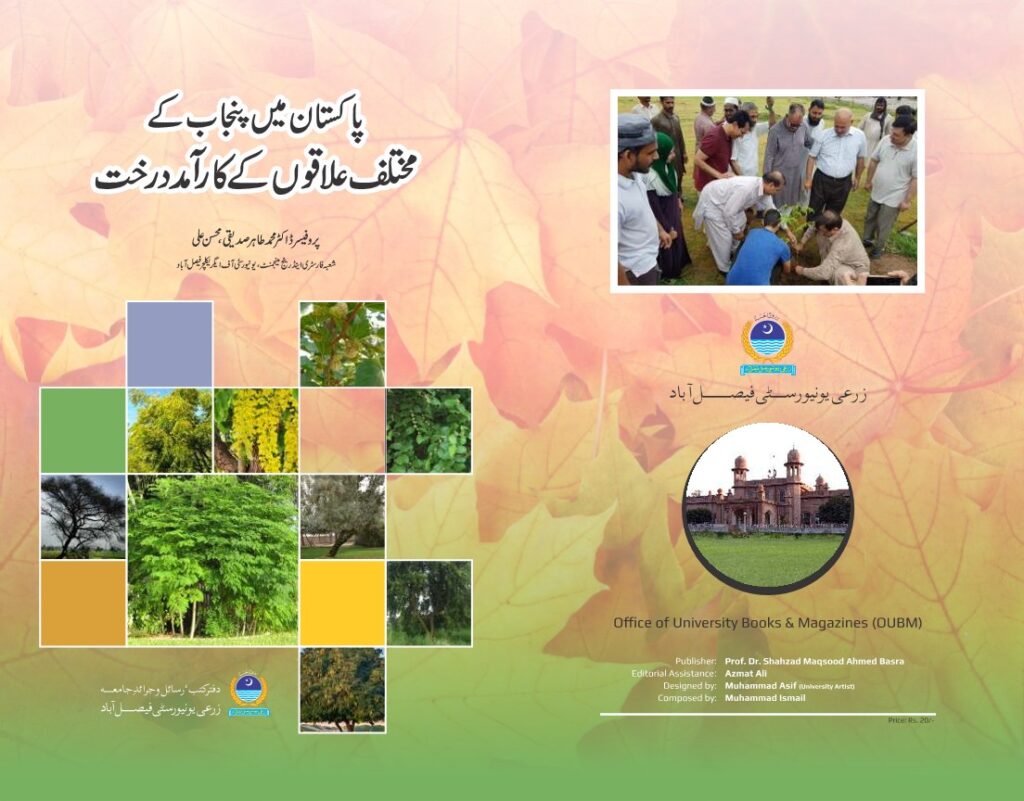
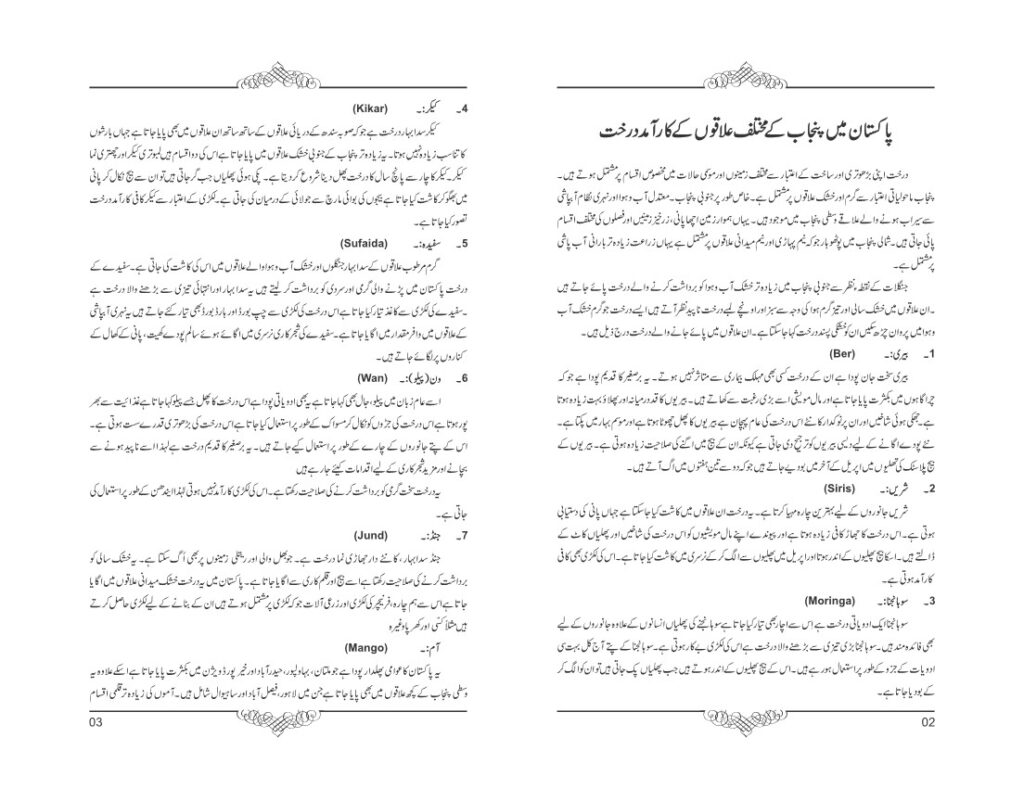
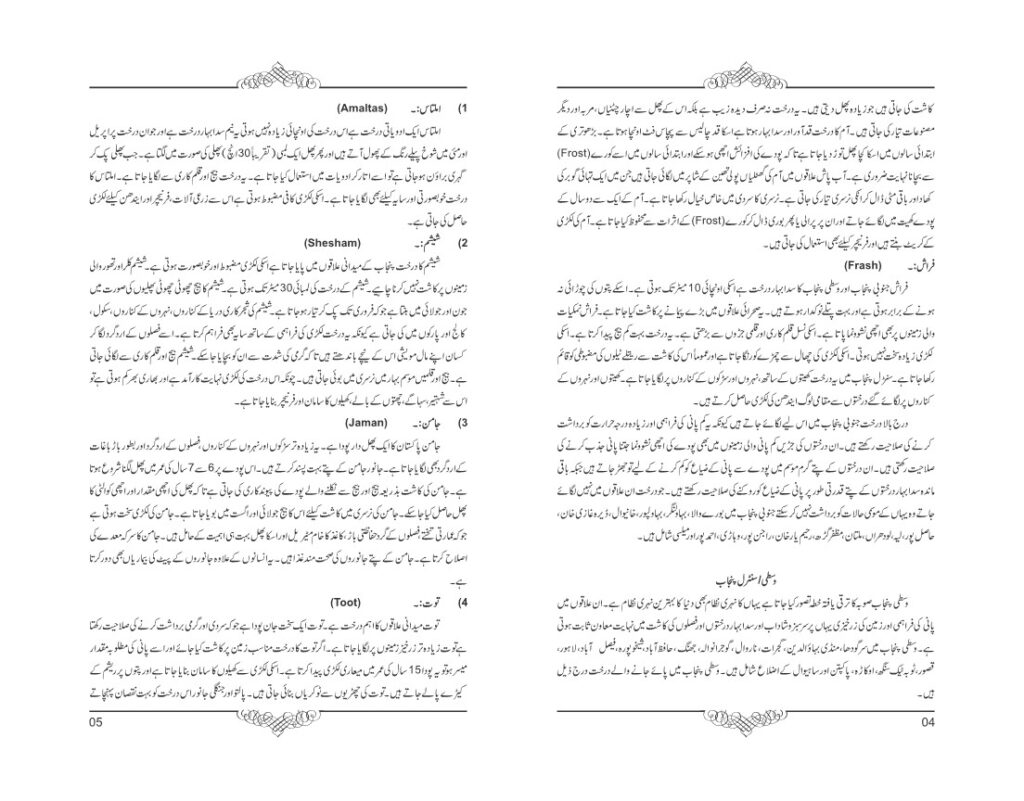
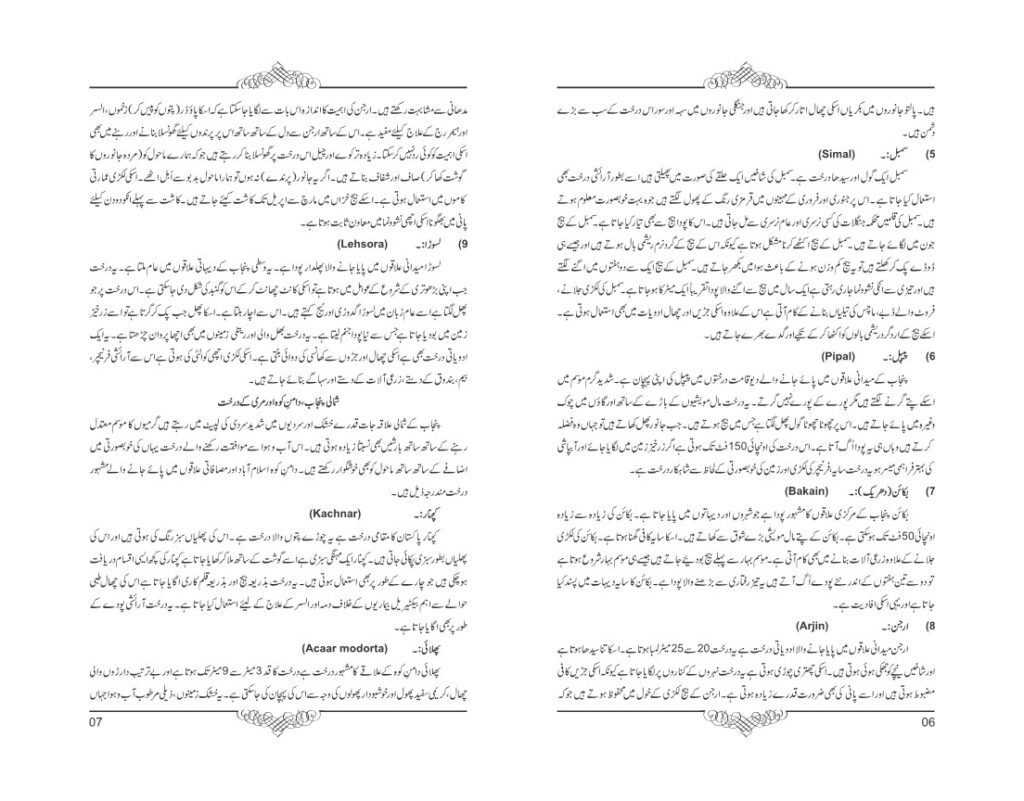
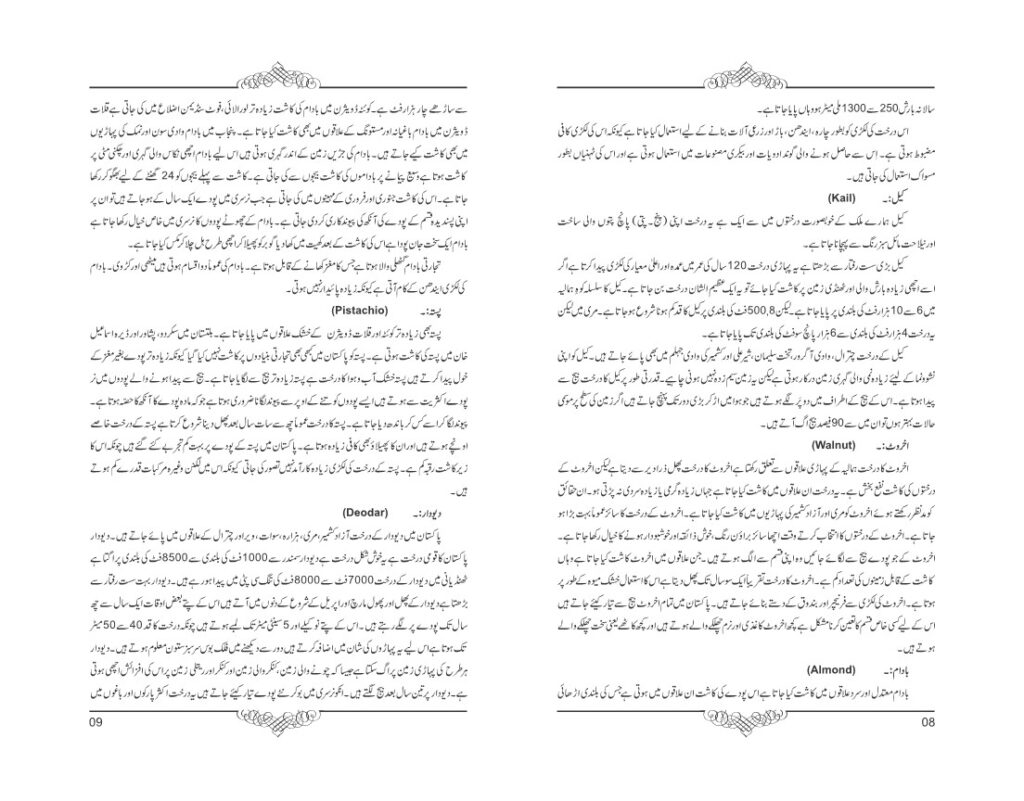
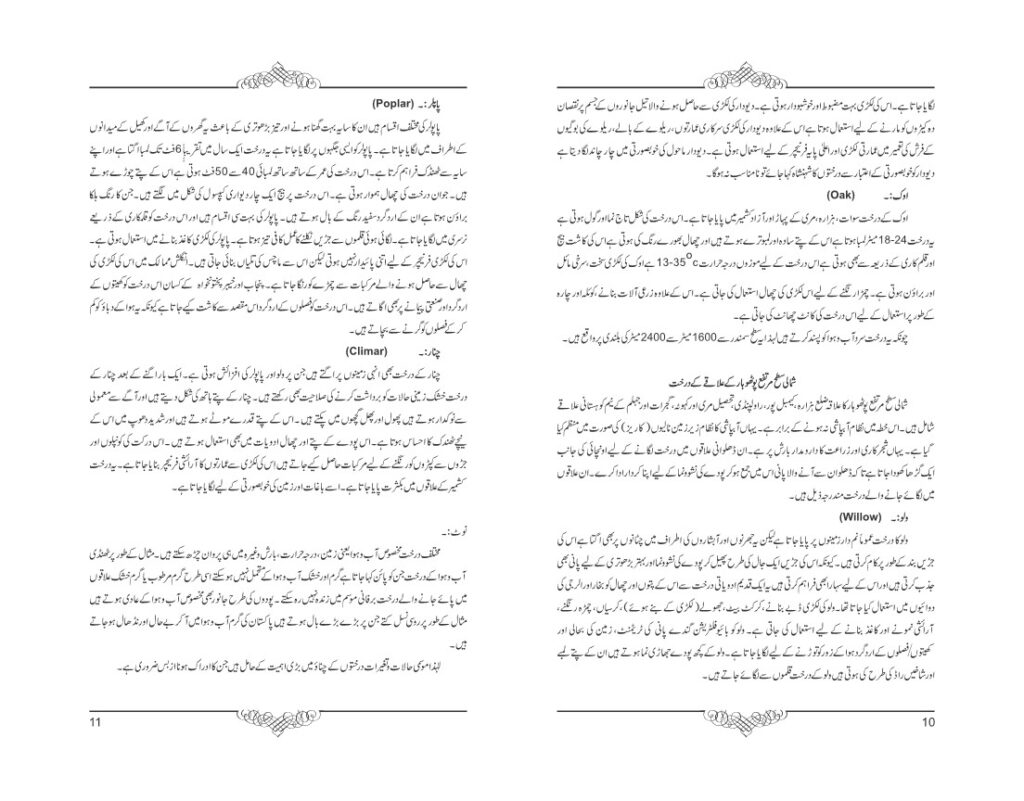
It merges the national tree flora (430+ species) with the University of Agriculture Faisalabad’s Urdu reference “Useful Trees of the Different Regions of Punjab in Pakistan” — the source of the original version of this page, preserved in Urdu below — and with regional native lists for Rawalpindi and planting lists for Lahore and Islamabad.
اردو خلاصہ: پاکستان میں پنجاب کے مختلف علاقوں کے کارآمد درخت
اس صفحے کا اصل ماخذ زرعی یونیورسٹی فیصل آباد کے شعبہ جنگلات کی کتاب “پاکستان میں پنجاب کے مختلف علاقوں کے کارآمد درخت” ہے، جس کے مصنف پروفیسر ڈاکٹر محمد طاہر صدیقی اور محمد علی ہیں۔ اس کتاب کا بنیادی اصول یہی ہے کہ ہر درخت اسی علاقے میں کامیاب ہوتا ہے جس کی آب و ہوا اور مٹی اس کے مزاج کے مطابق ہو، اسی لیے کتاب میں درختوں کو علاقوں کے حساب سے تقسیم کیا گیا ہے: پنجاب کے مختلف علاقوں کے درخت، پھر وسطی پنجاب کے درخت، پھر شمالی پنجاب اور کوہ سلیمان کی طرف کے درخت، اور آخر میں شمالی علاقوں کے درخت۔
کتاب میں بیان کردہ درخت یہ ہیں: بیری، شریں، سوہانجنا، کیکر، سفیدہ، وان، جنڈ، آم، فراش، املتاس، شیشم، جامن، توت، سمبل، پیپل، بکائن (درھیک)، ارجن، لسہوڑا، کیچنار، پھلائی، کیل، اخروٹ، بادام، پستہ، دیودار، اوک، ولو، پاپلر اور چنار۔ کتاب کے مطابق سوہانجنا گھروں کے قریب بیج اور قلم سے لگایا جاتا ہے اور اس کے بیج بھی استعمال ہوتے ہیں۔ بکائن کی اونچائی پچاس فٹ تک بیان کی گئی ہے۔ پھلائی ایک چھوٹا سا کانٹے دار درخت ہے جس کی اونچائی تین سے نو میٹر تک ہوتی ہے۔ دیودار تقریباً ایک ہزار سے ساڑھے آٹھ ہزار فٹ کی بلندی پر پایا جاتا ہے اور اس کی اونچائی چالیس سے پچاس میٹر تک ہوتی ہے۔ اوک سولہ سو سے چوبیس سو میٹر کی بلندی پر اگتا ہے۔ پاپلر کی اونچائی چالیس سے پچاس فٹ بیان کی گئی ہے۔
ذیل میں اسی کتاب کے اصل صفحات کی تصاویر دی جا رہی ہیں تاکہ قاری اصل متن خود بھی ملاحظہ کر سکے۔