Agricultural Supply Chain Resilience: Reducing Food Losses from Farm to Market
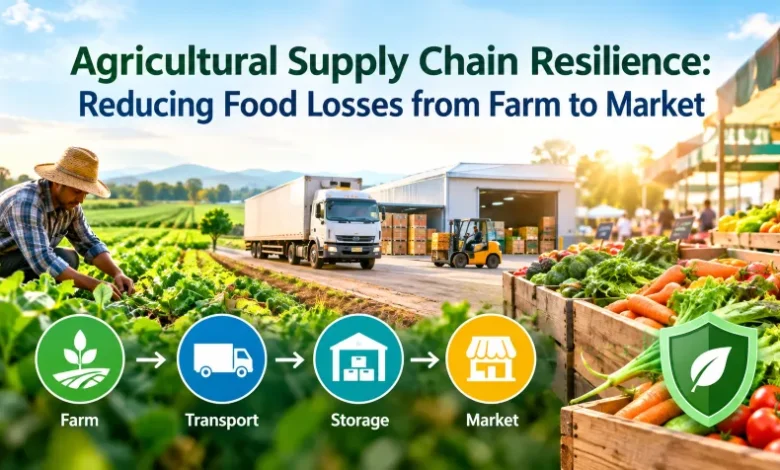
The worth of a crop only really comes to light when it is delivered at its destination in a condition where the food is still edible. Food can spoil along the way from the farm to the market for many reasons; improper harvesting, insufficient storage, defective packaging, changes in temperature, delayed transportation, poor infrastructure, and a situation when supply and demand don’t tally up. Now, in 2025, the concept of minimizing such losses is more closely linked with agricultural supply chain resilience. The main goal here is not simply to increase food production but also to safeguard the food already produced as it is handled and moved through various links of the supply chain.
Persistent Food Loss Across the Agricultural Supply Chain
In 2025, the Food and Agriculture Organization of the United Nations stated that it is estimated that approximately 13. 2% of all food, the volume about 1. 25 billion tonnes, gets lost after harvesting and the food gets lost before it reaches retail shelves. The estimate covers losses occurring across stages such as farm handling, storage, transportation, wholesale and processing. FAO’s latest global monitoring also indicates that there has been no apparent improvement in the global food-loss rate since monitoring began. Its SDG data estimates global food losses at 13.3% in 2023, compared with 13.0%. This stagnation is significant because agricultural production can increase without creating equivalent improvements in food availability, if substantial quantities continue to disappear along the supply chain.
Global Agriculture Outlook:
| Sr No | Parameter | |
| 1 | Crop Produced (Mn Tons 2025/2026) | |
| Wheat | 843.99 Mn Tons | |
| Rice | 545.91 Mn Tons | |
| Jowar/Sorghum | 63.07 Mn Tons | |
| 2 | World Harvested Area & Production (t/ha) 2025/2026 | |
| Wheat | 2.1333 t/ha | |
| Rice | 3.0741 t/ha | |
| Jowar/Sorghum | 4.1739 t/ha | |
| 3 | Crop Loss (Acres)2025/2026 | |
| Wheat | 8087 acres | |
| Rice | 72,000 acres | |
| Jowar/Sorghum | 620,000 acres | |
Perishability Makes Resilience Critical
Per FAO’s figures for 2025, fruits and vegetables were being lost globally at a rate of 25. 4%, a figure far higher than that of cereals and pulses that had a loss rate of 8. 4%. Freshly harvested fruits and vegetables are the ones that can get spoilt easily, as after harvesting, the change in their condition can be very quick. If they are not cooled in time, if the storage conditions are wrong with humidity, if they have received physical damage, or have been kept in very long transport, such a product can easily become waste just before reaching the consumers. Temperature management, that means, can be the biggest reason for building resilience. By refrigerating the product, pre-cooling, having temperature-controlled transport, and continuously monitoring the conditions, product quality will be better maintained as good control of conditions is a necessity for commodities.
Harvesting and Post-Harvest Handling
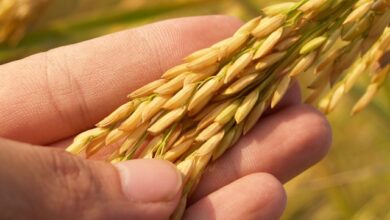
Harvesting methods are the first line of defence in the supply chain. If the harvest timing is wrong, the fruit or vegetables are mechanically damaged, or the wrong containers are used, and there is rough handling during loading, these may be minor defects that become very noticeable during transport or storage. After harvesting, the handling and storage needs of each type of commodity should be taken into consideration.
Crop-Specific Reasons for Agricultural Supply Chain Resilience
| Crop Type | Why Supply Chain Resilience Is Important | Key Resilience Priorities |
| Wheat | Wheat requires controlled storage to prevent moisture, pests, mould, and quality deterioration. | Moisture-Controlled Storage; Grain Aeration; Pest Management; Timely Harvesting; Protective Packaging |
| Rice | Rice requires careful drying and handling to prevent grain damage, mould, and quality deterioration. | Timely Drying; Moisture Management; Careful Threshing; Pest-Resistant Storage; Protective Handling |
| Jowar/Sorghum | Jowar requires proper drying and storage to prevent mould, pests, and grain deterioration. | Timely Drying; Moisture-Controlled Storage; Pest Management; Adequate Ventilation; Protective Handling |
| Maize | Maize requires effective drying and storage to minimize mould, pests, and grain damage. | Rapid Drying; Moisture Management; Pest Control; Aerated Storage; Careful Handling |
| Pulses | Pulses require proper drying and storage to limit insects, moisture, and quality deterioration. | Controlled Drying; Pest Management; Moisture Control; Protective Storage; Careful Handling |
| Fruits | Fruits require temperature control and careful handling to minimize rapid deterioration and physical damage. | Pre-Cooling; Cold Storage; Temperature Monitoring; Protective Packaging; Efficient Transportation |
| Vegetables | Vegetables require rapid cooling and suitable handling to preserve freshness and reduce deterioration. | Pre-Cooling; Cold Chain; Humidity Management; Protective Packaging; Rapid Transportation |
| Oilseeds | Oilseeds require controlled moisture and storage conditions to prevent mould, pests, and quality deterioration. | Moisture Control; Pest Management; Aerated Storage; Protective Handling; Timely Processing |
Storage Infrastructure Reduces Vulnerability
Storage capacity is a buffer that helps in case of fluctuations in supply and demand. If the storage system is suitable, the farmers and aggregators can avoid selling off everything at once when the stockpile is high. Besides, the goods get preserved through the use of the right storage. Another significant factor that affects storage is resilience through energy sources. Electricity outages affect cold storage devices, air-cooling equipment and tracking instruments such that the goods cannot be kept at the proper temperature; to have uninterrupted food distribution, power backup and proper planning of the equipment’s repair and maintenance is quite imperative.
Transportation and Logistics Efficiency
Good transportation can change localized production into regional or global supply. Still, if journey times are very long, roads are bad, vehicles are unsuitable, packaging is inadequate and loading and unloading are repeated, it can cause not only physical damage but also the decline in quality. Good logistics that are able to cope with disasters require that there is a flow of information, for example, from collection points through warehouses and processors to retailers. Well-planned transportation routes, a good distribution schedule of the shipments, as well as the ability to see and control inventories can help the operators to avoid the unnecessary delays and respond adequately when the transportation networks are disturbed.
Digitalization and the Smart Agriculture Solution Market
Smart agriculture solutions are gaining an immense role in reducing food loss as digital systems can help connect farm-level information with downstream supply-chain decision-making. The use of sensors can monitor temperature, humidity, and other storage-related conditions, whereas digital platforms can provide support for inventory visibility, crop forecasting, and logistics coordination. In addition, satellite-based information and farm-management technologies can also be a tool for improved planning before products enter the post-harvest chain. However, technology alone does not create resilience. FAO has identified barriers including high investment requirements, limited connectivity, unreliable energy and shortages of technical skills in the adoption of agricultural automation and digital technologies. These constraints mean that digital solutions need to be supported by infrastructure, training and practical operating procedures.
Climate and Operational Disruptions
Food supply chains have to withstand natural disasters and disruptions caused by shortages of energy, interruptions in transportation, and dramatic swings in the market conditions. Making a system capable of withstanding such unpredictable events involves avoiding total reliance on one warehouse, one transportation highway, one vendor, or one electricity source. Spreading the risks among the essentials will not only limit the effect of one disruption, but also keep the network running even if one node breaks down. Having more farm gateways, different transport routes, spare power generators, and storage warehouses in remote areas may be what it takes to not only maintain the flow of goods from the producers to the consumers but also make their delivery safe and consistent.
Measuring Losses at the Right Point
Measurement is essential before investment decisions are made. FAO’s Food Loss Index focuses on losses from production through the supply chain up to, but excluding, retail, allowing countries to identify changes in losses across commodities and supply-chain stages. For agricultural businesses and policymakers, measuring losses separately at harvesting, storage, transportation, processing and wholesale stages can reveal where interventions are likely to have the greatest effect. Pristine Market Insights can use this distinction when examining agricultural supply-chain resilience because food loss, food waste, logistics inefficiency and production losses represent related but different challenges.
The Broader Food-Waste Connection
The issue of food loss is wider than merely the transportation of crops from the farm to the retailers; it is also related to food waste later in the food system. The United Nations Environment Programme draws a line between food waste and food loss; most of the food waste, based on UNEP, is due to retail, restaurants, and home sectors. This differentiation is mostly valuable in the evaluation of the food supply chain, in the sense that the two terms refer to different stages and so different measurement and mitigation strategies. So, there is no basis in combining directly the figures of food loss with that of food waste, since they have been obtained from different parts of the food system.
Enhancing Farm-to-Market Chain Resilience
Achieving a more resilient agricultural supply chain basically comes down to safeguarding product value at each changeover. Improving harvesting and storage conditions to meet the crop’s requirements and guarantee the availability of a reliable cold chain with an efficient transport system and demand coordination, as well as digital monitoring, all in the same basket, would reduce losses quite a bit. The 2025 evidence shows why this remains an important global issue. FAO’s latest assessment places food losses after harvest and before retail at approximately 13.2%, while fruits and vegetables experience substantially higher losses than several other major commodity categories. The next stage of resilience is therefore not simply expanding agricultural production. It is improving the ability of supply chains to preserve what has already been produced, maintain quality during disruptions and deliver food efficiently from farm to market.
Improved storage and packaging methods also play a direct role in cutting these losses — our deep dive into post-harvest treatment trends covers how controlled atmosphere storage and smart packaging are extending shelf life across the supply chain.
Author Bio:
Sandhya Jadhav is a research analyst with expertise in food and beverage industry trends, agricultural systems, and supply chain developments. She focuses on emerging technologies, market dynamics, and evolving practices that influence food production, distribution, sustainability, and resilience across the agricultural value chain.