The Role of Stainless Steel Pipes in Modern Agricultural Infrastructure
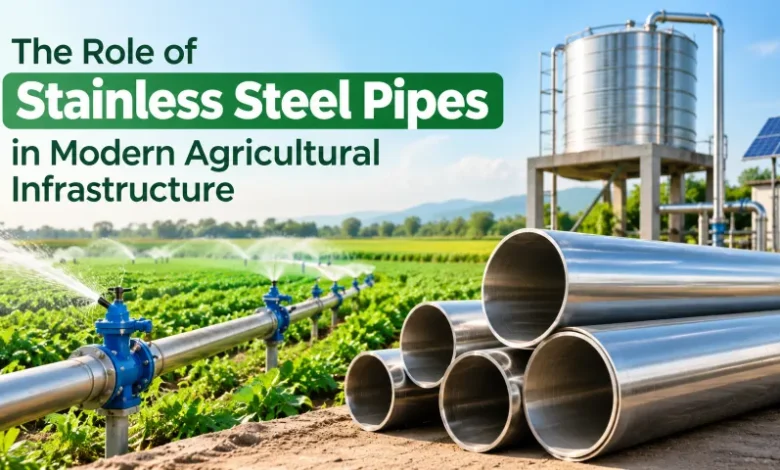
Walk through any large farm today and you’ll notice something that would have looked out of place twenty years ago: shiny metal piping running alongside irrigation channels, dairy barns, and grain stores. That’s stainless steel, and it has quietly become one of the more important materials in modern farm infrastructure.
For most of the last century, farmers relied on PVC and galvanized steel to move water, milk, and fertilizer around their land. Both materials did the job, but they also came with limitations that only became obvious after years of use. Stainless steel pipes are now filling in those gaps, particularly on farms that are scaling up production or trying to meet stricter food safety rules. This article looks at where these pipes are actually being used, how they compare to older materials, what they cost over time, and how to decide if they make sense for your own setup.
Why Farms Are Moving Away From Older Piping Materials
PVC pipe cracks under UV exposure after a few years in direct sunlight, and it becomes brittle in cold climates. Galvanized steel holds up better against the sun but has a different problem: the zinc coating that protects it wears away from the inside, especially when the pipe is carrying fertigation solutions, saline water, or manure runoff. Once that coating is gone, rust starts forming on the inside of the pipe where nobody can see it until water pressure drops or the pipe eventually fails.
Stainless steel avoids both of these failure points. It contains chromium, which forms a thin oxide layer on the surface of the metal. That layer is what gives stainless steel its resistance to rust and chemical attack. It doesn’t degrade the way galvanized coatings do, and it isn’t affected by sunlight the way plastic is. That’s the core reason it shows up in so many different corners of agricultural infrastructure now, from irrigation networks to dairy processing lines to the pipes carrying grain between silos.
Where Stainless Steel Pipes Are Actually Used on Farms
Irrigation and Water Distribution
Drip and micro-irrigation systems depend on consistent water flow through narrow pipes and emitters. Corrosion inside a pipe, even a small amount, can flake off and clog emitters over a season, quietly reducing how much water actually reaches the crop. This matters even more on farms drawing from tube wells, where knowing your actual output with a tube well discharge calculator helps you size the piping correctly in the first place, since undersized or corroded pipe can waste a good part of that discharge before it ever reaches the field. Farms that inject fertilizer directly into their irrigation water, a practice called fertigation, see the biggest benefit here, since stainless steel doesn’t react with dissolved fertilizer salts the way plain steel does.
Dairy and Livestock Farming
Milk pipelines were one of the earliest uses of stainless steel in agriculture, and this is still where the material is most standard. Food safety regulations in most countries require any surface that touches milk to be non-reactive and easy to clean thoroughly, which rules out plastic and galvanized pipe. The same reasoning applies to watering lines in poultry houses and livestock barns, where bacteria and biofilm can build up inside pipes made from less resistant materials.
Greenhouses and Controlled Environment Agriculture
Greenhouses are humid environments almost year round, which speeds up corrosion in ordinary metals. A greenhouse typically has a dense network of pipes carrying water, nutrients, and sometimes heat, all packed into a small space. Stainless steel handles that constant moisture without the recurring rust problems that galvanized pipe develops in the same conditions.
Grain Storage and Handling
Pneumatic systems that move grain between silos and processing equipment put a lot of abrasive wear on pipe interiors. Stainless steel resists that wear better than galvanized alternatives, and it won’t introduce rust flakes into stored grain, which matters for both food safety and quality grading.
Comparing Stainless Steel to PVC and Galvanized Steel
| Property | PVC | Galvanized Steel | Stainless Steel |
|---|---|---|---|
| Corrosion resistance | Low, degrades with UV exposure | Moderate, coating wears over time | High, resists rust and most chemicals |
| Typical lifespan | 15–25 years above ground | 8–12 years in fertigation or wet use | 25+ years with proper installation |
| Hygiene for food/milk contact | Not recommended | Not recommended | Standard requirement in most regulations |
| Performance in extreme temperatures | Poor, becomes brittle in cold | Good | Good, though it conducts heat and cold faster than plastic |
| Upfront cost | Low | Moderate | High |
Stainless Steel Grades Used in Agriculture
Not all stainless steel performs the same way, and choosing the right grade matters more than people expect when they’re buying pipe for the first time.
| Grade | Corrosion Resistance | Common Agricultural Use | Relative Cost |
|---|---|---|---|
| 304 | Good | General irrigation lines, greenhouse plumbing, grain handling | Moderate |
| 316 | Excellent, higher resistance to chlorides | Coastal farms, saline groundwater, dairy and food contact lines | Higher |
| 430 | Fair | Non critical fittings, low corrosion risk uses | Lower |
Grade 316 contains added molybdenum, which gives it much better resistance to pitting corrosion than 304. It’s usually the right choice anywhere the pipe will touch milk, fertigation chemicals, or salty groundwater. For general irrigation where budget matters more than chemical exposure, 304 is normally good enough and considerably cheaper.
Weighing the Cost Against Long Term Value
There’s no getting around it: stainless steel pipes in agriculture costs more upfront than PVC or galvanized steel, often two to four times as much per meter depending on the grade and diameter. That price gap is the main reason a lot of farms, especially smaller ones, haven’t switched over yet.
But the picture looks different once you factor in how long each material actually lasts under real farm conditions. Galvanized pipelines carrying fertigation solutions or livestock waste often need replacing within 8 to 12 years because of internal corrosion. A properly installed stainless steel system, by contrast, can run for 25 years or more with very little maintenance. Over that timeframe, the higher purchase price gets spread out, and in a lot of cases the total cost ends up lower once you account for repeated replacement, water loss from failing pipes, and labor for repairs.
For large commercial farms, dairy processors, and export oriented operations where compliance and hygiene aren’t optional, stainless steel is usually worth the investment. This is especially true for farms that have already invested in efficient watering setups, since pairing that with our guide on water-efficient irrigation methods for modern farms helps protect those efficiency gains instead of letting them wear away as an old pipe network ages. Smaller farms working with tighter budgets often do better with a mixed approach: stainless steel at the points most exposed to corrosion, such as fertigation injectors and milk lines, and PVC everywhere else where the risk is lower.
Installation and Maintenance Tips
Stainless steel needs less upkeep than older materials, but it isn’t completely maintenance free. A few things worth keeping in mind:
- Have joints welded properly, usually with TIG welding, since poor welding can weaken the corrosion resistant layer right at the seam.
- Keep stainless steel away from direct contact with plain carbon steel fittings. When the two touch, it can trigger galvanic corrosion at the connection point.
- Flush lines periodically, especially drip irrigation and dairy pipelines, to stop mineral deposits or biofilm from building up inside.
- In very hot or very cold climates, insulate exposed sections, since stainless steel transfers heat and cold faster than plastic pipe does.
- Inspect welded joints and fittings once a year even though the pipe itself needs little attention, since most failures happen at connection points rather than along the pipe body.
To screen for products that meet agricultural and industrial pipeline requirements, sourcing from a reliable professional supplier such as hnyasco can save a great deal of time and avoid many mistakes.
Frequently Asked Questions
Is stainless steel pipe worth it for a small farm?
It depends on what the pipe is being used for. For basic irrigation on a limited budget, PVC is often still the more practical choice. But for fertigation lines, dairy plumbing, or anything touching water that eventually reaches food or milk, the durability and hygiene benefits of stainless steel tend to justify the higher cost even for smaller operations.
Which grade should I use for irrigation water with high salinity?
Grade 316 is the better option for saline or coastal water sources. Its molybdenum content gives it stronger resistance to pitting corrosion than 304 in salty conditions.
How long do stainless steel pipes actually last on a farm?
With decent installation and basic upkeep, stainless steel piping commonly lasts 25 years or longer, well past the 8 to 12 years you’d typically get from galvanized steel under similar wet or corrosive conditions.
Does stainless steel piping change the taste or quality of milk or crops?
No, when installed correctly it’s chemically inert, which is exactly why it’s the standard material for milk contact surfaces and is increasingly preferred for fertigation systems where any reaction between water and pipe material would be a real problem.
Can stainless steel and PVC pipe be used together on the same farm?
Yes, and this is actually common practice. Many farms use stainless steel only at the points with the highest corrosion or hygiene risk, like fertigation injectors or dairy lines, and rely on PVC for the rest of the system where the water or environment is less demanding.
The Bottom Line
Stainless steel pipe isn’t going to replace every bit of plumbing on every farm, and it doesn’t need to. Its real value shows up in the specific spots where corrosion, hygiene, or chemical exposure would otherwise cut short the life of an irrigation or processing system. As more farms invest in precision irrigation, fertigation, and stricter food safety practices, stainless steel is turning into less of a luxury upgrade and more of a standard part of what modern agricultural infrastructure looks like.