How a Tractor Disc Harrow Turns Rough Ground into a Planting-Ready Seedbed
Every grower who has stared at a weedy, uneven patch of ground and then at a bag of seed knows the gap between the two. Seed does not care how good your intentions are — it needs loose, level soil with decent contact to actually germinate. That gap is exactly what a tractor disc harrow is built to close, and getting the sequence right matters just as much as owning the right implement.
Why the order of operations comes before the equipment
A common mistake is disking straight into standing weeds or old cover crop residue. The blades chop the vegetation into pieces, but many of those pieces are still alive enough to root again within days. The ground looks freshly worked, then the same weeds push back through ahead of the new planting and shade it out before it establishes.
The more reliable sequence is to deal with the existing vegetation first — spraying it out according to the product label and letting it brown off — and only then bringing in the harrow. Dead, dried material breaks apart and mixes into the topsoil far more easily than living plants, which usually means fewer passes to get a clean seedbed.
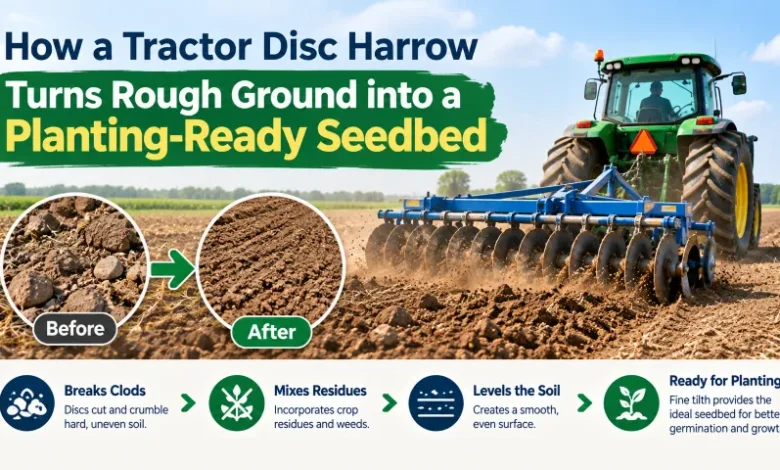
Direction matters on the passes that remain. A first pass with a tractor disc harrow opens the ground and breaks up clods; a second pass angled against the first knocks down the ridges left behind, leaving a more even surface. On sloped ground, working across the slope rather than straight up and down it keeps loosened soil from washing out in the next heavy rain.
Match the harrow’s width to the tractor, not the other way around
Tractor tires compact whatever ground they roll over, and those packed wheel tracks become stubborn strips where seedlings struggle to root — even after the rest of the field looks perfectly worked. An implement that spans at least the full width of the tractor’s wheel track reworks those compacted lines on every pass instead of leaving them behind untouched.
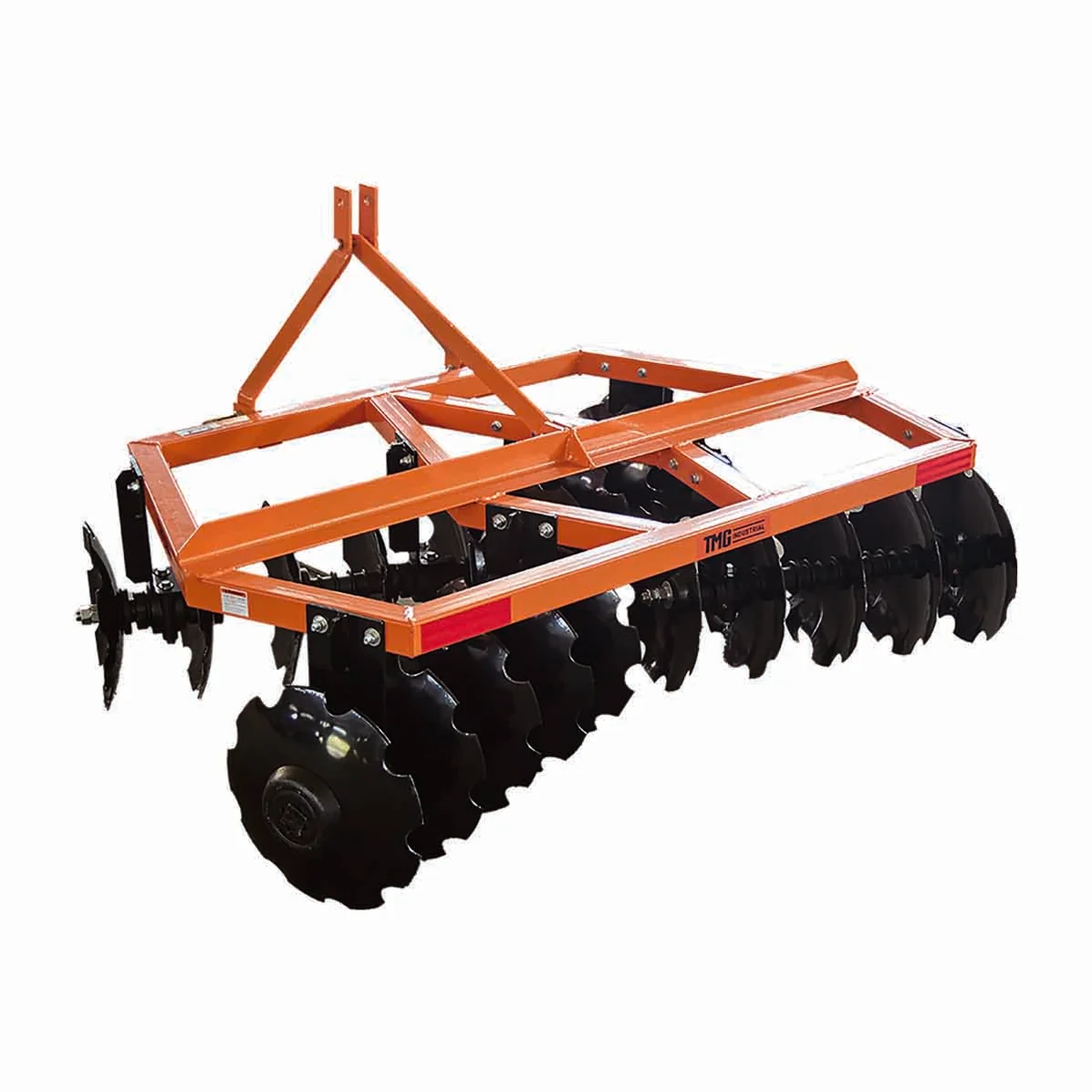
For compact and mid-size tractors in the 25 to 45 horsepower range, a tractor disc harrow in the six-foot class fits that job well — wide enough to cover the wheel tracks, narrow enough to fit through field gates and access trails that a larger implement simply cannot. It can also be lifted clear of stumps, rocks, and low spots on the way to less accessible plots, which matters on any farm with rougher terrain.
Seeding depth is a seed-by-seed decision, not a one-size setting
Mixed seed blends are where a lot of otherwise good land prep goes wrong, because different seed sizes need very different treatment. Bury a fine seed too deep and it may never reach daylight; leave a large grain sitting on top of the soil and birds or dry weather will take it before it germinates.
| Seed type | Ideal depth | Harrow pass |
|---|---|---|
| Cereal rye and wheat | ~1–1.5 in (2.5–4 cm) | Broadcast, then one light disc pass to cover |
| Oats and field peas | ~1.5–2 in (4–5 cm) | Slightly deeper, one light pass |
| Brassicas (turnips, radish) | Surface to 1/8 in (3 mm) | Press or roll, do not bury |
| Clover | Surface sown | Roll or cultipack on a firm bed, no burying |
On blended plantings, the practical order is to disc in the larger grains first, then broadcast the fine seeds afterward and firm them in with a roller or cultipacker rather than another disc pass.
Soil chemistry sets the ceiling on everything else
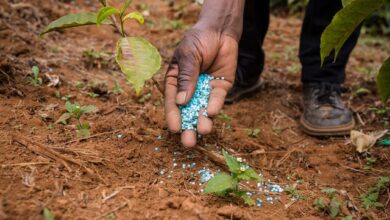
Many field and woodland soils run acidic, and clover in particular struggles badly at low pH regardless of how well the seedbed is prepared. Lime takes months to shift soil chemistry, so a soil test done well ahead of the planting window — and lime worked in with the harrow early — pays off far more than buying extra seed to compensate. Fertilizer is more forgiving on timing and can usually be broadcast and disced in shortly before planting.
A short table is a useful way to keep this straight when planning a season:
| Amendment | Lead time needed | When to work it in |
|---|---|---|
| Lime | Several months | Early season, well before planting |
| Fertilizer | Days | Shortly before or at planting |
| Soil test | One-time, before either | As early as possible each season |
Timing the final pass around rain
Seed left sitting on dry ground simply waits — and gives birds and dry wind a longer window to find it. Seed that goes in a day or two ahead of a good rain germinates quickly and gets a head start on competing weeds. Watching the short-term forecast and having the seedbed finished and ready to broadcast is as much a part of the plan as the tillage itself.
The reverse mistake is disking too soon after heavy rain. Wet soil smears rather than breaks apart, and the clods it forms dry into hard lumps with gaps around the seed. Waiting until the surface crumbles freely in the hand is a simple, reliable test for whether the ground is ready.
Getting the implement there and keeping it working
Access trails to remote or awkward fields tend to be narrow, with hidden stumps and uneven grades. Traveling with the harrow raised and at a slow, steady speed protects the gangs and bearings, and a quick check of bolts and bearings before the season starts avoids a breakdown far from the shed.
Once planting wraps up, rinsing soil and plant debris off the discs, greasing the bearings, and storing the implement under cover keeps it ready for the next season. A TMG Industrial 72 inch notched harrow, built for a Category 1 three-point hitch, is sized to match the compact tractors most commonly used for this kind of seedbed work.
Frequently asked questions
How many passes does a disc harrow usually need before a field is ready to seed? Two passes are typical on ground that was sprayed out ahead of time — one to break up the residue and open the soil, and a second angled pass to level the ridges. Heavier, more compacted ground may need a third pass.
Can a disc harrow replace a plow entirely? Not for every situation. A disc harrow is best suited to breaking up light-to-moderate residue and finishing a seedbed, not to turning over deeply compacted or previously unworked ground, which usually needs a plow or subsoiler first.
What size disc harrow fits a small or compact tractor? A six-foot working width generally suits tractors in the 25–45 horsepower range, matching typical wheel spacing without exceeding what the tractor can safely pull.
Is it necessary to spray weeds before disking? It is not strictly necessary, but skipping it usually means more passes and a higher chance of live weed fragments re-rooting through the new planting.
Check our blog on Precision Agriculture for more informative articles.