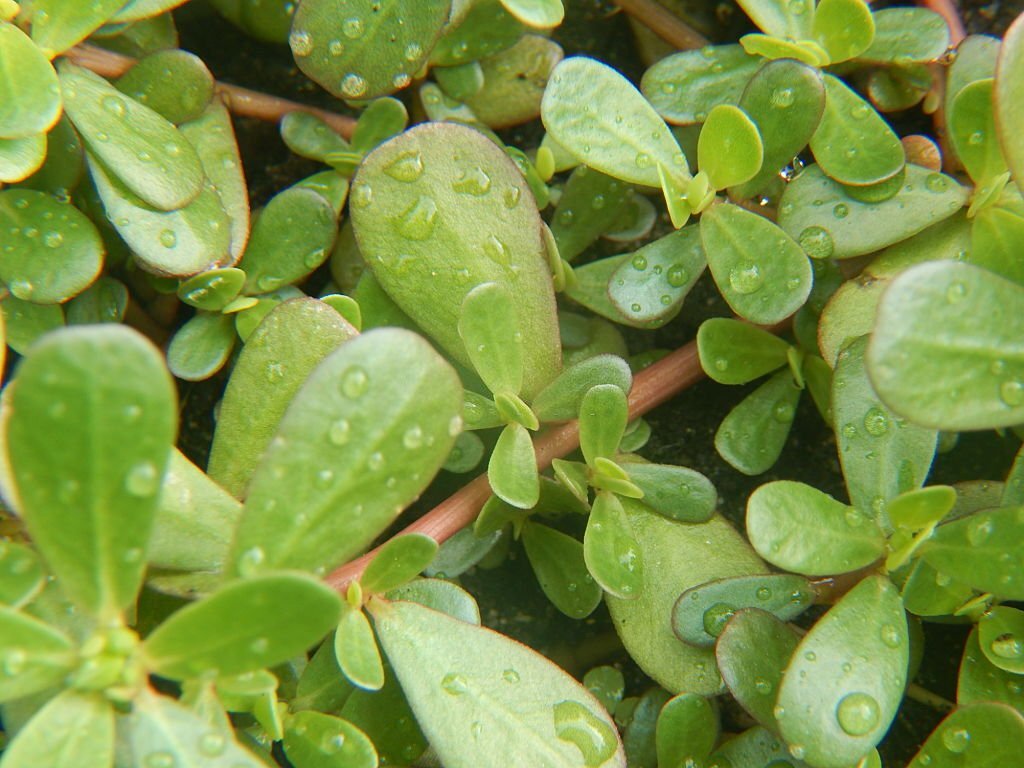
Why the Film on a Hoop House Matters More Than the Frame on a Clear Fall Night

On a still, clear morning in late autumn, a car windshield can be coated in frost while the air just above it never actually dropped below freezing. A few steps away, lettuce growing under a hoop house is completely untouched. Both effects come from the same physics, and understanding it explains what the plastic over a tunnel is really doing once the nights turn cold — and why frost protection has more to do with the film than the frame underneath it.
Hoop house, polytunnel, tunnel greenhouse — does the name change the physics?
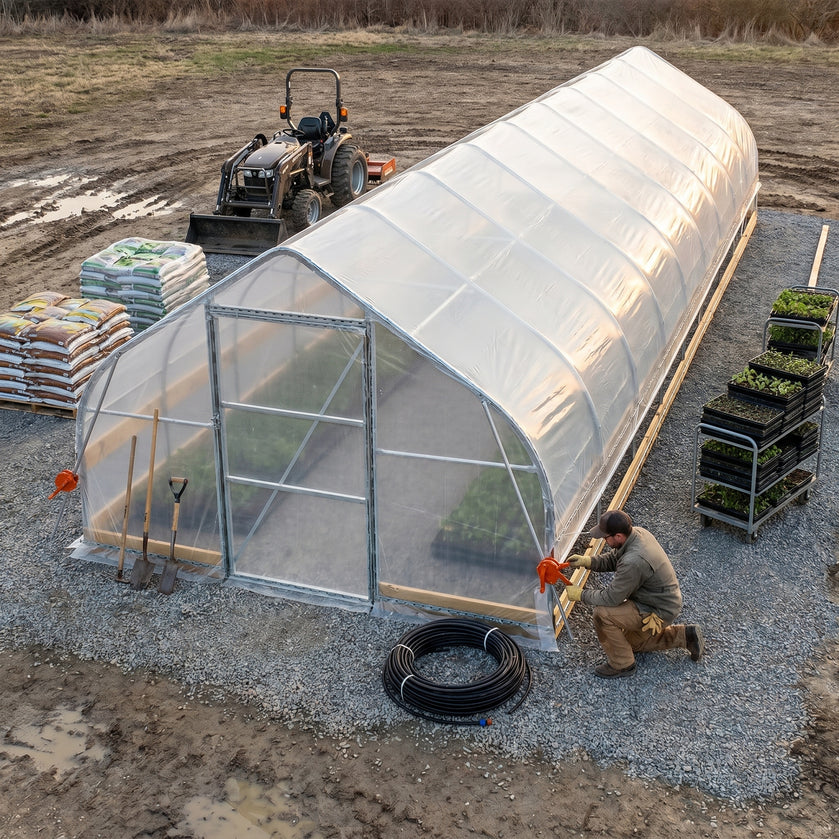
Growers in different regions use different words for close to the same structure. In much of North America the common term is hoop house; in the UK and parts of Europe the same unheated, plastic-covered structure is usually called a polytunnel; and “tunnel greenhouse” is used more broadly, often for larger or taller versions with higher clearance. A hoop house greenhouse, a polytunnel, and a tunnel greenhouse all work on the same principle — a plastic skin stretched over hoops, trapping air and blocking radiant heat loss — so the guidance below applies whichever name is used locally. The differences that actually matter are size, film type, and how the structure is vented, not the label on it.
A clear sky is what pulls the heat away
Every surface gives off heat as invisible infrared radiation, all the time. Under cloud cover, much of that radiation gets bounced back down. Under a clear night sky, there is almost nothing to send it back, so leaves, soil, and glass cool faster than the surrounding air — sometimes frosting over even when a thermometer nearby reads a few degrees above freezing.
That is why the sharpest early-season frosts show up on calm, cloudless nights rather than cold, windy or overcast ones. Wind mixes warmer air down toward the ground, and cloud cover acts like a blanket holding heat in. Remove both and radiational cooling does its work quickly.
Cold air also behaves like water — it flows downhill and pools in low spots. A structure placed in the lowest corner of a property sits directly in that pool of coldest air on still nights, while the same tunnel moved a little way up a gentle slope can stay noticeably warmer through the same night.
Why the type of plastic changes everything
A cover does two jobs: it traps a layer of still air, and — more importantly on a clear night — it intercepts outgoing infrared radiation before it escapes to the sky. Different films let very different amounts of that radiation through, even when they look equally clear in daylight.
| Film type | Cost | Night heat retention |
|---|---|---|
| Plain polyethylene | Lowest | Lets most infrared escape; loses heat fast |
| Infrared-treated poly | Moderate | Absorbs more radiation, noticeably warmer at dawn |
| EVA film | Moderate–high | Stays flexible in cold, strong heat retention |
| Double-inflated layers | Highest | Adds an insulating air gap, more parts to maintain |
Plain polyethylene is nearly transparent to long-wave infrared, so a tunnel covered with it can lose heat almost as fast as open ground on a still, clear night. An EVA greenhouse film, by contrast, blocks a much larger share of that outgoing radiation, which is why two tunnels that look identical at noon can sit several degrees apart at dawn. This is the core idea behind season extension: the film is doing more of the work than most growers assume, and it is often worth more than an equivalent spend on a heavier frame.
How much frost protection does film type actually add?
The numbers below are general ranges reported by growers and extension resources comparing covered ground to open ground on clear, calm nights — actual results vary with humidity, wind, and how tightly the film is fitted, so treat them as a planning guide rather than a guarantee.
| Cover | Typical frost protection (vs. open ground) | Best suited to |
|---|---|---|
| No cover (open ground) | 0°F / 0°C baseline | Not frost-sensitive crops only |
| Floating row cover alone | 2–4°F (1–2°C) | Light, early-season frost |
| Plain polyethylene tunnel | 3–5°F (2–3°C) | Mild climates, short season extension |
| EVA or IR-treated tunnel | 5–8°F (3–4.5°C) | Harder frosts, longer season extension |
| Tunnel + row cover inside | 8–12°F (4.5–7°C) | Hard freezes, deep-winter harvesting |
Stacking a row cover inside an EVA-covered tunnel is the combination most small growers rely on to keep hardy greens alive through nights well below freezing, since each layer adds its own barrier against radiant heat loss.
Sunny days bring the opposite problem
The same cover that holds heat in overnight traps it in during the day. On a bright, cold-season afternoon, the air inside a closed tunnel can climb well past what cool-season crops tolerate, even when it feels chilly outside.
Opening the ends or rolling up the sides during the warmest part of the day lets that excess heat escape and clears out humidity at the same time. Warm, damp air that stays trapped overnight condenses on the cold film and drips back onto leaves — one of the most common ways gray mold and other fungal problems take hold in late-season plantings.
A simple thermometer hung at plant height, checked around midday for the first couple of weeks, tells a grower far more about how much venting a specific site needs than any general rule — orientation, shelter, and film type all shift the result.
| Time of day | Main risk | What helps |
|---|---|---|
| Overnight, clear sky | Radiational frost | Better film (EVA/IR-treated), row cover, low siting avoided |
| Midday, full sun | Overheating | Venting ends/sides, midday temperature checks |
| Overnight, humid tunnel | Condensation, fungal disease | Morning watering, adequate daytime venting |
Extra layers add real degrees
Inside the tunnel, a lightweight fabric row cover laid over crops on the coldest nights adds a second barrier against heat loss. Each layer slows the rate at which soil and plants lose warmth, and stacking two or three together is often enough to keep hardy greens producing well into the colder months — which is the main reason small growers put up a hoop house greenhouse in the first place, rather than relying on open beds and row cover alone.
Watering in the morning rather than the evening also helps. Moist soil stores more daytime heat and releases it slowly overnight, while wet leaves going into a cold evening invite disease, and damp soil surfaces feed the same condensation problem building up on the film overhead.
Snow and wind test the film, not just the frame
A tightly fitted film sheds snow cleanly and resists flapping. A loose one ponds snow between the hoops and snaps back and forth in wind, and that constant movement wears through the plastic wherever it rubs against the frame. Checking the tension of the cover and its fastenings before the first storm, and gently pushing snow off from inside when it builds up, helps avoid tears through the season.
In areas with heavy snowfall, many growers decide in advance whether to keep a polytunnel covered through winter for cold-hardy crops or strip the film until spring. Either choice is workable, but it needs to be made before the first big storm, not during it.
Choosing and siting a tunnel
Anyone putting up a hoop house kit should think through the site before the first hoop goes in the ground. Level ground with good drainage, shelter from the strongest prevailing wind, and a clear path for low-angle autumn sunlight — the same siting logic used to maximize sunlight penetration through greenhouse glass applies just as much to a plastic-covered tunnel. all matter more than a few extra feet of length. Getting this right often comes down to picking the right greenhouse structure for the site and crop before worrying about film or venting at all.
Size is worth planning around actual growing needs rather than buying the largest kit available — a wider tunnel greenhouse holds temperature more evenly but costs more to vent and heat if needed, while a narrower one is easier to manage but has less buffer against a hard frost.
| Structure width | Typical use | Venting effort |
|---|---|---|
| 6–8 ft | Home garden, small beds | Low — ends alone often enough |
| 10–14 ft | Market garden rows | Moderate — sides usually need rolling |
| 20 ft+ | Commercial production | Higher — often needs powered venting |
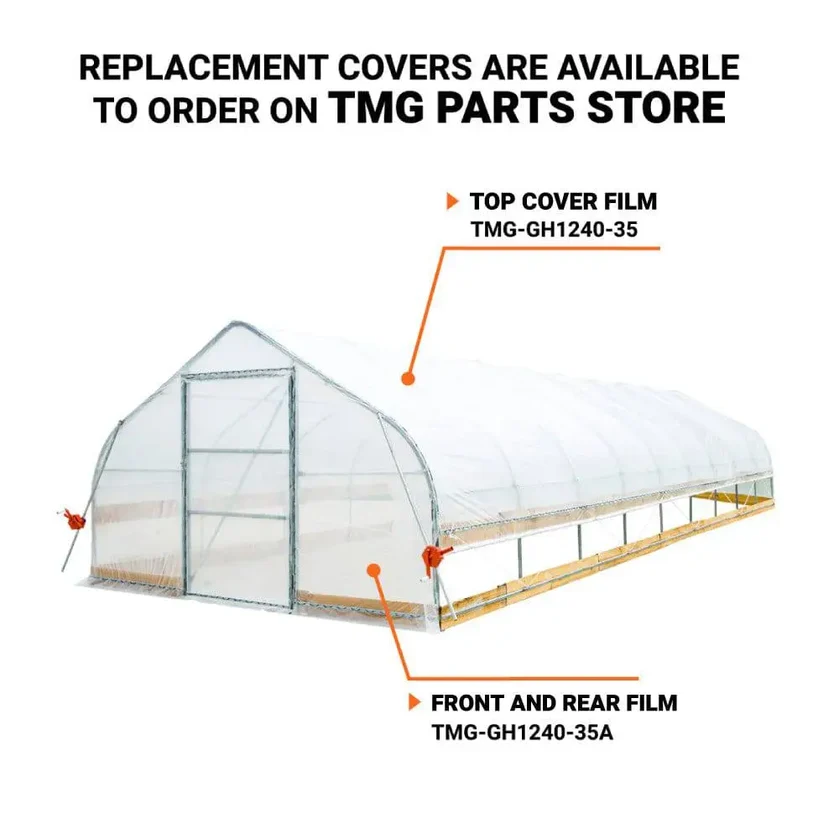
TMG Industrial‘s twelve by forty foot tunnel uses a six mil clear EVA cover, a film type that generally holds more warmth through a clear, cold night than plain polyethylene of similar thickness. Paired with sensible venting and a well-chosen site, a tunnel of that size can keep a household in fresh greens well after the open garden has frozen over.
Frequently asked questions
Why does frost form under a clear sky even when the air temperature stays above freezing? Surfaces radiate heat directly to space at night. Under clear skies there is no cloud cover to reflect that radiation back, so exposed surfaces like leaves and glass can drop several degrees below the surrounding air temperature and frost first.
Does a thicker plastic film automatically hold more heat? Not necessarily. Thickness affects durability and wind resistance more than heat retention. The material itself — plain polyethylene versus EVA greenhouse film or infrared-treated film — makes a bigger difference to overnight temperature than an extra mil or two of thickness.
How much should a hoop house be vented on sunny days? Enough to keep midday temperatures inside a comfortable range for the crop, checked with a thermometer at plant height rather than guessed. Most tunnels need at least the ends open, and often the sides rolled up, on any clear day above freezing.
Is it better to remove the film for winter or leave it on? Both are workable depending on snow load and what is being grown. The key is deciding before the first major storm, since making that call mid-storm risks damage to the film either way.
Is a polytunnel the same thing as a hoop house? Functionally, yes — both describe a plastic-covered structure built over hoops for season extension and frost protection. The terminology differs mainly by region, not by how the structure works.