Agriculture in Western Australia: Wheat, Sheep and the Future of WA Farming

Western Australia farms on a continental scale, but almost all of its cropping and grazing happens in one corner of the state: the south-west, between Geraldton and Esperance. This is the South West Land Division, some 30 million hectares of farmland — roughly 12% of the state’s total land area — where wheat and sheep built the rural economy and still anchor it today. Grains, livestock and horticulture across just four southern regions, the Wheatbelt, Mid West, Goldfields-Esperance and Great Southern, contribute more than $6 billion a year to the WA economy. This guide explains where WA farming happens, what it produces, how rainfall shapes it, and where it is heading next.
Where does farming happen in Western Australia?
Almost all of it happens in the South West Land Division. The state’s non-pastoral agricultural area lies in the south-west, stretching from Geraldton on the west coast down and across to Esperance on the south coast, and inside that division sit two broad farming worlds. The intensive “South West” corner, with its very high rainfall, supports dairy, horticulture and grazing on smaller, greener farms. North and east of it lies the Wheatbelt — also called the “Wheat and Sheep” zone — a vast broadacre landscape of low, medium and high rainfall country where most of the state’s grain is grown and a large share of its sheep are run. The Department of Primary Industries and Regional Development (DPIRD) tracks this production through regional snapshots that record production volumes, value, employment and climate for each region. Between the paddocks, the sandplains carry mallee, heath scrub and the native wildflowers that make this corner of Australia famous every spring — a reminder that WA farms operate inside one of the world’s most distinctive natural landscapes.
The regions that carry WA agriculture
Four regions do most of the heavy lifting. The Wheatbelt is the giant: primary industries there cover about 8.6 million hectares and are valued at $3.35 billion, and just over half of all land in the region is arable. The Great Southern, on the south coast, contributes $1.2 billion of primary industry value, with livestock accounting for 41% of it. The Mid West, around Geraldton, produces $930 million worth of agriculture, and the Esperance port zone a further $800 million. Together with the Goldfields-Esperance area, these regions’ grains, livestock and horticulture contribute more than $6 billion annually to the state economy. The figures below are DPIRD’s snapshot values — they move with seasons and prices, but the ranking of the regions is consistent year after year.
| Region | Primary industry value | Known for |
|---|---|---|
| Wheatbelt | $3.35 billion across about 8.6 million hectares | Wheat, barley, canola and sheep; just over half the land arable |
| Great Southern | $1.2 billion | Livestock at 41% of value — sheep, cattle and pigs |
| Mid West | $930 million | Wheat and canola, rising horticulture, steady sheep numbers |
| Esperance port zone | $800 million | Wheat, barley and canola dominant; pulses increasing |
| Four southern regions combined | More than $6 billion a year | Grains, livestock and horticulture |
Wheat: the crop that built the Wheatbelt
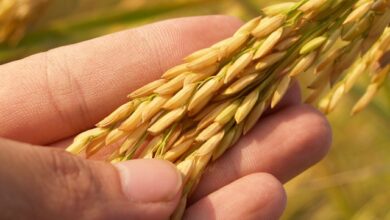
Wheat is the foundation crop of Western Australian agriculture. Cereals are the dominant land use on most WA farms, grown in rotations with crops such as canola and with pasture phases that rest the soil and support sheep. In the Esperance port zone, wheat, barley and canola dominate production, and pulses are an increasing part of the mix as growers look for break crops and nitrogen. The Mid West grows more than wheat and canola — cucumbers are an example of a horticultural crop on the rise there, while its sheep production has steadied after a period of decline. The system’s potential shows in the good years: in 2021, above-average rainfall helped deliver a record WA grain harvest of more than 22 million tonnes. The constraint is the country itself. Much of the Wheatbelt has relatively infertile, sandy soils and highly variable rainfall, so average yields run lower than in other Australian growing regions — which is why soil improvement, rotations and patience matter so much here.
Sheep and the mixed-farming system
Sheep are the Wheatbelt’s second pillar, and on most farms the two enterprises run together rather than apart. WA sheep production happens inside mixed crop-livestock systems spread across 14 agroecological zones: cereals and canola are grown in rotations that include pasture phases, and those pastures carry the sheep, so the flock and the crop programme support each other across the year. The gross value of sheep production in WA was $397 million in 2023-24. The Great Southern is the livestock heartland, running 3.4 million sheep alongside 174,000 cattle and 80,000 pigs. After two years of elevated turn-off, 2025 was a quieter year: total slaughter reached 4.6 million head, down 11% on 2024, and live sheep exports fell 25% to 317,700 head, with Kuwait taking 43% of exported sheep ahead of Jordan and Qatar. DPIRD’s reading of the new electronic identification data suggests the state flock may stand closer to 10.5 million head than the 11.5 million previously estimated — and that the slower turn-off, helped by improved seasonal conditions and firm sheep prices, may be signalling the early stages of flock rebuilding.
| WA wheat and sheep headline figures | Figure |
|---|---|
| Gross value of WA sheep production, 2023-24 | $397 million |
| Sheep in the Great Southern | 3.4 million head, plus 174,000 cattle and 80,000 pigs |
| Total sheep and lamb slaughter, 2025 | 4.6 million head, down 11% on 2024 |
| Live sheep exports, 2025 | 317,700 head, down 25%; Kuwait took 43% |
| Estimated WA flock, end of 2025 | About 10.5 million head |
| Record WA grain harvest, 2021 | More than 22 million tonnes |
Rainfall decides what a farm can do
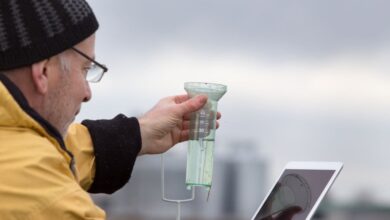
Rainfall is the master variable in WA farming. Across the Wheatbelt, average annual rainfall ranges from about 250 mm in the low-rainfall east to 750 mm near the western and southern coasts, and DPIRD groups the sheep country into three environments: low (under 350 mm), medium (350–450 mm) and high (over 450 mm). Farm structure follows the rain. High-rainfall farms are the smallest, averaging 3,384 hectares with 36% of their land in pasture and the highest stocking rates, at 6.6 dry sheep equivalents per winter-grazed hectare. Medium-rainfall farms average 4,944 hectares, and low-rainfall farms 6,480 hectares, with stocking rates falling as the country dries. Soils reinforce the pattern: coarse sands around Geraldton hold little water or nutrient, red clays in the Eastern Wheatbelt seal over in dry spells and shed runoff into salt lakes, while the south coast’s reliable rainfall and loamy soils make it some of the most productive farmland in the state. In the dry east and north, the discipline is restraint — low inputs, and leaving large sections of land fallow as often as every second season, sometimes farming only half the croppable area in a year.
| Rainfall zone | Annual rainfall | Typical farm | What grows and grazes there |
|---|---|---|---|
| Low | Under 350 mm | Largest farms, about 6,480 ha; lowest stocking rates; frequent fallow | Broadacre cereals with sheep on pasture phases |
| Medium | 350–450 mm | Mid-size farms, about 4,944 ha; about 20% of land in pasture | Wheat, barley and canola in rotation with pasture and sheep |
| High | Over 450 mm | Smallest farms, about 3,384 ha; 36% pasture; highest stocking rates | Intensive livestock, prime lambs, dairy and horticulture |
Clearing and developing farmland
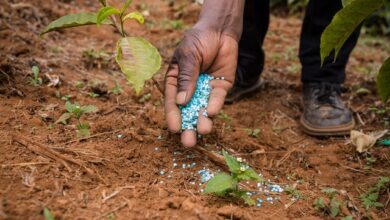
Developing a farm block in WA often starts with what has to come off it. Old fences, derelict sheds, abandoned machinery and decades of accumulated scrap have to be cleared before new pasture, cropping or infrastructure can go in, and on older Wheatbelt properties that clean-up can be a project in itself. Bringing in a professional demolition clean up service for unsafe sheds and structures, and a scrap specialist such as Dream Lucky Scrap Metal for the metal, leaves the block safe, tidy and ready to work. The effort shows in the land’s value, too: buyers pay a premium for well-managed farms with a good history of fertiliser application and soil amelioration, because that patient work overcomes some of the limits of WA’s naturally infertile soils. Around the homestead, the same steady garden maintenance — clearing, planting and regular upkeep — keeps a developed block looking and functioning like the going concern it is.
What is changing in WA farming?
WA farmland itself has become a headline. Broadacre farmland values in Western Australia rose by some 301% between 2015 and 2023, against a national increase of 172%, as buyers recognised that WA land had been undervalued next to the higher-priced growing regions of the eastern states. Corporate and institutional farmers have been assembling large-scale aggregations to capture scale efficiencies: the Lawson Grains portfolio sold for more than $500 million in 2021, with six of its ten aggregations in WA’s medium-rainfall zones, and individual properties such as Cheriton Farms at Kojonup (about $100 million) and Varley Farms (about $50 million) have changed hands at corporate scale. The eastern and northern Wheatbelt tells the other side of the story — thinner buyer depth, low-input systems, and country dominated by well-established generational farmers whose deep local knowledge is itself a competitive advantage.
The future of farming in Western Australia
The future of WA farming is being shaped by three forces at once: a flock at a turning point, a structural change in the sheep trade, and the emissions question. Each is already visible in the numbers.
- Flock rebuilding: 2025’s slower turn-off, improved seasonal conditions and firm prices point to early rebuilding, and mandatory electronic identification — in place since January 2025 — is giving the industry its clearest flock data yet, with 5.5 million white lamb tags sold across 2025 pointing to stronger lambing than expected.
- The live-export transition: the Australian Government’s $139.8 million Sheep Industry Transition Assistance Package, including a $40 million Supply Chain Capacity Program, is funding expanded onshore processing capacity in the lead-up to the end of live sheep exports by sea — while Kuwait, Jordan and Qatar remain the key live markets in the meantime.
- Emissions and efficiency: sheep account for about 25% of WA’s agricultural greenhouse gas emissions, around 3.3 Mt CO2-e in 2023, and the state has committed to net zero across the economy by 2050. DPIRD research shows the top 25% of farms earn about four times the gross margins of the bottom 25% while keeping emissions per dollar of margin lower — through pasture management, breeding, lambing and turn-off efficiency. Better genetics and reproductive performance, more lambs per ewe and heavier fleeces, plus legume-rich pastures and low-methane supplements, are the practical pathways forward.
The pattern is consistent with WA farming’s whole history: the producers who read their rainfall zone honestly, and manage soil, pasture and genetics carefully, are the ones still farming — and profiting — a generation later.
Frequently asked questions
What is the main farming region of Western Australia?
The Wheatbelt, inside the South West Land Division between Geraldton and Esperance. Primary industries there cover about 8.6 million hectares and are valued at $3.35 billion; the wider division spans some 30 million hectares, about 12% of the state.
What are the main crops grown in Western Australia?
Wheat, barley and canola are the dominant broadacre crops, and cereals are the main land use on most farms. Pulses are increasing in the Esperance port zone, and horticulture such as cucumbers is growing in the Mid West.
How many sheep are there in Western Australia?
DPIRD’s latest reading puts the flock at about 10.5 million head at the end of 2025, revised from an earlier estimate of 11.5 million using electronic identification data. The Great Southern alone runs 3.4 million sheep, and sheep production was worth $397 million gross in 2023-24.
How much rain does the Wheatbelt get?
Between about 250 mm a year in the dry east and 750 mm near the western and southern coasts. DPIRD groups the sheep country into low (under 350 mm), medium (350–450 mm) and high (over 450 mm) rainfall environments, and farm size and stocking rates follow that gradient.
Is sheep farming in Western Australia growing or shrinking?
Turn-off fell in 2025 — slaughter down 11% and live exports down 25% — but DPIRD reads that as possible early flock rebuilding rather than decline, helped by better seasons and firm prices. The industry is also preparing for the end of live sheep exports by sea, with government funding for expanded onshore processing capacity.