Agave – اگیو

What is an agave plant (اگیو)?
The agave plant of this post — اگیو — is Agave americana, the century plant: a slow-growing evergreen succulent forming a rosette of thick, spiny-edged leaves, needing full sun and sharply drained soil, asking for very little water, and grown in pots or sunny dry ground for its foliage; a rosette flowers once, after 10–30 years, then dies, leaving offsets. A close companion in the same dry planting is the yucca plant, a stiff-leaved rosette that asks for the same sun and drainage.
Agave americana is a rosette-forming, evergreen perennial succulent in the asparagus family, Asparagaceae. Its common names are century plant, American century plant, American aloe and maguey. The genus Agave holds about 200 species native to desert Mexico and the southwestern United States; A. americana is native to Arizona, Texas and Mexico. Its leaves are thick and fleshy — they store the plant’s water, and the waxy coating on their surface holds evaporation down, which is how the plant rides out long dry spells — grey-green, with sharp marginal teeth and a sharp tip spine.
Despite the name “American aloe”, Agave americana is not a true aloe and is not interchangeable with aloe vera: the two are different plants, and agave sap irritates skin rather than soothing it.
How big Agave americana grows
Agave americana grows to about 1–1.5 m in a pot or cool climate, and to roughly 3–6 ft tall with a 6–10 ft spread in warm ground — exceptionally to about 10 ft.
The plant is slow-growing and long-lived, taking 10–20 years to reach maturity, and a pot holds it much smaller, for much longer. The form in this post’s photos is the variegated type: greyish-green, yellow-margined leaves with hard spines. Judge a spot by the ground-grown size, not the young potted plant.
The pot-versus-ground decision changes more than size, so compare the two situations before planting:
| In a pot | In the ground | |
|---|---|---|
| Mature size | About 1–1.5 m; held small for years | 3–6 ft tall, 6–10 ft spread; exceptionally ~10 ft |
| Water | Moderate in growth; almost dry in winter | Deep, infrequent once established; little in winter |
| Feeding | Dilute balanced feed in growth | None or almost none; feed can push soft growth |
| Winter | Move under cover; tender (H2) | Hardy only in USDA zones 8–10 |
| Best use | Patio specimen; under glass in cold climates | Specimen, slopes, rock gardens, xeriscape |
Where to plant an agave
An agave should be planted in full sun — at least six hours of direct sun a day — in a sheltered position, in sandy or gritty soil that drains sharply and never stays wet.
Soil matters more than richness: well-drained loam or sand, acid to neutral, suits the plant, and it adapts to other soils only if they also drain well, because wet soil causes root rot. The agreed uses are specimen planting, slopes, coastal and drought-tolerant schemes, containers, and rock gardens — the rockery use this post’s own Urdu literature recommends. Agave is a natural anchor in a water-efficient xeriscape design, and the bed layout itself is covered in this site’s guide to rock gardening.
Placement is also a safety decision: keep the rosette well back from paths, where its spines cannot catch passers-by, in a sheltered spot out of strong wind.
How to plant an agave, step by step
You plant an agave by setting it at its previous depth in a hole about twice as wide as the root ball, in spring or early fall, then watering it in once deeply.
- Protect yourself first. Wear gloves, long sleeves and eye protection against the sharp spines and irritant sap.
- Dig the hole. Open a hole twice as wide as the root ball and no deeper, in the chosen sunny, drained position.
- Set the depth. Set the plant at its previous depth, rosette base slightly above the soil so water cannot pool in the crown.
- Backfill and firm. Fill around the root ball, firm gently, and keep gritty material against the stem rather than wet organic matter.
- Water in once. Water once, deeply, to settle the soil, then let it dry before watering again.
- Finish dry. Leave a gravel-style surface around the rosette instead of damp mulch, so the crown stays dry.
How often to water an agave
An agave should be watered only when the soil has dried out: moderately in growth, and almost dry in winter.
For a new plant, water regularly through the first month and season while roots establish — guides range from every few days to weekly at first — then space waterings out. An established plant needs a deep watering every two to four weeks at most in the growing season, and little or none in winter: soak thoroughly, then wait until the soil is dry again.
Overwatering is the main way this plant is killed. Agave americana is hardy in dry conditions, but too much water damages it — the warning in this post’s Urdu literature — because roots in wet soil rot. If in doubt, wait another week: a thirsty agave recovers, a rotted crown rarely does.
Growing Agave americana in a pot — or indoors
Agave americana grows well in a pot on a patio or under glass while young and small, but it is not a long-term houseplant, because its mature size and spines eventually outgrow any room. For a rosette that genuinely accepts a room, the snake plant is the honest alternative — it tolerates indoor light in a way agave never will.
A container holds the plant much smaller for much longer, which is why pot growing is standard in cold climates: grow it in gritty cactus compost in bright light, water moderately in growth, feed it a dilute balanced feed every two to three weeks while growing, and keep it almost dry in winter. The plant is tender (RHS hardiness H2; hardy outdoors only in USDA zones 8–10), so move the pot under cover for winter.
Choose a pot when:
- Your winters are too cold for it outdoors — it is tender (H2), reliably hardy outdoors only in USDA zones 8–10, so the pot moves under cover for winter.
- Space is tight — a pot holds it much smaller, for much longer, than open ground.
- You want a patio or under-glass specimen in a cold climate — the standard cold-climate way to grow it.
The indoor answer is species-specific. Smaller agave species exist for indoors, but A. americana is the large century plant: a young rosette can spend time in the brightest indoor position, but plan it as temporary — a patio or bed is its permanent home. This post’s Urdu literature says it directly — this plant should not be used as an indoor plant — and size and spines are why.
How to propagate agave from pups
An agave is propagated by removing the offsets, or pups, that form around the base of the rosette, and the recommended time to take them is spring or autumn.
Pups are clones of the mother and root at the base over time. Wait until a pup is about 4–6 inches tall with roots of its own, cut the connection cleanly — wearing gloves, long sleeves and eye protection — let the cut callus in shade for a few days, plant it in dry, gritty mix, and wait about a week before the first light watering. Seed is possible, but offsets are faster and keep the parent’s form.
Removing pups does two jobs: it produces new plants, and it controls the colony the mother would otherwise build. Leave some for a clump, or take them all where space is limited.
Does an agave die after flowering?
Yes — Agave americana is monocarpic, so each rosette flowers once, after about 10–30 years, and that rosette then dies, while its offsets live on.
The “century plant” name comes from the old belief that flowering took 100 years; it does not. Outdoor plants most often bloom between their 10th and 25th years, the wider reported range running to 30 depending on conditions, and indoor plants rarely flower. When flowering comes, a stalk rises from the rosette’s centre to 15–30 ft — about 4.5–9 m — branching near the top, with greenish-yellow flowers in panicles at the branch ends.
What happens next is a simple sequence. The flowering rosette dies back over the following months; once it collapses, cut out the spent rosette, taking care with the spiny leaves. Offsets that appeared at the base as it flowered then take over, growing on as a colony.
The whole flowering sequence, stage by stage:
| Stage | What happens |
|---|---|
| Growing years | The rosette takes 10–20 years to reach maturity; outdoor plants most often flower between years 10 and 25, the wider range running to 30 |
| Flowering | A stalk rises 15–30 ft (about 4.5–9 m) from the centre of the rosette, branching near the top, with greenish-yellow flowers in panicles |
| After flowering | The flowering rosette dies back over the following months; once it collapses, cut it out, taking care with the spiny leaves |
| The colony | Offsets that appeared at the base as the rosette flowered grow on, and can form a colony |
Agave safety around children and pets
Agave americana is not a plant for unprotected, close-contact spots: it carries hard spines, its sap irritates skin, and it is potentially harmful to pets if eaten.
Keep the three hazards separate, because each needs a different precaution. The mechanical hazard is the leaf — hard marginal spines and a sharp terminal spine — so site the plant away from paths and play areas. The chemical hazard is the sap, a skin irritant that can cause contact dermatitis, so wear gloves and protective equipment whenever you handle or divide it. The third is ingestion: potentially harmful to dogs and cats if eaten, so keep it from pets that chew foliage.
This post’s Urdu literature makes the placement rule directly: because the leaf edges are pointed, in homes with children the plant should be planted only in safe places. Treat that as a planting requirement: choose the protected spot first, then plant.
Why an agave rots or gets marked
An agave that is rotting is almost always sitting in soil that stays too wet, because root rot in poorly drained or overly moist soil is this plant’s main disease problem.
Check drainage and watering first: a soft, discoloured rosette base in ground that never dries between waterings points to rot, and the remedy is to stop watering, improve drainage and remove rotted material. Beyond water, problems are few: the agave snout weevil can be troublesome, slugs and snails may mark or chew foliage, and in wet or humid weather anthracnose, a fungal leaf-spot disease, can open brown-to-black lesions on the leaves — remove marked leaves and keep water off the foliage. Otherwise the plant is generally disease-free and needs no pruning — just remove dead lower leaves, wearing gloves.
The same checks, as a quick diagnosis table:
| What you see | Likely problem | What to do |
|---|---|---|
| Soft, discoloured rosette base; soil that never dries between waterings | Root rot in poorly drained or overly moist soil | Stop watering, improve drainage and remove rotted material |
| Brown-to-black spots or lesions on the leaves, in wet or humid weather | Anthracnose, a fungal leaf-spot disease | Remove affected leaves and keep water off the foliage |
| Marked or chewed foliage | Slugs and snails | Check the foliage for slugs and snails, which may mark or chew it |
| Nothing wrong visible | Usually no problem — the plant is generally disease-free | No pruning needed; just remove dead lower leaves, wearing gloves |
اگیو کی دیکھ بھال
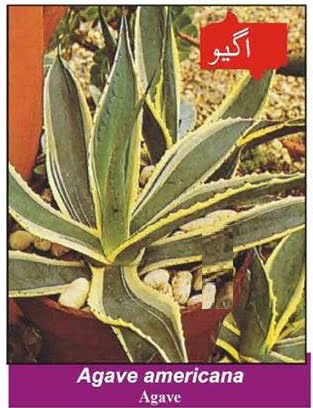


اگیو
Agave — (Agave americana)
اگرچہ اس کی افزائش اس کے بچوں (آف سیٹ) کے ذریعے سارا سال کی جا سکتی ہے، لیکن اس پودے کو اس کے پتوں کی خوبصورتی کی وجہ سے گملوں میں لگایا جاتا ہے۔ اسے پانی کی ضرورت کم ہوتی ہے، اور یہ موٹے پتوں والا سکولنٹ (Succulent) ہونے کی وجہ سے راکری (Rockery) کے لیے بہت موزوں سمجھا جاتا ہے۔ یہ کافی دھوپ برداشت کر سکتا ہے۔ اسے گھر کے اندر کے پودے کے طور پر استعمال نہیں کرنا چاہیے۔ اس کے پتوں کے کنارے نوکیلے ہوتے ہیں، اس لیے جن گھروں میں بچے ہوں وہاں اسے صرف محفوظ جگہوں پر لگانا چاہیے۔ اگرچہ یہ کافی سخت جان پودا ہے، لیکن زیادہ پانی اسے نقصان پہنچا سکتا ہے۔
اگیو یعنی Agave americana ایک سدا بہار سکولنٹ ہے جو موٹے، نوکیلے کناروں والے پتوں کی گلابی شکل بناتا ہے۔ اسے مکمل دھوپ، پانی فوراً نکالنے والی مٹی اور بہت کم پانی چاہیے۔ پاکستان میں اسے دھوپ والی کھلی جگہ یا آنگن کے گملے میں، راستوں اور بچوں سے دور لگائیں، سردیوں میں پانی تقریباً بند رکھیں، اور بہار یا خزاں میں اس کے بچوں (آف سیٹ) سے نئے پودے بنائیں۔ سنبھالتے وقت دستانے ضرور پہنیں۔ یہ 10 سے 30 سال بعد ایک بار پھول دیتا ہے؛ پھر اصل پودا مر جاتا ہے مگر بچے رہتے ہیں۔
اگیو کو کتنا پانی دینا چاہیے؟
اگیو کو تب ہی پانی دیں جب مٹی خشک ہو جائے۔ بڑھوتری میں معتدل پانی دیں اور سردیوں میں پودے کو تقریباً خشک رکھیں، کیونکہ زیادہ پانی جڑ سڑنے کا سبب بنتا ہے۔
کیا اگیو گھر کے اندر لگایا جا سکتا ہے؟
نوجوان، چھوٹا اگیو کچھ عرصہ گملے میں رکھا جا سکتا ہے، لیکن Agave americana بڑا پودا ہے اور اس کے کانٹے اسے گھر کے اندر مستقل رکھنے کے لیے مناسب نہیں بناتے۔
اگیو کے بچے (آف سیٹ) کیسے الگ کریں؟
بہار یا خزاں میں وہ بچہ الگ کریں جو 4 سے 6 انچ لمبا ہو اور اس کی جڑیں بن چکی ہوں۔ دستانے پہن کر اسے کاٹیں، کٹا سرا چند دن سائے میں خشک ہونے دیں، پھر خشک بجری ملی مٹی میں لگا کر ایک ہفتے بعد ہلکا پانی دیں۔
کیا اگیو بچوں کے لیے محفوظ ہے؟
اگیو کے پتوں کے کنارے سخت کانٹوں والے ہوتے ہیں اور اس کا رس جلد پر خارش پیدا کر سکتا ہے، اس لیے بچوں والے گھر میں اسے صرف محفوظ جگہ پر لگائیں۔ یہ کھائے جانے پر پالتو جانوروں کے لیے بھی نقصان دہ ہے۔ نوٹ: اگیو اصل ایلو ویرا نہیں ہے — ایلو ویرا (کوار گندل) کی کاشت الگ تحریر ہے۔
اگیو کتنے سال بعد پھول دیتا ہے؟
اگیو 100 سال بعد پھول نہیں دیتا؛ یہ عام طور پر 10 سے 30 سال میں، اکثر 10 سے 25 سال میں، ایک ہی بار پھول دیتا ہے۔ پھولوں والا تنا 15 سے 30 فٹ اونچا ہو سکتا ہے، اور پھول کے بعد اصل پودا مر جاتا ہے جبکہ بچے بڑھتے رہتے ہیں۔
Frequently asked questions about the agave plant
Five questions account for most agave confusion: the 100-year myth, pot watering, frost, the cactus question, and pups.
Does a century plant really take 100 years to flower?
A century plant does not take 100 years to flower: Agave americana typically flowers once after 10–30 years, most often between 10 and 25 years outdoors. The “century” name survives from an old exaggeration, and a potted indoor plant may never flower at all.
How often do you water an agave in a pot?
An agave in a pot should be watered moderately while growing, whenever the compost has dried out, and kept almost dry in winter. A container dries faster than open ground, so check the compost rather than a calendar. A mix that stays damp for weeks means overwatering — and root rot.
Can agave survive frost?
Agave americana survives frost only in mild conditions: it is rated tender (RHS hardiness H2) and reliably winter-hardy outdoors in USDA zones 8–10. Outside those zones, grow it in a container and move the pot under cover for winter, or give open ground the most sheltered, sharply drained position available.
Is agave a cactus?
An agave is not a cactus: Agave americana is a succulent in the asparagus family, Asparagaceae, while cacti belong to a different family. Both need full sun, sharp drainage and sparse water, but agave spines grow from leaf margins and the tip, not cactus areoles. Readers comparing the two can work through this site’s cactus plant guide alongside this profile.
What do you do with agave pups?
Agave pups can be removed in spring or autumn and planted as new plants, or left to form a colony. A pup transplants best at 4–6 inches tall with its own roots: cut it free, let the cut callus in shade, plant in dry gritty mix, and wait a week before watering lightly. Removing pups also stops a planting outgrowing its space.