How to Choose a Fruit Tree for Your Garden? A Practical Buying Guide
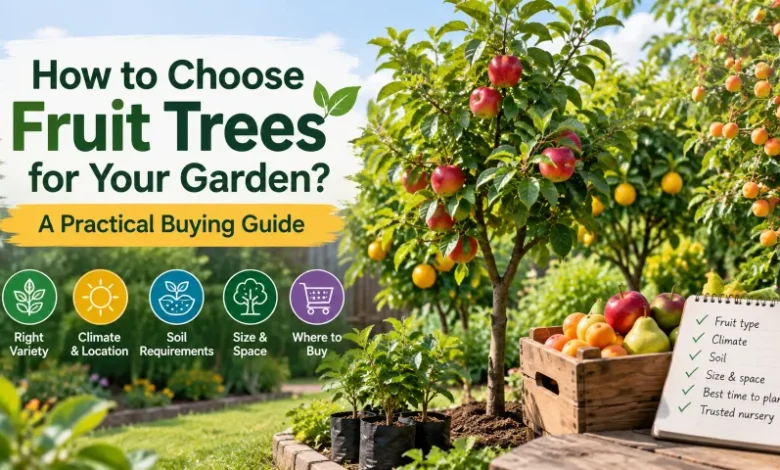
There’s something different about biting into an apple you grew yourself compared to one from a supermarket shelf — the flavour feels earned. But knowing how to choose a fruit tree isn’t really a decision to make on a whim while walking through a nursery. Whether that tree settles in well, grows strong, and hands you a reliable harvest for years depends on a few choices you make long before it goes into the soil: the variety, the rootstock it’s grafted onto, what your garden actually offers in sun and drainage, and how much attention you give it in its first couple of seasons.
The “best” fruit tree isn’t automatically the one everyone else is planting. It’s the one that suits your space, your climate, and what you actually want to do with the fruit once it arrives.
How to Choose a Fruit Tree: Where Most Gardeners Start
Apples, pears, plums, sweet and sour cherries, peaches and apricots cover most of what ends up in home gardens, and increasingly, gardeners are also experimenting with compact or dwarf forms of less common species. But the species name only tells part of the story. Two apple varieties can look nearly identical on the nursery shelf and then behave completely differently five years into the ground — take the Jonathan apple, valued as much for its flavour and nutrition as for how reliably it fruits, compared with a variety bred mainly for looks: one shrugs off a late frost, the other loses its entire blossom.
Before you settle on a species, it helps to see how the common choices actually compare side by side:
| Fruit Tree | Sun Needs | Self-Fertile? | Typical Ripening | Good For |
| Apple | Full sun | A few varieties; most want a partner | Late summer–autumn | Beginners, most climates |
| Pear | Full sun | Rarely on its own | Late summer | Larger gardens |
| Plum | Full sun–light shade | Many are self-fertile | Mid–late summer | Smaller gardens |
| Sweet cherry | Full sun | Usually needs a partner | Early–midsummer | Warmer climates |
| Sour cherry | Full sun–partial shade | Generally self-fertile | Midsummer | Cooler climates, baking |
| Peach | Full sun | Self-fertile | Midsummer | Warm, sheltered spots |
| Apricot | Full sun | Self-fertile | Early–midsummer | Dry, warm climates |
Garden Size and Rootstock: The Detail Most People Skip Past
If your garden is on the smaller side, a strongly growing tree can quietly become a problem. Give it a few years and its canopy may swallow a flowerbed, throw shade over a vegetable patch, or simply grow too tall to prune from the ground. This is where the rootstock — the root system the variety has been grafted onto — matters more than most buyers realise. It’s not just a technical detail on the plant label; it quietly decides how big the tree will eventually get, how fast it grows, how soon it starts fruiting, and how much maintenance it will demand.
| Rootstock Type | Mature Height | First Fruit | Spacing Needed | Best For |
| Dwarf | 6–8 ft (2–2.5 m) | 2–3 years | 6–8 ft apart | Small gardens, patios, containers |
| Semi-dwarf | 10–15 ft (3–4.5 m) | 3–4 years | 12–15 ft apart | Medium-sized gardens |
| Standard / vigorous | 18–25 ft+ (5.5–7.5 m+) | 5–8 years | 20–30 ft apart | Large gardens, traditional orchards |
In a bigger space, a stronger-growing standard tree can be the start of a proper home orchard. In a compact garden, a dwarf or semi-dwarf tree on the right rootstock will usually be far easier to live with — and, in many cases, it starts fruiting sooner too.
Reading Your Garden Before You Read the Plant Label
Most fruit trees want full sun — not “gets some light in the afternoon,” but several unobstructed hours a day. Sunlight doesn’t just push growth along; it shapes how well the fruit ripens, how it colours, and how it tastes. A tree tucked into heavy shade will often flower half-heartedly and fruit even less.
Drainage matters just as much, even though it’s easy to overlook. Roots need both moisture and air, so a spot where water sits for days after rain is a poor match for most fruit trees. If your soil is heavy clay or thin and sandy, it’s worth improving the structure — working in organic matter, correcting drainage — before you plant, not after. Fixing a struggling tree’s soil three years in is a far harder job than preparing the ground properly on day one.
Do You Actually Need Two Trees to Get Fruit?
Sometimes, yes. This is one of the details buyers skip past most often, and it can quietly cost you an entire harvest.
Some varieties are self-fertile and will set fruit on their own. Others need a compatible pollination partner — a different variety of the same species, flowering at roughly the same time, growing close enough for bees to move between them. This becomes especially important if you’re planting in an area without other fruit trees nearby, since you can’t rely on a neighbour’s tree to do the job.
If you’re buying more than one tree at once, it’s worth planning them as a group from the start rather than picking each variety in isolation. Getting pollination right can be the single biggest factor in how much fruit you actually see.
Staggering Ripening Times So You’re Not Buried in Fruit
Fruit varieties generally split into early- and late-ripening types, and in a garden with room for more than one tree, mixing the two is usually a good idea. It stretches the harvest out over weeks instead of dumping everything on you in a single intense week — which, for anyone who’s had three trees ripen simultaneously, is less exciting than it sounds and mostly just means frantic jam-making.
Before choosing a variety, it’s worth thinking about how you’ll actually use the fruit — eaten straight off the tree, stored through winter, preserved, juiced, or baked — since some varieties suit one use far better than another.
When Is the Best Time to Plant?
Autumn and early spring are the traditional windows. Planting in autumn gives roots a head start before winter sets in, assuming the weather cooperates. Spring planting tends to demand more attention to watering, particularly if the season warms up quickly or rain is scarce.
Container-grown trees are a bit more forgiving, since their roots aren’t disturbed at the point of sale, which means they can typically go in over a much longer stretch of the year. Whatever the season, avoid planting during a hard frost, a heatwave, or an extended dry spell — none of which give a young tree a fair start.
A Quick Checklist Before You Buy
Before handing over money for a tree, it’s worth having answers to the following:
- The species and exact variety name — not just “apple tree”
- Whether it’s grafted, and onto which rootstock
- Its expected mature size and how many years until first fruit
- Whether it needs a pollination partner nearby
- Whether the source is reputable and the tree is properly labelled
- How it will be protected in transit, if you’re buying online
Price shouldn’t be the deciding factor here. A fruit tree is a commitment measured in years, not seasons — paying a little more for the right variety up front is almost always cheaper than replacing the wrong one later.
Planting It the Right Way
Dig a hole generous enough for the roots to spread naturally — never cram or fold them to fit a hole that’s too small. Once the tree is sitting at the right depth, backfill with soil, firm it gently, and water thoroughly. For grafted trees, keep an eye on the graft union; it shouldn’t end up buried below the soil surface.
Young trees, especially in windy or exposed spots, often benefit from staking in their first year or two. And watering matters more here than at almost any other stage — a newly planted tree has a small root system and dries out far more easily than one that’s already established.
Should You Feed a New Tree Straight Away?
Not necessarily. Piling on fertiliser doesn’t make a young tree grow faster — if anything, heavy feeding before the root system is established can do more harm than good. The priority early on is a healthy root system, which comes from good soil preparation, consistent moisture, and simply keeping an eye on how the tree is settling in. Fertilising can be introduced later, adjusted to the soil type and the tree’s condition, ideally guided by a soil test rather than guesswork.
Mistakes That Tend to Show Up Years Later
The most common misstep is picking a variety purely because its fruit looks familiar from the supermarket — which isn’t necessarily a sign it will suit a small private garden. Beyond that, a few mistakes come up again and again:
- Not checking how large the tree will eventually get
- Overlooking pollination requirements entirely
- Planting in a spot with too little sun
- Spacing trees too close together
- Choosing a variety poorly suited to the local climate
- Skipping regular watering in the first season
- Buying unlabelled trees from an unreliable source
In gardening, some bad decisions don’t show their consequences for several years — by which point they’re much harder to undo. A little research before buying usually saves far more effort than trying to fix things later.
So, How Many Trees Should You Plant?
There’s no fixed number. In a small garden, two or three well-chosen trees can still produce a genuinely useful harvest. With more room, a small home orchard with staggered ripening times becomes realistic.
What matters more than the count is the planning behind it — future crown size, spacing, sunlight access, and how practical it will be to mow, prune, and harvest around the trees later. A young nursery tree looks deceptively small, which tempts people to plant too close together. It’s worth designing the garden around where the trees will be in five or ten years, not how they look on the day you bring them home.
Frequently Asked Questions
Can I plant a fruit tree in a container if I don’t have garden space?
Yes, particularly dwarf varieties on compact rootstocks, which are specifically bred to stay small and perform well in pots. They’ll need more frequent watering than a tree in open ground, since containers dry out faster.
How long does it take for a new fruit tree to produce fruit?
It depends heavily on the rootstock. Dwarf trees can fruit within two to three years, semi-dwarf varieties within three to four, while standard, vigorous trees may take five to eight years to properly get going.
Do I need to prune a fruit tree in its first year?
Light, formative pruning in the first couple of years helps establish a strong shape, but heavy pruning too early can slow the tree down. It’s usually better to focus on establishment first and save more serious pruning for once the tree is settled.
What’s the difference between a self-fertile and a self-pollinating tree?
In practice, gardeners often use the terms interchangeably. Both describe a tree that can set fruit without a different variety nearby — useful in a small garden where space for a second tree isn’t an option.
Is it better to buy a bare-root tree or a container-grown one?
Bare-root trees are usually cheaper and establish well when planted in the correct autumn-to-spring window, but they’re only available during that season. Container-grown trees cost a bit more but can be planted across a much longer stretch of the year.
Final Thought
Choosing a fruit tree well means looking past the variety name and the picture on the label. Matching the tree to your space, your soil, your sunlight, and your pollination setup is what actually determines whether it thrives — or quietly struggles for years without ever telling you why. Fruit trees are a long-term investment in the truest sense: the extra hour spent choosing the right one at the start tends to pay back for decades afterward.