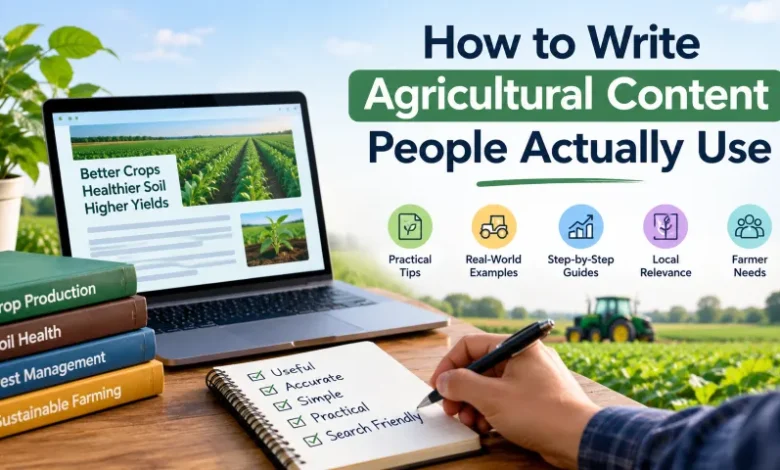
How to Write Agricultural Content People Actually Use
Good farming advice usually starts small — a farmer noticing which crop shrugged off a dry spell, a gardener figuring out a mulching trick that cut down on watering, someone stumbling onto a soil-covering method that saved real effort. These small, local observations are worth more than they seem. Passed along, they help other growers adapt to their own conditions, and they make practical knowledge easier to find for anyone trying to farm, garden, or simply take better care of the land around them.
Not every article needs to be groundbreaking. A clear, honest guide to composting, seed starting, or cutting back on water use can genuinely change how someone approaches their garden or field. Below is a rundown of what makes agricultural content worth publishing — and worth a reader’s time.
Start with a question readers actually have
Pick a topic by thinking about what someone actually needs to *do*. A person with a small backyard garden might be stuck on heavy, compacted soil. A small-scale farmer might be weighing different ways to cut irrigation losses. Either way, a useful article answers one real question well, rather than skimming the surface of five.
Context matters more than people give it credit for. A watering schedule built for a humid coastal region can fail badly in a dry inland climate, and what works on a five-acre commercial farm rarely translates directly to a backyard plot. Say plainly what conditions the advice assumes — season, soil type, space, water access — and if a method only works under specific circumstances, say so instead of presenting it as a rule that applies everywhere.
Ground the article in something real
Personal experience makes writing feel alive, but it shouldn’t be dressed up as universal proof. If you tried something yourself, say what you tried, where, and when — and be honest about what actually happened. Resist the urge to promise a technique will always boost yield or wipe out a pest for good. Weather shifts, plant varieties differ, soil health varies from one field to the next, and all of it affects the outcome.
Topics touching on chemicals, animal health, food safety, or environmental risk deserve extra caution. Check current guidance from a qualified agricultural body or public institution before publishing anything definitive, and be upfront about when a reader should talk to a local professional instead of relying on an article alone. None of this means the piece has to be long-winded — it just needs to be honest about its limits.
Lay the steps out in an order a reader can actually follow. A guide to starting a compost pile, for instance, might walk through picking a spot, balancing green and brown material, keeping moisture in check, and knowing when the pile is finished. That kind of specific sequence does far more for a reader than a vague line about how “composting is good for your garden.”
Make sustainability practical, not abstract
Environmental advice lands better when readers can connect it to something they’ll actually do this weekend. Mulching cuts down on evaporation. Rotating crops can break up certain pest cycles. Leaving soil bare too long invites erosion. These are useful facts — but they’re more useful paired with the trade-offs: more labor here, new equipment there, a planting schedule that needs adjusting.
Give people a first step they can manage. A household could start collecting kitchen scraps for a small compost bin. A gardener might plant a few native flowers to draw in pollinators. A grower testing a new approach could try it on one small plot before rolling it out across a whole field. Small experiments like these let people learn what actually works on their own land, without paying for a mistake at full scale.
Write for readers at different starting points
Agricultural writing tends to reach a mixed audience — some readers have been farming for decades, others are trying container gardening for the first time. Explain terms the first time they show up, use headings that actually describe what’s coming, and break dense processes into short, digestible steps. Be specific with measurements and timing wherever they matter; vague advice is often no advice at all.
Photos help, but only when they’re doing real work. A photo of healthy soil is far more useful with a caption pointing out exactly what to look for — crumbly texture, dark color, visible organic matter — rather than just sitting there as decoration. And before publishing any image, make sure it’s yours to use, or that you have permission.
Reach readers beyond your own site
Publishing on another relevant website can put your work in front of readers who’d never otherwise find your page. This approach — often called guest posting — works best when the piece is written specifically for that publication’s audience, not repurposed from something already on your own site. Spend time understanding what that site usually covers and how it’s written, then pitch something that genuinely fits and gives its readers something useful.
Treat a guest contribution with the same care you’d give your own content. Follow the publisher’s guidelines, back up any claims you make, and only include links where they actually help the reader — not just because you want them there. A solid article should hold up on its own even if nobody clicks a single link in it.
Not everyone wants to handle every part of this alone — writing, editing, design, research. For that, a freelance marketplace like Osdire connects buyers with freelancers across more than 900 categories, from writing and translation to graphics, programming, video, music, and photography. Pricing is flat with no hidden fees, and payments are held securely until the buyer approves the finished work. As with any freelance arrangement, it’s worth nailing down scope, deadlines, and revision terms before work starts.
You can check some well written samples from our English Blog and also get guidelines to write for us here.
The bottom line
Good agricultural writing isn’t just about having a decent idea. It takes attention to local conditions, information you can actually stand behind, clear step-by-step instruction, and respect for the reader’s time. Whether it’s water conservation, soil health, or growing food at home, writing that’s grounded in real practice helps people make better decisions — and adapt proven methods to their own land, on their own terms.