Rye Grass in Pakistan – رائی گھاس کی کاشت، چارہ اور پیداوار کا مکمل گائیڈ
Commonly Available Rye Grass Varieties in Pakistan:
| Variety | Approximate Price |
|---|---|
| Kohenoor Ryegrass | Rs. 6,200 |
| Vortex Ryegrass | Rs. 2,435 |
| Imported Perennial Ryegrass | Rs. 4,125 |
| Big Boss American Ryegrass | Rs. 1,600 |
| RV G-1 | Rs. 2,000 – Rs. 2,500 |
| RG-1 (Sargodha) | Rs. 1,200 – Rs. 1,500 |
| Makkhan Grass | Rs. 1,800 – Rs. 2,400 |
| Tift 86 | Rs. 1,600 – Rs. 2,200 |
While premium branded ryegrass seeds typically retail between Rs. 1,600 and Rs. 2,500 per kilogram, generic or unbranded varieties from local dealers often reduce this cost by roughly 20%, bringing the lower end of the market price range down to approximately Rs. 1,000 per kilogram (estimated).


Literature: Rye Grass in Pakistan | رائی گھاس کی کاشت by Agriculture Department Punjab (Old Data)
Rye Grass in Pakistan – Complete Cultivation Guide for Livestock Farmers
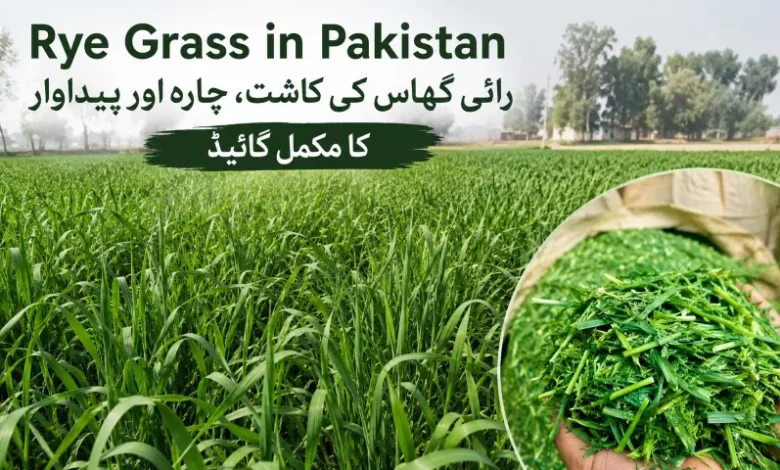
Rye grass is one of the most valuable winter fodder crops available to Pakistani farmers. It remains green and highly productive throughout the cold months — precisely when other fodder options become scarce and livestock nutrition becomes most challenging. Its high moisture content makes it particularly palatable to cattle, buffalo, sheep, and goats — all of which consume it eagerly. Beyond its value as green fodder, rye grass can also be dried and stored for use during periods when fresh green feed is unavailable. Rye grass is one of the highest quality temperate grasses available and its protein content during peak winter growth regularly exceeds 18% on a dry matter basis, making it comparable to quality alfalfa and significantly superior to most cereal straws used as winter fodder in Pakistan.
Rye Grass Seed Varieties and Cost in Pakistan
Choosing the right rye grass seed variety significantly affects both establishment success and overall fodder yield. Pakistani farmers now have access to several imported and locally available varieties — ranging from budget-friendly options to premium branded seeds.
Commonly Available Rye Grass Varieties in Pakistan:
| Variety | Approximate Price |
|---|---|
| Kohenoor Ryegrass | Rs. 6,200 |
| Vortex Ryegrass | Rs. 2,435 |
| Imported Perennial Ryegrass | Rs. 4,125 |
| Big Boss American Ryegrass | Rs. 1,600 |
| RV G-1 | Rs. 2,000 – Rs. 2,500 |
| RG-1 (Sargodha) | Rs. 1,200 – Rs. 1,500 |
| Makkhan Grass | Rs. 1,800 – Rs. 2,400 |
| Tift 86 | Rs. 1,600 – Rs. 2,200 |
While premium branded ryegrass seeds typically retail between Rs. 1,600 and Rs. 2,500 per kilogram, generic or unbranded varieties from local dealers often reduce this cost by roughly 20%, bringing the lower end of the market price range down to approximately Rs. 1,000 per kilogram (estimated).
At the recommended seeding rate of 6 to 8 kg per acre, the seed cost for a typical one-acre rye grass stand ranges from approximately Rs. 9,600 to Rs. 19,700 depending on the variety selected — a relatively modest investment given the high fodder yields the crop produces across multiple cuts throughout the winter season.
Climate Requirements
Rye grass thrives in cool conditions and performs best under cold, moderate temperatures. It does not tolerate heat well and is therefore not suitable for cultivation in areas that experience warm weather during the growing period. Regions with access to reliable irrigation and cooler winters are the most suitable for rye grass production — particularly irrigated areas of Punjab where winter temperatures remain consistently moderate.
Soil and Land Preparation
Rye grass can be grown on a wide range of soil types — from sandy loam to heavier textured soils — making it adaptable across most farming regions of Pakistan. However, the crop performs best on well-prepared, fertile soils. Land preparation should involve thorough plowing to achieve a fine, firm seedbed. One deep plow followed by planking and cross-planking prepares the field effectively for seeding.
Seeding Rate and Timing
The recommended seeding rate is 6 to 8 kg of quality, certified seed per acre. The field should be thoroughly cleaned of weeds before sowing. The ideal sowing time depends on the farming system:
- Solo cropping: Sow from October to November when temperatures have dropped sufficiently to support germination and early establishment
- Mixed cropping with berseem: Sow together at the time of berseem establishment — October onwards — to create a combined fodder stand that provides excellent mixed nutrition for livestock
- Spring rye grass: When grown with berseem in mixed stands, the rye grass component provides the first cut while berseem establishes and begins to produce
This flexibility in sowing systems makes rye grass an excellent crop for integration into existing fodder rotations.
Irrigation
Rye grass requires two to three irrigations during its growing period. The first irrigation should be applied immediately after sowing. Subsequent irrigations are applied every three weeks or as required based on soil moisture and weather conditions. The crop’s relatively low water requirement makes it suitable for areas where irrigation water availability is limited during winter months.
Fertilizer Recommendations
Correct fertilizer application is critical for achieving high rye grass yields:
Solo Rye Grass Cultivation:
- Apply 1 bag of DAP (Diammonium Phosphate) and 1 bag of Urea at sowing time
- Follow with 1 bag of Urea after each cut to support rapid regrowth
- Additionally apply 1 bag of Bori Urea or Potash at the time of sowing
Mixed Rye Grass and Berseem Cultivation:
- Apply 5 bags of SPS (18%) and 1 bag of Potash or Bori Urea (18%) at the time of berseem sowing
- Apply 1 bag of DAP and 1 bag of Bori Urea or Potash at sowing time
Adequate nitrogen application after each cut is particularly important as it directly drives the speed and volume of regrowth — one of rye grass’s greatest productive advantages.
Pest and Disease Management
- Crown rust — most common fungal disease — yellowing of leaves — apply fungicide if severe
- Aphids — common in dry spells — use recommended insecticide
- Armyworm — caterpillar damage — monitor regularly and apply as needed
- Prevention — avoid waterlogging, maintain correct plant density, use certified disease-resistant seed
Cutting and Yield
The first cut of rye grass is typically ready 60 days after sowing when plant height reaches 45 to 50 cm. This is an important threshold — cutting too early reduces subsequent regrowth vigor while cutting too late reduces feed quality and palatability.
Rye grass produces multiple cuts throughout the season. As the crop matures and cutting cycles continue, the stands become denser and more productive. Cutting frequency and timing depend on growth rate and livestock feed requirements.
Expected yields from rye grass cultivation:
| System | Yield Range |
|---|---|
| Solo rye grass | 600 to 700 maunds per acre (green fodder) |
| Mixed rye grass + berseem | 900 to 1,000 maunds per acre (combined) |
Rye grass seed can also be harvested locally — providing an additional income stream for farmers who wish to produce their own planting material for subsequent seasons.
Why Rye Grass is Valuable for Pakistani Livestock Farmers
The combination of winter production, multiple cuts, high palatability, and strong yields makes rye grass one of the most economically attractive fodder crops available in Pakistan. Dairy farmers in particular benefit significantly — rye grass’s high moisture content and nutritional quality during the winter dry period directly supports milk production at a time when other green fodder options are scarce.
Understanding how much fodder your livestock actually require is essential for planning your rye grass cultivation area effectively. Farmers raising dairy cattle, buffalo, or mixed livestock herds can use the free Livestock Feed Calculator at fasalbachao.com to calculate exact daily and seasonal fodder requirements — helping determine how many acres of rye grass your operation genuinely needs before the season begins.
Common Mistakes Farmers Make
- Cutting too early — reduces root reserves and weakens regrowth
- Overgrazing — damaging stands by allowing livestock direct access instead of cutting and carrying
- Skipping post-cut nitrogen — the biggest reason for poor regrowth
- Sowing too late — November end or December reduces establishment before cold intensifies
- Waterlogging — rye grass does not tolerate standing water — ensure drainage before sowing
Silage and Hay Making
- Rye grass makes excellent silage when cut at the correct stage
- Optimal silage cutting is at early heading — before full ear emergence
- Wilting to 30–35% dry matter before ensiling improves fermentation quality
- Hay making is possible in areas with predictable dry winter weather
- Also check out the complete method of Silage Making in Pakistan in English and urdu here.