Turkey Farming – How to Start and Manage a Profitable Turkey Farm
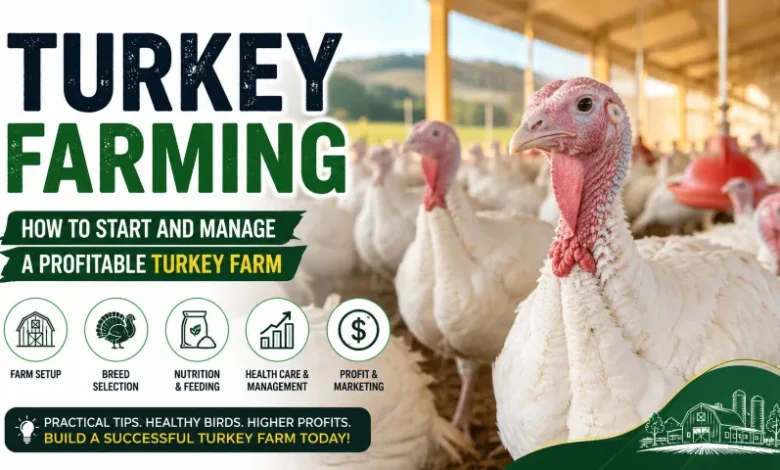
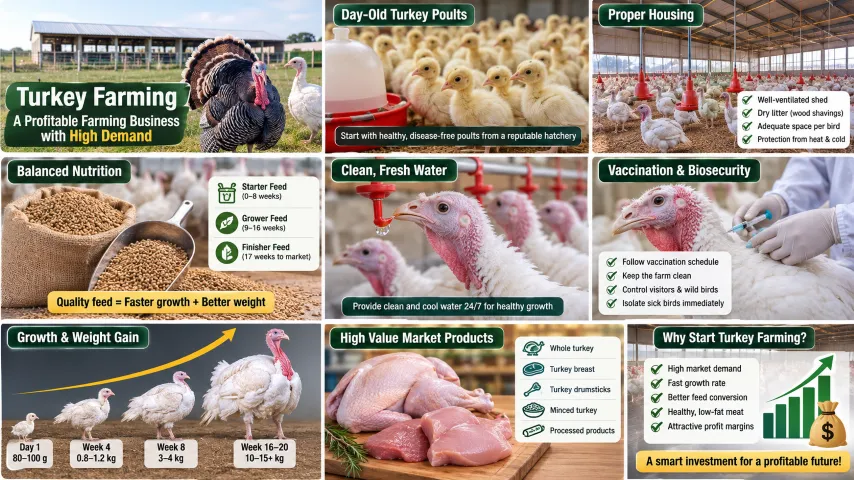
Turkey farming remains one of the most underutilized poultry opportunities available to small and medium-scale farmers worldwide. While chicken and duck farming dominate most backyard and commercial poultry operations, turkey production occupies a relatively uncrowded market space — meaning farmers who enter it face less competition and often enjoy more stable pricing than conventional broiler producers.
The global turkey industry is well established across North America, Europe, and parts of Asia. Countries including the United States, Canada, Italy, France, and the United Kingdom lead in commercial production. Worldwide turkey populations exceed 270 million birds annually, yet demand consistently outpaces domestic supply in many developing markets — creating genuine opportunity for new producers.
Why Turkey Farming Makes Commercial Sense
Turkey meat has several nutritional advantages over conventional chicken that are driving growing consumer demand. It is significantly lower in fat while remaining high in protein, making it a popular choice among health-conscious consumers worldwide. Turkey provides excellent protein quality, B vitamins, selenium, zinc, and phosphorus — nutrients important for muscle maintenance, immune function, and overall metabolic health.
From a farming economics perspective turkey production is compelling because:
- Feed conversion ratios are competitive with broiler chickens when measured against final carcass weight
- Dressing percentages reach 80 to 87 percent — among the highest of any commercial poultry species
- Market demand peaks around major holidays in Western markets, creating predictable seasonal pricing cycles
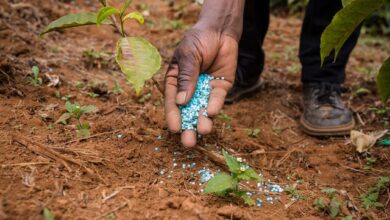
- Turkey manure is an excellent organic fertilizer, providing an additional income stream or cost reduction on farms that integrate poultry with crop production
Farmers interested in integrating poultry manure into a broader crop nutrition program can find practical guidance on soil fertility management in the Lime Application Rate Calculator at fasalbachao.com — understanding soil pH and amendment requirements helps maximize the value of poultry manure as an organic input.
Selecting the Right Turkey Breed
Breed selection is the foundation of any successful turkey operation. The most widely farmed commercial breeds worldwide fall into two broad categories — white feathered varieties developed for rapid commercial growth, and heritage breeds valued for flavour, natural breeding ability, and outdoor production systems.
Common Turkey Breeds:
| Breed | Characteristics | Best For |
|---|---|---|
| White Holland | Fast growing, white plumage, high yield | Commercial indoor production |
| Broad Breasted Bronze | Large frame, excellent feed conversion | High volume commercial farming |
| Bourbon Red | Heritage breed, rich flavour, natural breeder | Free range and specialty markets |
| Narragansett | Hardy, adaptable, good for outdoor systems | Free range farming |
| Black | Good forager, disease resistant | Extensive free range systems |
| Slate | Attractive plumage, moderate growth | Specialty and direct marketing |
| Beltsville White | Compact size, suitable for small operations | Smallholder and backyard farming |
For most commercial operations the White Holland or Broad Breasted Bronze offer the fastest growth and best feed efficiency. Heritage breeds like Bourbon Red and Narragansett command premium prices in direct marketing channels but require more management skill and longer production periods.
Key Production Parameters
Understanding the basic biological parameters of turkey production is essential for planning feed budgets, housing capacity, and marketing timelines.
Turkeys mature significantly more slowly than chickens. Males reach marketing weight at around 14 to 16 weeks while females are typically ready between 16 to 20 weeks. The male to female breeding ratio is approximately 1:5 in managed flock settings.
Turkey eggs weigh approximately 85 grams at laying and around 50 grams when the chick hatches. Incubation takes 28 days — a full week longer than chicken eggs. Annual egg production from breeding hens ranges from 80 to 100 eggs depending on breed, management, and nutrition.
Feed conversion across the production cycle typically falls between 2.7 and 2.8 — meaning each kilogram of live weight requires roughly 2.7 to 2.8 kilograms of feed. This compares reasonably well to broiler chickens when the higher carcass yield of turkey is factored into the economic calculation.
Expected mortality during the brooding phase runs between 3 and 4 percent in well-managed flocks — comparable to quality commercial broiler production.
Hatching and Brooding Turkey Chicks
Incubation
Turkey eggs can be hatched naturally under broody hens or artificially using incubators. Natural hatching with a turkey hen allows 10 to 15 eggs per sitting and achieves hatching rates of 60 to 80 percent under good management. Artificial incubation using commercial setters provides more consistent results at commercial scale.
Temperature during incubation should be maintained at 99.5°F throughout. Humidity requirements change with season — drier conditions in summer require 61 to 63 percent relative humidity while winter conditions demand 85 to 90 percent. Eggs must be turned a minimum of 5 to 7 times daily to prevent the developing embryo from adhering to the shell membrane.
Brooding Turkey Poults
Turkey poults are more fragile during the brooding phase than chicken chicks and require more careful temperature and nutrition management. Brooding runs from hatch through approximately 4 weeks of age.
Starting temperature should be 95°F at chick level during the first week, reduced by 5°F each week until birds are fully feathered and comfortable at ambient temperature. Turkey poults need approximately twice the floor space of chicken chicks of equivalent age — overcrowding during brooding is one of the primary causes of early mortality.
Clean drinkers and feeders must be in place 48 hours before chicks arrive. During the first days poults sometimes struggle to locate feed and water independently — placing a few older chicken chicks in the brooder for the first two weeks helps poults learn eating and drinking behaviour more quickly. Green material placed in low containers also stimulates feeding interest in newly hatched poults.
Infrared heat lamps or gas brooder systems both work effectively for turkey poults. Ensure adequate ventilation without creating cold drafts — fresh air and temperature stability are equally important.
Housing Design for Turkey Farms
Proper housing protects birds from weather extremes, predators, and disease while providing the environmental conditions needed for optimal growth.
Shed Orientation and Dimensions
Turkey sheds should run east to west with the long face oriented north to south. This maximises cross ventilation during warm months while reducing direct sun exposure inside the building. Shed width of 60 to 65 feet works well for most production scales. Roof height should clear 8 to 10 feet at the eaves with a central ridge above 30 feet in larger structures. Roof overhangs of at least 3 feet on each side prevent rain ingress during wet weather.
Space Allowances by Age
Providing adequate floor space is critical for turkey welfare, growth performance, and disease prevention:
| Age Group | Minimum Floor Space |
|---|---|
| 0 to 4 weeks | 1 square foot per bird |
| 5 to 8 weeks | 1.5 square feet per bird |
| 8 to 12 weeks | 2 square feet per bird |
| 12 to 16 weeks | 2.5 square feet per bird |
| 16 weeks to marketing | 3.5 square feet per bird |
Breeders require 5 to 6 square feet per bird to allow natural movement and mating behaviour.
Production System Options
Free range production allows turkeys access to outdoor pasture — reducing feed costs by up to 50 percent through natural foraging and significantly improving bird welfare. However disease exposure, predator risk, and environmental mortality are all higher in extensive systems. Free range production suits farms with adequate land, natural shade trees, and low predator pressure.
Intensive shed-based production provides much better control over feed conversion, disease management, and environmental conditions. It is the preferred system for commercial volumes and suits locations with high predator pressure or challenging climates. The Deep Litter System within sheds maintains floor warmth during cold months and is particularly suitable for winter turkey production in temperate regions.
Feeding Turkey Through the Production Cycle
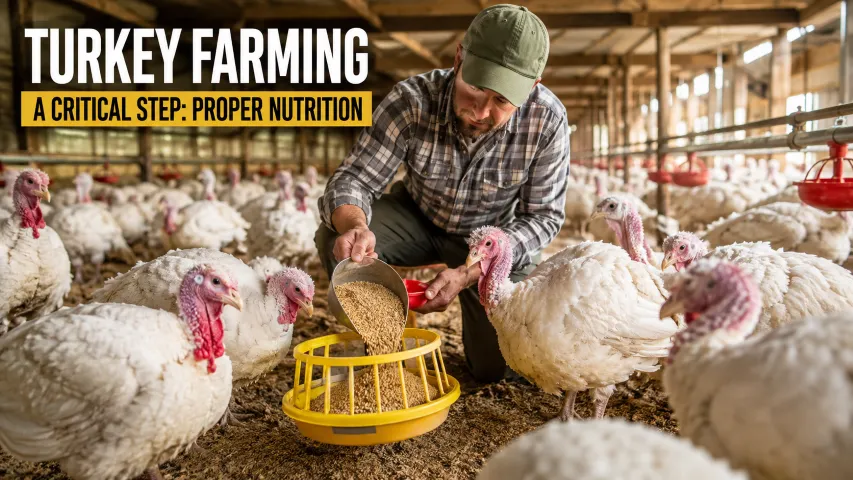
Nutrition is the largest single cost in turkey production — typically representing 65 to 70 percent of total production expense. Getting the feeding program right directly determines growth rate, feed conversion efficiency, and final profitability.
Turkey have substantially higher protein requirements than broiler chickens — particularly in the early weeks. A starter diet of 28 percent protein is recommended for poults from hatch through 4 weeks of age. This reduces progressively as birds mature, reaching 14 percent for breeding adults.
Feed Requirements by Stage:
| Age | Daily Feed per Bird | Approximate Weekly Gain |
|---|---|---|
| 0 to 4 weeks | 80 to 95 grams | 150 to 180 grams |
| 5 to 8 weeks | 250 to 350 grams | 500 to 700 grams |
| 8 to 12 weeks | 450 to 550 grams | 700 to 900 grams |
| 12 to 16 weeks | 550 to 700 grams | 600 to 800 grams |
| 16 to 20 weeks | 650 to 750 grams | 400 to 600 grams |
Separate male and female turkeys from 8 weeks onwards if possible — males require more energy-dense feed to support their faster growth while females perform better on slightly lower energy diets. Using the same diet for both sexes results in either overfeeding females or underfeeding males.
Fresh clean water must be available at all times. Water consumption increases significantly during hot weather — ensure drinkers are inspected and cleaned twice daily during summer months. Adding vitamins and electrolytes to drinking water during heat stress periods reduces heat-related mortality and maintains feed intake.
Green fodder — including legumes, grass, and leafy vegetables — can constitute up to 50 percent of the diet in intensive systems, reducing feed costs while providing beneficial micronutrients not always present in compounded rations.
Disease Management in Turkey Flocks
Disease prevention through biosecurity and vaccination is always more cost-effective than treatment after an outbreak. Turkey flocks are susceptible to several specific diseases that require proactive management.
Biosecurity Fundamentals
- Maintain strict all-in all-out production cycles — never mix birds of different ages in the same shed
- Disinfect all incoming equipment, vehicles, and materials before they enter the farm
- Purchase replacement stock only from certified disease-free hatcheries
- Keep detailed flock records including daily mortality, feed consumption, and water intake
- Limit farm visitor access and provide dedicated footwear and clothing for farm entry
Key Diseases and Management
Newcastle Disease is the most economically significant viral disease affecting turkey flocks globally. It spreads rapidly through respiratory secretions and contaminated equipment. Affected birds show twisted necks, loss of coordination, respiratory distress, and sudden death. There is no effective treatment once an outbreak occurs — prevention through strict vaccination schedules and biosecurity is the only reliable protection. Vaccinate all birds at day one, 5 weeks, 6 weeks, and 10 weeks of age using appropriate vaccine types for each stage.
Fowl Cholera is a bacterial disease causing acute mortality — birds may be found dead without prior visible signs. Survivors show green diarrhea, swollen wattles, and extreme weakness. Treatment with broad-spectrum antibiotics reduces losses but cannot eliminate the disease from the farm. Complete depopulation, thorough disinfection, and a rest period of at least 4 weeks between flocks is the most reliable management response.
Infectious Coryza causes respiratory disease characterised by nasal discharge, swollen face and sinuses, foul-smelling secretions, and reduced feed intake. While rarely causing high mortality directly, coryza severely reduces growth rate and feed efficiency. Antibiotic treatment helps manage symptoms but does not eliminate carrier birds. Source flock health testing before purchasing replacement stock prevents introduction of this disease.
Fowl Pox spreads through mosquito bites, direct contact with infected birds, and contaminated equipment. It causes warty lesions on the face, comb, and unfeathered skin. Vaccination provides reliable protection and should be included in all preventive health programs in areas where mosquito pressure is high.
Haemorrhagic Enteritis causes sudden bloody diarrhea and high mortality particularly in birds between 6 and 12 weeks of age. It is caused by a specific turkey adenovirus and spreads rapidly through contaminated water and feces. Vaccination is available and highly effective. Maintaining clean water and avoiding overcrowding significantly reduces outbreak risk.
Cannibalism is a behavioural problem rather than a disease — but it causes significant losses if not managed proactively. Beak trimming at day one or day 5, maintaining adequate floor space, providing sufficient feeder and drinker access, and using dim lighting all reduce the incidence of pecking behaviour. Nutritional deficiencies — particularly salt and protein — can trigger or worsen cannibalism and should be ruled out before other management interventions.
Breast Blisters are more common in females and develop when birds spend extended time resting on hard or rough floor surfaces. Providing adequate clean dry litter depth throughout the production cycle prevents this condition from developing.
Marketing Turkey Effectively
Turkey reaches ideal marketing weight at approximately 6 months of age for males and slightly earlier for females. At this point male carcasses yield 7 to 7.5 kilograms and females between 5 and 5.5 kilograms of live weight. Dressing percentage — the proportion of live weight recovered as saleable carcass — averages 80 to 87 percent in well-finished birds.
By consuming approximately 100 grams of feed daily through the finishing phase, each bird converts efficiently to around 30 grams of daily liveweight gain. This efficiency makes the final weeks of production particularly important — maintaining feed quality and bird health through to slaughter age protects the investment made in earlier production phases.
Turkey markets in most regions peak around major holidays and seasonal events. Producers who time their marketing to coincide with high-demand periods consistently achieve better prices than those who sell into low-demand windows. Direct marketing to restaurants, hotels, catering companies, and individual consumers eliminates middlemen and typically improves farm-gate prices by 20 to 30 percent compared to selling through wholesale traders.
The combination of high dressing percentage, growing health-conscious consumer demand, and relatively low producer competition makes turkey farming a genuinely attractive diversification option for poultry farmers willing to invest in the additional management knowledge the species requires.