Green Manure: The Free Fertilizer Most Gardeners Dig In at the Wrong Time
If you’ve ever left a bed empty over autumn and watched it turn into a slab of compacted, weedy mud by spring, green manure is the fix nobody tells you about early enough. It’s one of the oldest tricks in gardening, and yet most new allotment holders in the UK only stumble across the term after they’ve already lost a season’s worth of soil health to bare ground.
So let’s actually answer the question properly: what is green manure, why do experienced growers swear by it, and how do you use it without making the classic beginner mistakes?
What Is Green Manure, Really?
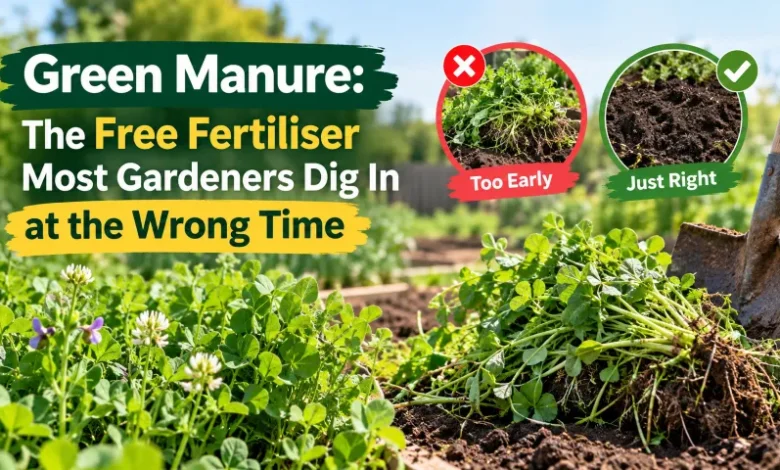
Green manure is a crop you grow specifically to dig back into the soil while it’s still young, leafy and soft — not to eat, not to sell, just to feed the ground itself. You sow it, let it grow for a few weeks or months, then chop it down and work it into the top layer of soil before it has a chance to flower and set seed (or right at first flower, depending on the crop — more on that below).
It’s easy to confuse with a cover crop, and honestly the two overlap so much that people use the terms interchangeably. But there’s a real difference. A cover crop’s main job is to sit there — protecting bare soil from wind, rain and weeds, and keeping living roots in the ground when nothing else is growing. It might get mowed and left on the surface as mulch rather than dug in at all. Green manure has a more active job: it’s grown with the specific intention of being turned into the soil, where it breaks down and releases its goodness directly into the root zone of whatever you plant next.
Same seeds, different outcome, depending on what you do with the crop at the end.
Why Bother? What Green Manure Actually Does for Your Plot
- Feeds the soil, not just the plants. Digging in green material feeds the fungi, bacteria and worms that make soil actually work.
- Adds nitrogen — for free. Certain green manure crops pull nitrogen straight out of the air and fix it in the soil (more on this below).
- Builds structure. Root systems break up compacted ground and improve drainage without you needing to double-dig every bed.
- Suppresses weeds. A dense stand of green manure out-competes weed seedlings for light and space.
- Prevents nutrient leaching. Over a wet British winter, bare soil loses nutrients to rain. A living crop holds onto them.
Building soil organic matter this way isn’t just good gardening practice — at a larger farm scale, the same soil-carbon principles behind green manuring are increasingly tied to schemes like carbon credits in agriculture.
Nitrogen: Where It Actually Comes From
This is the part most gardening blogs gloss over, so it’s worth getting right.
Legume green manure crops — think field beans, vetch, clover, and trefoil — host bacteria called rhizobia in nodules on their roots. These bacteria pull nitrogen straight out of the air and convert it into a form the plant, and eventually your soil, can use. If you’ve never grown that particular legume on your plot before, the rhizobia may not already be present in your soil, which is why seed suppliers often sell legume seed pre-coated with the matching inoculant.
There’s a satisfying little test for whether it’s working: dig up a plant mid-season and slice open one of the root nodules. Pink or reddish inside means active nitrogen fixation. White or greenish inside means the bacteria aren’t doing much, and you may want to inoculate next time.
Cereals and grasses — rye, oats, mustard — don’t fix nitrogen, but they do something legumes can’t: their dense, fibrous roots open up heavy soil, and their bulkier stems add long-lasting organic matter once dug in. That’s why a lot of experienced growers don’t pick one or the other — they sow a mix.
Green Manure Crops: What to Choose and When
The right green manure crop depends on your soil, your timing, and how long the bed will be free. Broadly, UK green manure seeds fall into a few useful groups:
Quick cover, any time of year
- Mustard — fast, cheap, brilliant for a short gap between crops (avoid if you’re rotating brassicas, though)
- Phacelia — not even in the same family as your veg, so it slots into any rotation, and bees love the flowers if you let a few bloom
- Buckwheat — very fast, good for breaking up short summer gaps
Overwinter green manure
- Field beans and winter tares (vetch) — hardy, nitrogen-fixing, good on heavier ground
- Grazing rye — extremely hardy, superb root structure, but tough to dig in by hand come spring, so plan for that
- Winter field clover — slower to establish but a strong nitrogen contributor if left through to spring
Longer-term soil building
- Red clover and alfalfa (lucerne) — best left in for a full season or more if you have the space
- Trefoil — low-growing, shade-tolerant, good undersown between taller crops
Mixing a legume with a cereal or grass — vetch with oats, for instance — is a genuinely good habit to get into. The cereal acts almost like scaffolding, holding the softer legume up off the wet ground, while the legume supplies the nitrogen and the cereal supplies bulk that breaks down more slowly and keeps feeding soil life for longer after digging in.
| Crop | Type | Best sown | Main benefit | Notes |
|---|---|---|---|---|
| Mustard | Cereal-family (brassica) | Spring–autumn | Fast bulk, weed suppression | Avoid before/after brassica crops |
| Phacelia | Non-legume | Spring–autumn | Fits any rotation, bee-friendly | Not frost-hardy in hard winters |
| Buckwheat | Non-legume | Summer | Very fast short-gap filler | Dies at first frost |
| Field beans / winter tares | Legume | Autumn | Nitrogen fixing, hardy | Slice a root nodule to check fixation |
| Grazing rye | Cereal | Autumn | Deep roots, extreme hardiness | Tough to dig in by hand come spring |
| Winter field clover | Legume | Autumn | Steady nitrogen over winter | Slower to establish |
| Red clover / alfalfa | Legume | Spring | Long-term soil building | Needs a full season or more |
| Trefoil | Legume | Spring–summer | Undersowing, shade-tolerant | Low-growing, won’t compete for light |
The Timing Question: When to Dig It In
Here’s where most people get it wrong, and it’s worth understanding why, not just memorising a rule.
When you dig fresh plant material into soil, the microbes that break it down need nitrogen as well as carbon to do their work — much like a builder needs both bricks and mortar. Young, leafy, nitrogen-rich growth (soft vetch, young clover) breaks down quickly and releases its surplus nitrogen back into the soil fairly promptly. Mature, woody, carbon-heavy growth is the opposite: the microbes have to borrow nitrogen from the surrounding soil to break it down at all, and for a few weeks that nitrogen becomes temporarily unavailable to anything else growing nearby. That’s exactly why seedlings sown too soon after digging in a woody green manure crop can go pale and stall, even though you’ve just added a load of “goodness” to the bed.
| Material type | Example | Dig in at | Rest before sowing next crop |
|---|---|---|---|
| Soft, leafy, nitrogen-rich | Young vetch, clover | Early flower | 2 weeks |
| Mixed legume + cereal | Oats and vetch | Legume’s first flowers | 3 weeks |
| Bulky, more mature cereal | Rye, mustard left too long | Before seed set | 4+ weeks |
| Direct-sown small seeds going in next | Any of the above | — | Lean toward longer end; trial in a tray first |
The practical upshot: dig your green manure in at or just before flowering. By then legumes are close to peak nitrogen content and cereals have put on decent bulk, but nothing has gone woody or set seed yet (seed means next year’s green manure becomes next year’s weed problem). On an allotment, that usually means checking the bed weekly from late winter onwards once things start moving, because on a mild spring the gap between “just flowering” and “gone to seed” can close faster than you’d expect.
Then give it a rest. Two to four weeks between digging in and sowing your next crop is a sensible minimum, longer for bulkier, more mature material. If you’re direct-sowing small seeds rather than planting out transplants, they’re more sensitive to that decomposition period, so lean toward the longer end. A quick trial — a few seeds sown in a tray of the worked soil — will tell you if it’s ready before you commit the whole bed.
Digging In: The Practical Bit
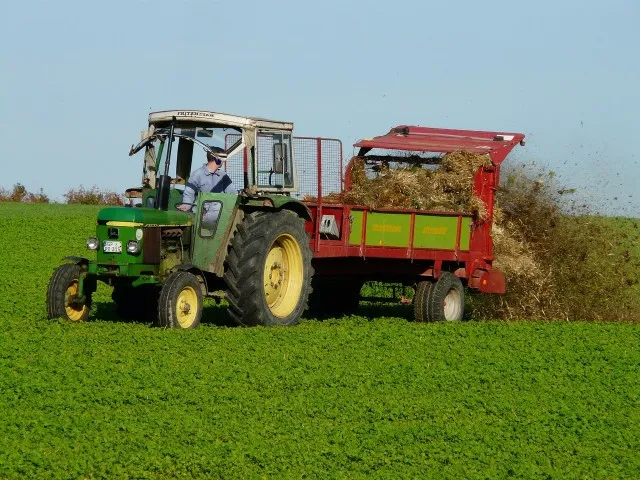
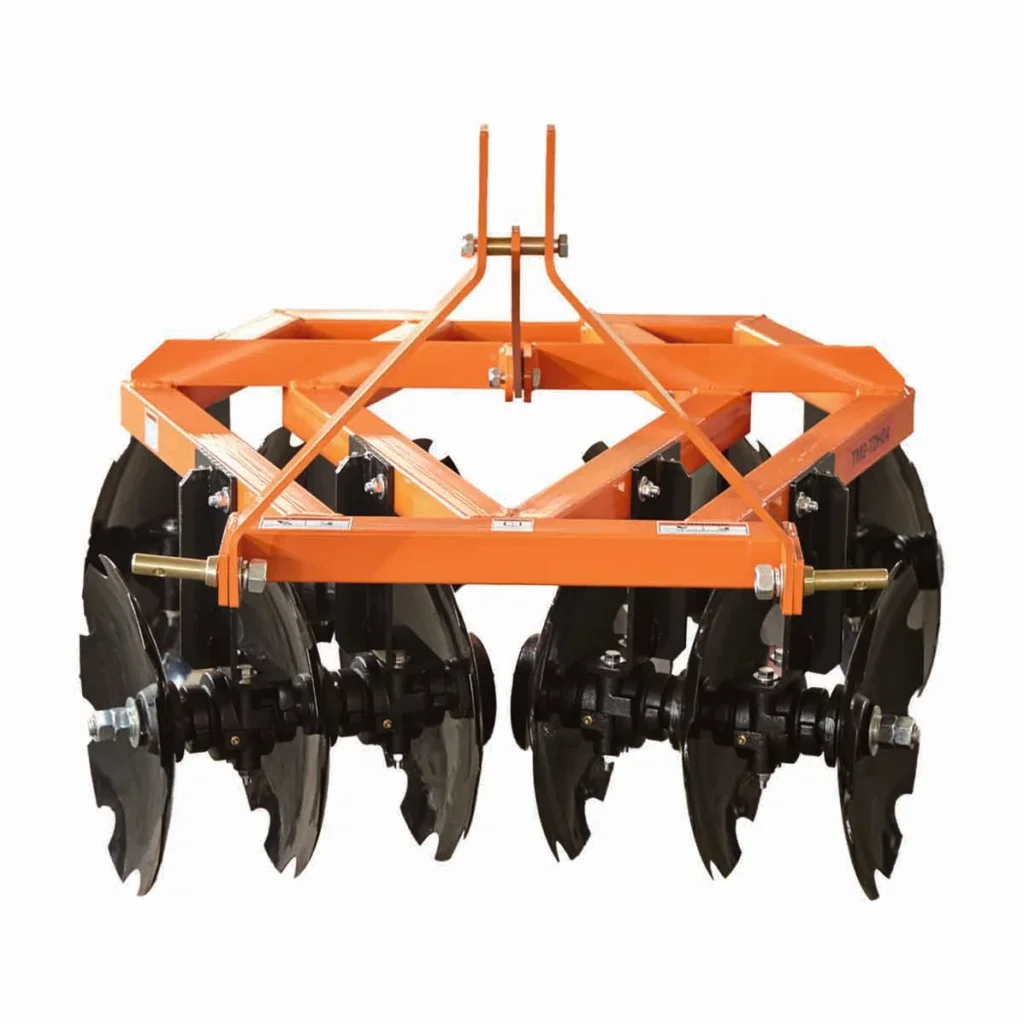
Don’t just try to dig a tangled, waist-high crop straight into the ground — it’ll wrap around your fork and half of it will end up sitting proud of the soil instead of buried. Chop or strim it down first, let it wilt for a day, then work it into the top few inches, where the oxygen and soil organisms that break it down are most active. Buried too deep, it decomposes far more slowly and does you less good. On a plot rather than a field, a fork and a bit of patience does the same job a disc harrow does at scale. If you’re working a larger plot and want to speed the job up, a small disc harrow does the same job a fork does by hand — cutting slashed green manure into the topsoil in two passes rather than one.
For smaller blocks, the 48 inch notched disc harrow from TMG Industrial fits a Category I three-point hitch on tractors from 20 to 30 HP, suited to working slashed crop material into the topsoil once the crop reaches flowering.
Green Manure on an Allotment: Making It Actually Work in a Small Space
Allotment growing is a different game to a farm field, and most green manure advice is written with acres in mind, not a ten-rod plot. A few things matter more at allotment scale:
- Use the gaps you actually have. Most allotmenters don’t have a bed free for six months — you’ve got the three weeks between your garlic coming out and your leeks going in. Fast crops like mustard, phacelia or buckwheat are built for exactly that.
- Undersow where you can. Trefoil or low clover sown between taller crops like brassicas covers the ground and fixes nitrogen without taking up a bed of its own.
- Don’t let it flower and seed by accident. On a small plot, one green manure crop that sets seed becomes years of hand-weeding. Keep an eye on it.
- Buy green manure seeds in small packs. UK seed suppliers sell green manure seed in allotment-sized quantities specifically because most gardeners don’t need a farm-sized sack of vetch — check the packet for whether inoculant is included if you’re growing a legume for the first time.
Frequently Asked Questions
What is green manure in simple terms?
Green manure is a crop grown specifically to be dug back into the soil while it’s still young and leafy, rather than harvested. It feeds soil life, adds organic matter, and — if it’s a legume — adds nitrogen too.
What’s the difference between green manure and a cover crop?
They overlap a lot, and the seeds are often identical. The difference is what happens at the end: a cover crop’s main job is protecting bare soil and can be left on the surface as mulch, while green manure is grown with the specific intention of being dug into the ground.
Which green manure crops are best for an allotment?
For short gaps between crops, mustard, phacelia or buckwheat work well since they grow fast. For overwinter cover, field beans and winter tares are the standard choice. If you want something to undersow between taller crops, trefoil or low clover are good options since they won’t compete for light.
Do I need to buy special green manure seeds, or can I use ordinary seed?
You can use ordinary vetch, clover, mustard or rye seed, but seed sold specifically as green manure seed is usually cheaper per gram and sold in allotment-sized packs rather than farm quantities. If you’re growing a legume for the first time on that plot, check whether the seed comes pre-coated with inoculant, or buy it separately.
When should I dig in green manure?
At or just before flowering. By that point legumes are near peak nitrogen and cereals have put on good bulk, but nothing has gone woody or set seed. Leave it too long and stems turn woody and may seed; dig it in too early and you waste most of the crop’s growth.
How long after digging in green manure can I plant?
Generally two to four weeks, depending on how bulky or mature the material was. Soft, leafy material needs less time; bulkier or more mature growth needs longer, since the soil microbes need time to break it down without competing with your next crop for nitrogen.
Can I grow green manure over winter?
Yes — field beans, winter tares and winter field clover are all hardy enough for UK winters and are commonly sown in autumn to hold and improve soil until spring.
Will green manure fix nitrogen in poor or new soil?
Only if the right bacteria (rhizobia) are present to nodulate with the legume’s roots. If that legume hasn’t grown on your plot before, the bacteria may be missing, which is why inoculated seed is worth using the first time round. You can check whether it’s working by digging up a plant and slicing open a root nodule — pink or red inside means it’s active.
The Bottom Line
Green manure isn’t a fringe technique — it’s one of the simplest, cheapest ways to keep an allotment or garden bed productive without buying in bags of fertiliser every season. Pick the right crop for the gap you’ve got, get the timing of digging it in right, and give the soil a short rest afterwards. That’s really the whole method. The rest is just matching crop to season and space.